The German Shepherd was built from the ground up as a working animal. Captain Max von Stephanitz founded the Verein für Deutsche Schäferhunde (SV) in 1899 with a specific vision: a dog of supreme intelligence, physical capability, and unwavering temperament. More than 125 years later, it remains the world’s most versatile working breed and one of its most popular family companions. For a deeper look at how the breed came to be, see our history of the German Shepherd.
Below is a breakdown of breed characteristics: the measurable standards, the behavioral traits, and the practical realities of living with this dog.
Size and Build
The AKC breed standard specifies clear size parameters. Males stand 24 to 26 inches at the shoulder, with 25 inches as the center ideal. Females stand 22 to 24 inches, with 23 inches as center ideal. Males typically weigh 65 to 90 pounds and females 50 to 70 pounds, though weight is not formally specified in the written standard.
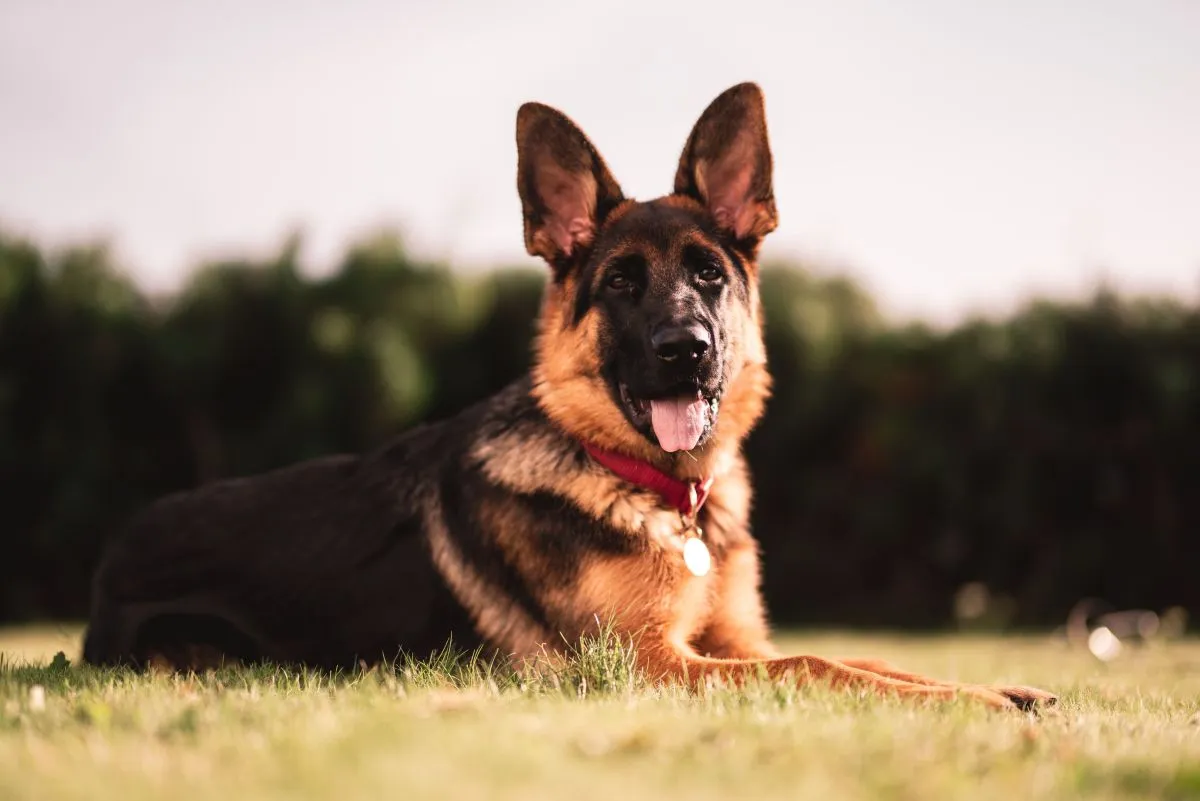
What the standard does specify is proportion. The Shepherd is longer than tall, at a ratio of approximately 10 to 8.5. This elongated frame is the architectural foundation for the breed’s signature movement.
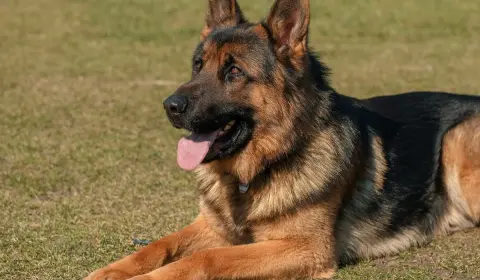
The overall impression should be strength without bulk. The AKC standard calls for a dog that is “strong, agile, well muscled and full of life.” The chest is deep, with well-sprung ribs that provide ample lung capacity for sustained work. The topline flows from the withers into a gradual slope toward the croup, a silhouette instantly recognizable even at a distance.
The FCI Standard No. 166 describes the breed’s purpose as “a working dog, universally suitable as a companion, guard, protection, service and herding dog.” That mandate, universal utility, shaped every physical trait the breed carries.
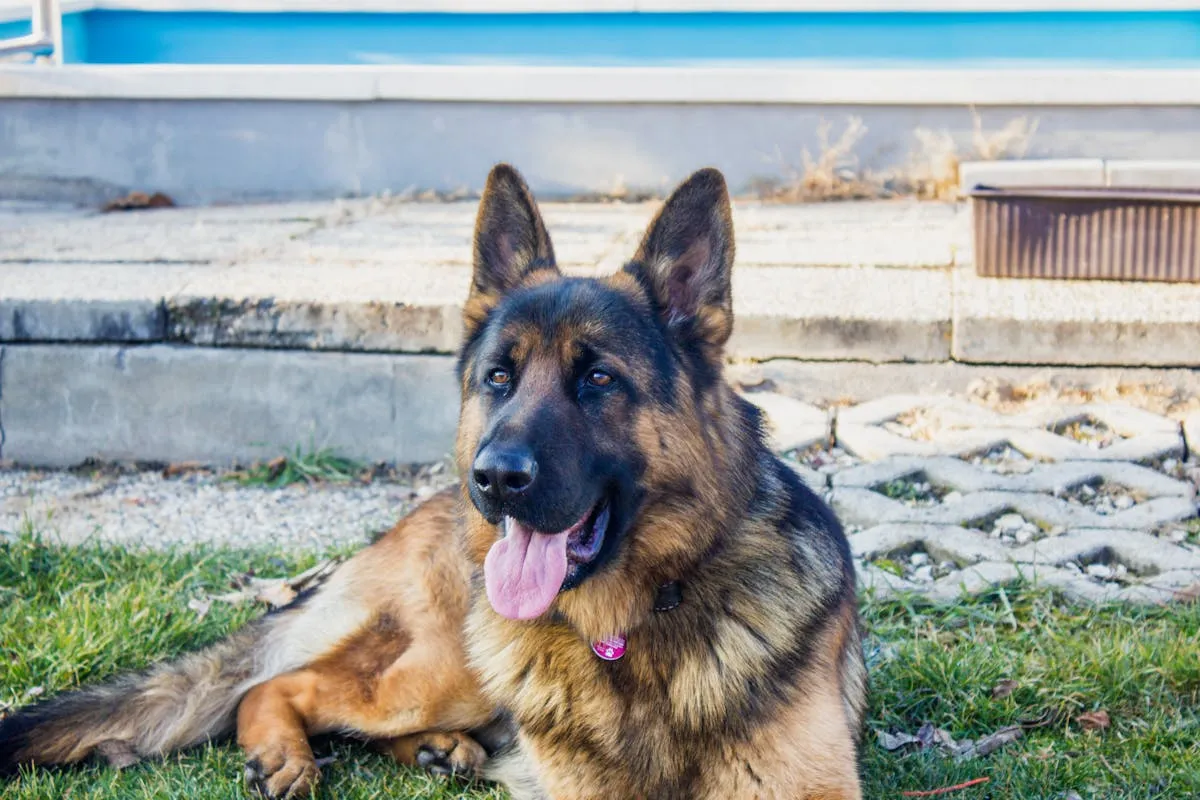
The head is noble and cleanly chiseled, proportionate to the body. The muzzle is long and strong, with a straight nasal bridge parallel to the forehead. Ears are moderately pointed, open toward the front, and carried erect when at attention. Cropped or hanging ears are disqualifying faults under the AKC standard. Puppies are born with floppy ears that typically become erect between four and seven months, though some take longer.
The jaw closes in a scissor bite with a full complement of 42 teeth. An undershot jaw is a disqualifying fault. The tail is bushy, reaches at least to the hock joint, and hangs in a gentle curve at rest. It rises somewhat when the dog is in motion or alert but should never curl over the back.
A well-built Shepherd projects both power and athleticism. Nothing coarse or clumsy about it. The dog looks like it could work all day and still have something left.
The Flying Trot
If there is one physical trait that defines the breed, it is the gait. The AKC standard describes it as a “far-reaching, elastic, seemingly effortless trot.” Breeders call it the flying trot, and once you have watched a well-built Shepherd move at a ground-covering pace, you understand why.
The mechanics are specific. The front legs reach far forward without wasted upward motion. The rear legs drive powerfully from well behind the body. At full trot, the feet travel close to the ground and the topline remains firm and level. The result: a dog that covers enormous distances with minimal energy expenditure. That was precisely the trait von Stephanitz prized for a dog that needed to patrol the perimeter of a flock for hours.
This gait is not cosmetic. It was and remains a functional requirement. A Shepherd with poor structure (steep shoulders, short upper arm, insufficient rear angulation) cannot produce a correct trot. Movement is given heavy weight in show rings and breeding evaluations because the gait reveals the structure beneath the coat.
Different breeding lines emphasize different structural priorities, which produce real variations in movement. For more on how these lines differ, see our guide to types of German Shepherds.
Coat and Colors
The breed carries a double coat: a dense, straight, harsh outer coat lying close to the body, with a thick undercoat beneath. The standard specifies medium length. The coat is shorter on the head, inner ear, front of the legs, and feet, and longer on the neck, sometimes forming a slight ruff.
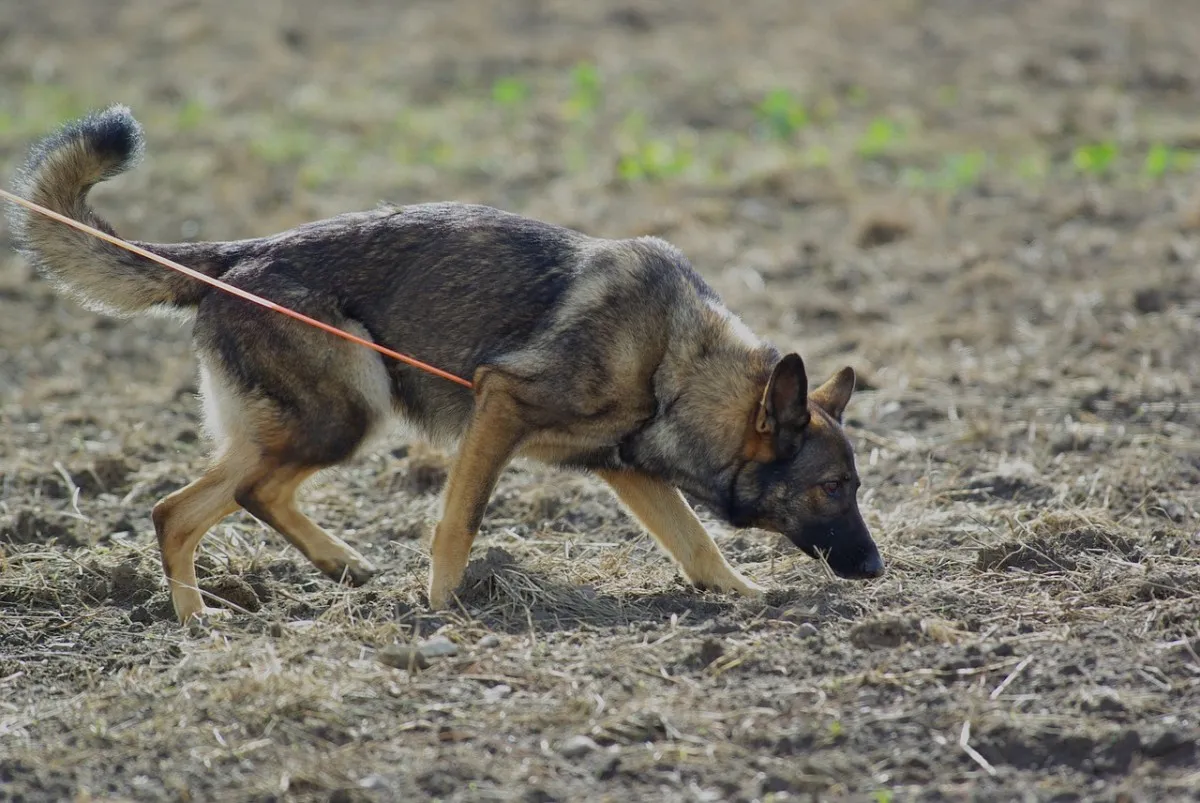
This coat is built for function. The dense undercoat provides insulation against cold and heat. The harsh outer coat sheds water and resists dirt. It is a coat designed for a dog that works outdoors in variable weather.
Shedding is significant. Shepherds shed year-round and experience two heavy seasonal blowouts, typically in spring and fall, when the undercoat comes out in clumps. This is not a hypoallergenic breed by any definition.
Long-coated German Shepherds, sometimes called “long stock coats,” do occur and have grown in popularity. The SV now recognizes long stock coat as a separate variety for show purposes, though the AKC standard considers it a fault.
On color, the AKC standard is permissive: “most colors are permissible,” with strong, rich colors preferred. The most common patterns are black and tan, black and red, sable, bi-color, and solid black. Pale, washed-out colors, blues, and livers are serious faults. White is a disqualifying fault under the AKC standard. (White Shepherds exist and can be registered, but they cannot be shown in AKC conformation.) The nose must be predominantly black.
Temperament and Personality
The AKC standard describes the ideal temperament: “The breed has a distinct personality marked by direct and fearless, but not hostile, expression, self-confidence and a certain aloofness that does not lend itself to immediate and indiscriminate friendships.”
That last phrase — “does not lend itself to immediate and indiscriminate friendships” — captures something essential. This is not a golden retriever. A well-bred Shepherd is friendly with its family, tolerant of known visitors, and reserved with strangers. That reserve is not shyness or aggression. It is appraisal. The dog is watching, evaluating, deciding how to respond. I’ve seen it with every Shepherd I’ve owned. Someone new walks in, and the dog just… watches. Quietly sizing them up before committing to anything.
The breed’s emotional depth often surprises new owners. Despite their reputation as tough working dogs, Shepherds are remarkably sensitive to the moods and emotional states of their people. A stressed owner typically produces a stressed dog. A calm, confident handler produces a calm, confident Shepherd. This emotional attunement makes them outstanding service and therapy dogs, but it also means they do not thrive in chaotic or unstable environments.
The bond with a primary handler runs deep. Shepherds are often called “Velcro dogs” because they want to be wherever their person is. That attachment is a feature of the breed, not a flaw. It is what makes them so responsive to training and so reliable in working roles. But it also means they do not do well with prolonged isolation. A Shepherd left alone in a backyard for hours will develop behavioral problems. That is a guarantee, not a possibility.
Protective instinct is innate. You do not train this breed to be a guardian. You manage the instinct that is already there. A well-socialized Shepherd distinguishes between genuine threats and ordinary life. A poorly socialized one does not, and that is where problems begin.
Intelligence
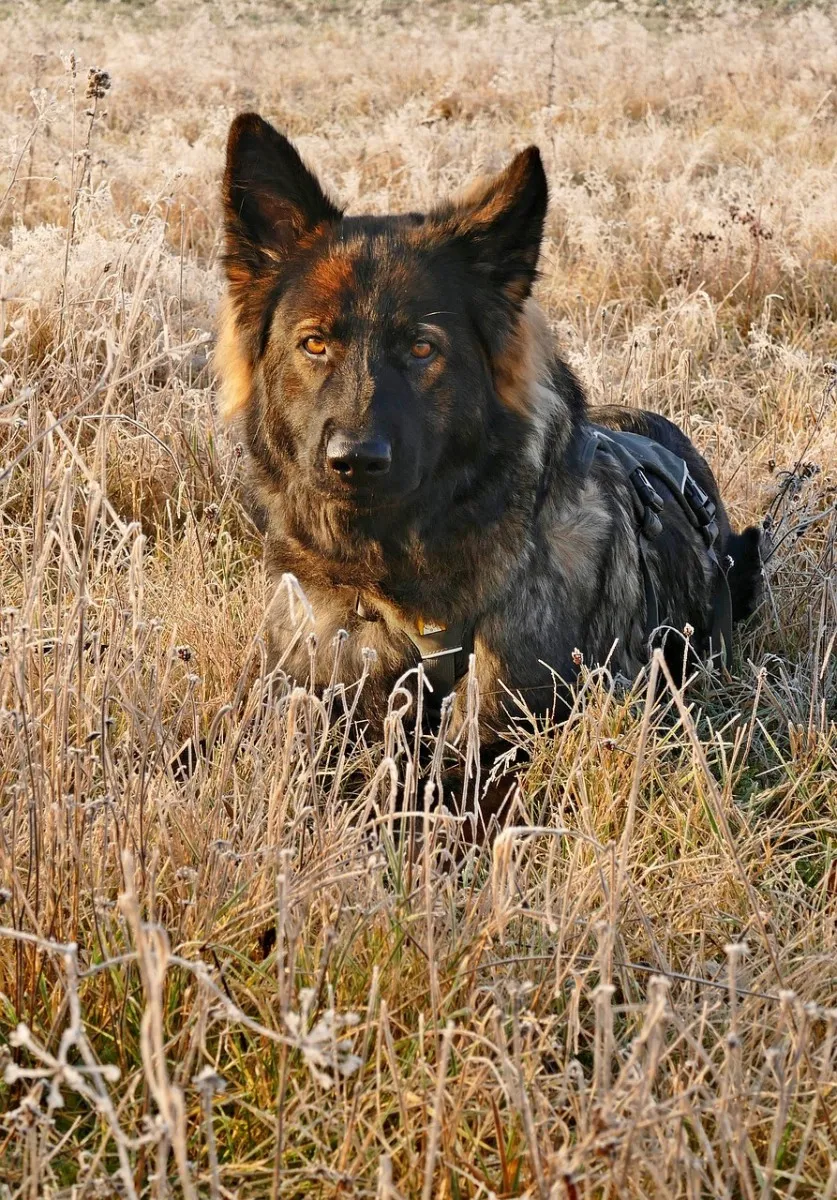
In Stanley Coren’s landmark 1994 study The Intelligence of Dogs, the breed ranked third overall, behind the Border Collie and the Poodle. That placed the breed in the “Brightest Dogs” tier, the top 10 of all breeds evaluated.
Coren’s methodology surveyed 199 obedience trial judges across the AKC and Canadian Kennel Club, measuring working and obedience intelligence: how quickly a dog learns new commands and how reliably it follows them. The breed learned new commands in fewer than five repetitions and obeyed a known command on the first attempt 95 percent of the time or better.
Worth noting what that study measured and what it didn’t. Working and obedience intelligence captures trainability and responsiveness to human direction. It does not fully capture problem-solving ability, spatial reasoning, or independent decision-making, all areas where the Shepherd also excels but that are harder to quantify through obedience trials.
In practical terms, this intelligence means a Shepherd learns fast. Very fast. They learn the things you want them to learn, and they also learn the things you do not. They learn which family member enforces rules and which one caves. They learn which door leads to the treats. They figure out that staring at you long enough during dinner works on at least one person at the table. My current dog has my youngest completely figured out.
This intelligence cuts both ways. A well-trained Shepherd is one of the most responsive and capable dogs alive. An untrained one uses that same cognitive power to solve its own problems, and the solutions rarely match what the owner had in mind.
Working Drive and Versatility
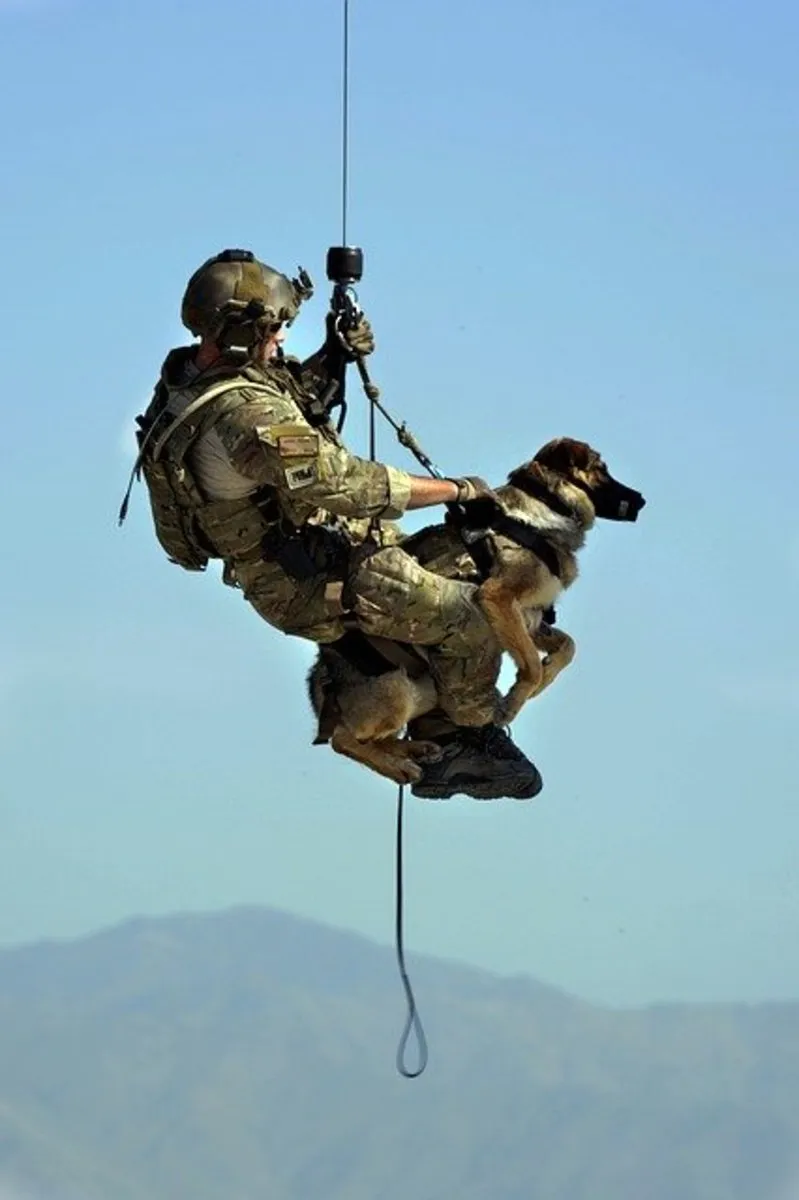
No breed in the world is deployed across as many working disciplines. The breadth is remarkable:
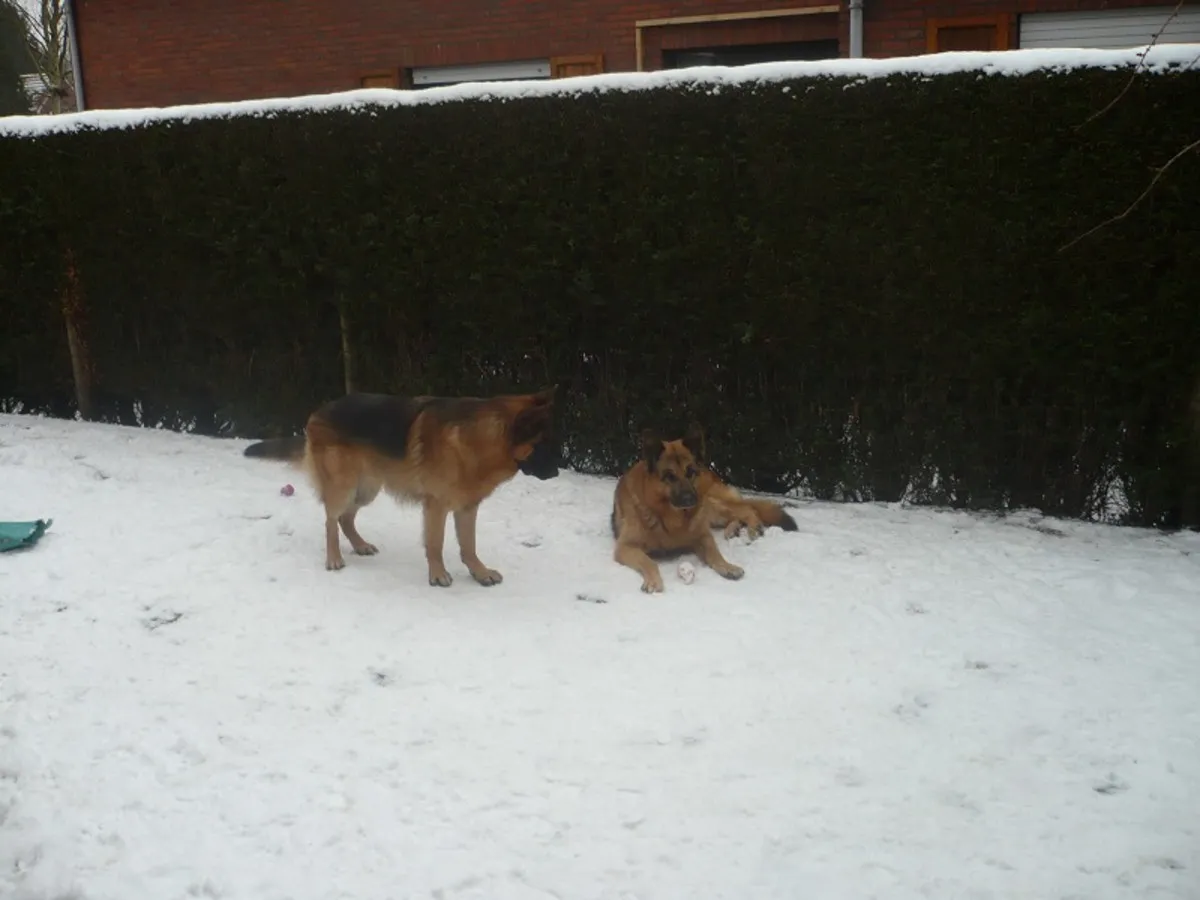
- Police and law enforcement. Detection, patrol, suspect apprehension, crowd control. The breed has been the dominant police dog worldwide for over a century.
- Military. Combat tracking, explosives detection, patrol. Shepherds serve in armed forces across the globe.
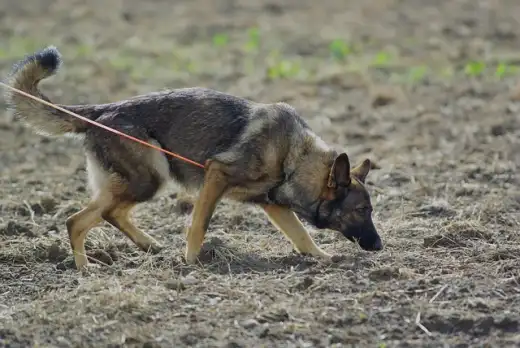
- Search and rescue. Wilderness tracking, disaster rubble search, water search, avalanche recovery.
- Service dogs. Guide dogs for the visually impaired (the breed was the original guide dog), mobility assistance, psychiatric service.
- Therapy dogs. Hospital and hospice visitation, courthouse comfort dogs, school reading programs.
- Detection work. Narcotics, explosives, accelerants, agricultural contraband, electronics, human remains.
- Herding. The original job. Shepherds are still used as working herders, particularly in Europe.
- Family companion. The role most fill today, and one that draws on every trait listed above.
This versatility was deliberate. Von Stephanitz’s breeding philosophy prioritized utility above all else. His famous dictum, “Utility is the true criterion of beauty,” produced a dog never bred for a single task. The Shepherd was designed to be trainable, adaptable, physically capable, and mentally stable enough to perform whatever job was asked of it.
The breed’s working drive varies significantly across lines. Some working-line dogs carry an intensity that is genuinely unsuitable for casual pet ownership. Some show-line dogs carry a lower drive that makes them more manageable in a family setting. Understanding which type of German Shepherd matches your lifestyle is one of the most consequential decisions a prospective owner can make.
The SV, the world’s largest breed club for any single breed with roughly 50,000 to 60,000 members in approximately 1,800 local groups, continues to promote breeding evaluations that test temperament, working ability, and structure together. This three-pillar approach is why the breed has maintained its working capability alongside its popularity as a pet.
Family Suitability
The breed ranks as the fourth most popular in the United States according to 2025 AKC registration data. Millions of families live happily with these dogs. But the breed is not for everyone, and pretending otherwise helps no one.
What the breed needs:
- Time. Shepherds require meaningful daily interaction. Training sessions, walks, play, work. The format matters less than the consistency. A bored Shepherd is a destructive one.
- Exercise. This is an athletic working breed. A short walk around the block is not enough. Plan for at least an hour of physical activity daily, more for high-drive individuals.
- Training. Not optional. Not something you get around to eventually. Training should begin the day the dog comes home and continue throughout its life.
- Socialization. Early, broad, and ongoing. Expose the puppy to different people, places, sounds, surfaces, and other animals. The window between 3 and 14 weeks is critical, but socialization should not stop at 14 weeks.
- Space. A Shepherd can adapt to apartment living if exercise needs are met, but a yard is a significant quality-of-life advantage for the dog and for you.
With children: A well-bred, well-socialized Shepherd can be an outstanding family dog. They tend to be patient with children they are raised with and often become naturally protective. Their size and energy level demand supervision around small children. That is common sense with any large dog, not a breed-specific concern.
With other pets: Early socialization is the deciding factor. Shepherds raised alongside other dogs and cats typically coexist fine. Introducing a mature Shepherd to a new cat or small animal requires more caution and management.
What makes the breed a poor fit: Owners who want a low-maintenance dog. Owners who will leave the dog alone for 10 or more hours daily. Owners unwilling to invest in training. Households where no one has time for daily exercise. If those describe your situation, a different breed will serve you and the dog better.
Ownership also carries financial weight. Food, veterinary care, insurance, training, and equipment add up. Our cost guide breaks down realistic expenses. On the feeding side, a breed of this size requires quality nutrition matched to its life stage and activity level. Our feeding hub covers the specifics.
Health Overview
The breed is generally robust, but it carries predispositions that prospective owners should understand.
Hip and elbow dysplasia are the most discussed orthopedic concerns. According to the Orthopedic Foundation for Animals (OFA), approximately 19.8 percent of Shepherds evaluated show some degree of hip dysplasia. The AKC recommends hip and elbow evaluations as part of responsible breeding health screening. Buying from a breeder who conducts these evaluations does not guarantee a problem-free dog, but it significantly improves the odds.
Bloat (gastric dilatation-volvulus, or GDV) is a life-threatening emergency more common in deep-chested breeds. The stomach fills with gas and can twist on its axis, cutting off blood supply. This condition requires immediate veterinary intervention.
Degenerative myelopathy (DM) is a progressive spinal cord disease that causes gradual hind-limb weakness and paralysis. A DNA test exists to identify carriers.
Exocrine pancreatic insufficiency (EPI) affects the pancreas’s ability to produce digestive enzymes. It is manageable with enzyme supplementation but requires lifelong treatment.
Allergies, both environmental and food-related, are common in the breed, often manifesting as skin irritation, ear infections, or digestive issues.
This is a summary, not a comprehensive veterinary reference. For any health concern, consult your veterinarian. Breed-specific health decisions (screening tests, preventive care, diet) should be guided by a professional who knows your individual dog.
Lifespan
The AKC lists the German Shepherd lifespan at 9 to 13 years, with most dogs falling somewhere in the 10 to 12 year range. Genetics, diet, exercise, veterinary care, and living conditions all influence where an individual dog lands within that span.
Larger dogs generally have shorter lifespans than smaller dogs, and the German Shepherd fits this pattern. A 90-pound male may have a shorter expected lifespan than a 55-pound female, all else being equal.
The best things an owner can do to support longevity are straightforward: maintain a healthy weight, provide regular exercise, keep up with veterinary wellness checks, and feed a quality diet appropriate to the dog’s age and activity level.
What Makes This Breed Unique
Every breed has its partisans. The German Shepherd’s case rests not on any single trait but on the combination. There are faster dogs, stronger dogs, more biddable dogs, more independent dogs. There is no breed that packages intelligence, trainability, physical capability, protective instinct, handler sensitivity, and sheer versatility into one animal the way the Shepherd does.
That combination is also what makes the breed demanding. Every strength carries a corresponding requirement from the owner. The intelligence demands engagement. The loyalty demands presence. The drive demands an outlet. The sensitivity demands stability.
Get those things right, and the German Shepherd is unlike any other dog you will ever own. Most people who have one good Shepherd become lifetime breed enthusiasts. That is not sentiment. It is what happens when you live with an animal that was designed, from its very first generation, to be a partner.
Sources
- American Kennel Club. Official Standard for the German Shepherd Dog. AKC breed standard document. Accessed 2026. akc.org
- Fédération Cynologique Internationale. Standard No. 166: German Shepherd Dog. fci.be
- German Shepherd Dog Club of America. Breed education resources. gsdca.org
- Coren, Stanley. The Intelligence of Dogs. New York: Free Press, 1994.
- Orthopedic Foundation for Animals (OFA). Hip dysplasia statistics by breed. ofa.org
- Verein für Deutsche Schäferhunde (SV). Breed club membership and organizational data.
- American Kennel Club. Most Popular Dog Breeds of 2025. Annual registration statistics.
Related Articles
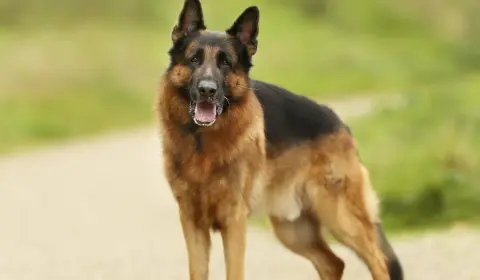
History of the German Shepherd Breed
From Max von Stephanitz and Horand von Grafrath in 1899 to the world's most versatile working dog. The complete history of the German Shepherd breed.
Types of German Shepherds: 5 Breed Lines Compared
From American show lines to DDR working dogs, there are 5 distinct German Shepherd types. Compare appearance, temperament, health, and price for each line.