German Shepherd Breed Guide
Your Shepherd comes when called in the living room. In the backyard, about 80% of the time. At the park with other dogs around — not a chance. He looks at you, considers his options, and goes back to whatever he was doing.
This is the most common training gap in the breed. German Shepherds are smart enough to know when they are on leash and when they are not, and many learn early that off leash means optional compliance. The good news: Shepherds are also smart enough to learn a reliable recall. It just takes a more structured approach than most owners expect.
Why recall fails specifically with this breed
They are too smart for casual training. A Shepherd quickly learns that “come” sometimes leads to good things (treats, praise) and sometimes leads to bad things (leash goes on, fun ends, getting put inside). The dog runs a cost-benefit analysis every time. If the alternative to coming back is chasing a squirrel, you lose.
Adolescence breaks everything. Between 6 and 18 months, the dog becomes more independent, more confident, and more interested in the environment. A recall that was solid at 5 months may vanish at 9 months. This is normal brain development, not defiance. See our adolescent phase guide for context.
The cue has been poisoned. If “come” has ever been followed by something the dog dislikes — ending play, being crated, a bath, a nail trim — the cue has a negative association. The dog hears “come” and thinks “fun is over.” You may need to start with a completely new word.
The long-line protocol
This is the foundation of reliable recall training. A long line (15 to 30 feet) gives the dog the feeling of freedom while keeping you in control. The dog never gets to learn that recall is optional, because every call still resolves with the dog coming to you.
Four-phase recall training timeline
| Phase | Duration | Where | Success signal |
|---|---|---|---|
| 1. Load the cue | 1-2 weeks | Indoors, zero distractions. Living room, hallway, kitchen. | Dog snaps head and moves toward you within 1-2 seconds of the cue. 10-15 reps per day. |
| 2. Long-line outdoors | 2-4 weeks | Backyard or quiet outdoor space with 15-30 ft long line attached. | Dog returns from mild distractions (sniffing, wandering) on first cue. Gentle line-reel if not — never a yank. |
| 3. Proofing | Ongoing (1-3+ months) | Increasingly challenging environments. Other dogs at 50 ft, then 30, then 20. New locations. | Recall holds at the same distance for 9 of 10 reps before reducing distance to the trigger. |
| 4. Off-leash in controlled spaces | 6+ months from start | Fenced parks, enclosed fields, secure yards. | Recall holds first time, every time, at the current distraction level. Regress to long line if it fails. |
The first phase is the one most owners skip. They think the indoor work is unnecessary because the dog already knows his name. The point of phase 1 is not knowledge — it is to overwrite any prior negative association and rebuild the cue as a hundred-percent-pays event. Skip it and the rest of the protocol cracks under real-world distraction.
Phase 1 detail — load the cue indoors
Start in your house with zero distractions.
- Say your recall word (choose something you have not already poisoned — “here,” “come,” or a whistle) in an upbeat voice.
- When the dog comes to you, reward with the highest-value treat you have. Not kibble. Real meat, cheese, something the dog goes crazy for.
- Repeat 10-15 times per day across different rooms.
- Make every single recall a celebration. The dog should believe that coming to you is the best thing that could possibly happen.
Rule: Never call the dog and then do something he dislikes. Every recall must end with a reward during this phase.
Phase 2 detail — long-line outdoors
Move to your yard or a quiet outdoor area with the long line attached.
- Let the dog explore on the line. When he is mildly distracted (sniffing, not fixated), call the recall cue.
- If the dog comes, huge reward. Party. Multiple treats.
- If the dog does not come, gently reel him in with the long line. Do not yank. Guide him to you, then reward when he arrives. The dog learns: coming to you always happens, and always pays.
- Gradually increase distractions. Practice near other people, then near other dogs at a distance.
Key rule: Never call the dog when you know he will not come. Every failed recall teaches him that “come” is optional. If he is locked onto a squirrel at 10 feet, do not call him. Walk up, guide him away, and try later when the distraction is lower.
Phase 3 detail — proofing against the real world
Proofing means testing the recall in increasingly challenging situations while still on a long line.
- Other dogs walking past at 50 feet. Then 30 feet. Then 20 feet.
- People approaching.
- New environments (parking lots, trails, fields).
- Different times of day.
- Different energy levels (after exercise vs fresh and wired).
Only move to off-leash practice in enclosed areas once the long-line recall is nearly 100% reliable at the current level of distraction. This takes months, not weeks.
Phase 4 detail — off-leash in controlled environments
Fenced parks, enclosed fields, or secure yards. Test the recall with low distractions first. Gradually increase difficulty. Always have high-value treats.
If the recall fails at any point, go back to the long line for that level of distraction. Regression is normal, especially during adolescence.
The emergency recall — and why it stays separate
A separate, high-priority cue reserved for genuine emergencies — the dog is heading toward a road, approaching an aggressive dog, or in danger.
Choose a word or sound you never use casually. A specific whistle, “COME NOW,” or any unique phrase. Practice it rarely (once or twice per week) but always pair it with an extraordinary reward — an entire handful of treats, a piece of steak, something the dog never gets otherwise.
The emergency recall should be so heavily rewarded that the dog drops everything and sprints to you. Using it for everyday situations dilutes its power.
What poisons a recall cue
The most common cue-poisoning patterns
| Pattern | Why it ruins the cue | What to do instead |
|---|---|---|
| Calling to end fun at the park | ”Come” predicts the leash going on and the walk ending. Dog avoids the cue. | Call, reward, release back to play. End of session: walk over to the dog and clip the leash on without using the recall. |
| Calling for nail trims, baths, crating | Dog associates the cue with universally disliked events. | Walk to the dog and lead him to those tasks. Reserve the recall cue for things that pay. |
| Calling in an angry tone | Dog reads tone as conflict. Some Shepherds will avoid an angry handler entirely. | Always upbeat. If you are frustrated, walk over and get the dog yourself rather than calling. |
| Calling and then chasing when he doesn’t come | You started a game the dog will always win. The chase is now part of the cue. | Run the opposite direction. Most dogs follow a moving handler. Reward when he catches up. |
| Repeating the cue when it fails | ”Come, come, come, COME” teaches the dog the cue can be ignored several times before it matters. | One clear cue. If no response, walk over and reset. Re-load the cue indoors before trying again outside. |
| Practicing without a long line | Every unenforced recall teaches the dog the cue is optional. | Long line for the entire training period. Off-leash work is a graduation, not a starting point. |
Realistic expectations
A reliable recall in low to moderate distraction is achievable for most Shepherds within 3-6 months of consistent daily training.
A reliable recall around high-value distractions (other dogs, prey animals, chaotic environments) takes 6-12 months and may never be 100%. Even well-trained dogs have thresholds. Knowing your dog’s threshold and managing accordingly is responsible ownership, not failure.
Some Shepherds — particularly those with high prey drive or leash reactivity — may never be safe off leash in uncontrolled environments. Using a long line in those situations is not a crutch. It is intelligent risk management. The cost of a dog escaping — injury, loss, liability — far outweighs the inconvenience of a long line.
“Off-leash reliability is the product of months of small, repeatable training events — not a single intensive course. Owners who treat recall as something they finish are the ones whose dogs lose the skill.”
— Association of Professional Dog Trainers, recall consensus position
What Actually Made Recall Stick
The dogs I’ve known that came back reliably were the ones whose owners ran phase 1 for longer than felt necessary and phase 4 with more caution than felt necessary. The dogs that did not come back reliably were never untrainable — they were the ones whose owners moved off the long line too soon.
For related training challenges, see our guides on leash training, leash reactivity, and the adolescent phase.
Sources
- Position Statement on Humane Dog Training ↗ Reward-based methods over aversive (e-collar) recall training.
- German Shepherd Dog Breed Profile ↗ Breed sprint speed and working-dog drive context.
- Teaching Your Dog to Come When Called ↗ Long-line protocol + reward-event framing.
- Why You Should Hire a Professional ↗ Recall as an ongoing maintenance skill, not a finished course.
- Find a Behavior Consultant ↗ Referral path for prey-driven dogs that plateau on off-leash work.
Follow new work
A new guide every week or so.
Roughly one new guide every week or so. Cost data, feeding research, breed health — sourced and dated. By Sam, in Belgium.
Related Articles
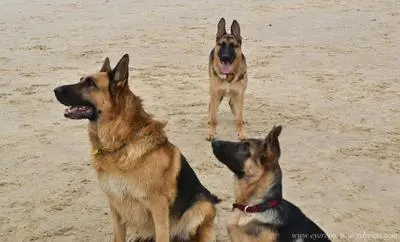
German Shepherd Adolescent Phase: Surviving 6 to 24 Months
Why a trained German Shepherd puppy suddenly ignores you between 6 and 24 months — the brain and hormone changes behind it, and what actually helps.
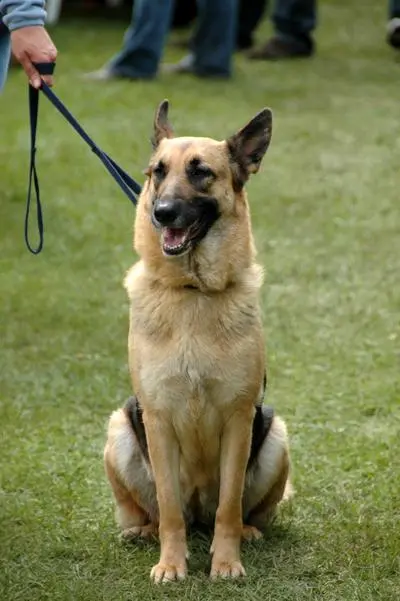
German Shepherd Reactivity on Leash: Why and What to Do
Why German Shepherds lunge and bark on leash and how to fix it. Step-by-step walk protocol, engage-disengage method, and equipment that helps.
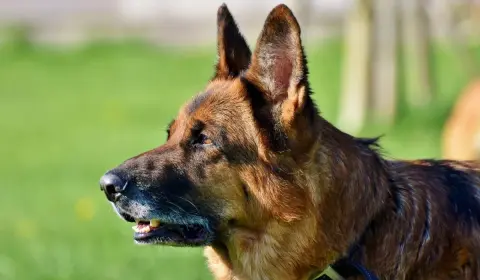
German Shepherd Leash Training: Stop the Pulling
Loose-leash walking for a powerful breed. Equipment comparison, the stop-and-go protocol, timelines, and what to do when reactivity starts on the leash.