German Shepherd Cost Guide
Hip dysplasia is the most discussed orthopedic condition in this breed, and for good reason. In a long-running analysis of the OFA registry (Oberbauer, Keller & Famula 2017; roughly 107,000 German Shepherd hip evaluations from 1970–2015), 18.9% of submitted hip radiographs were graded dysplastic, alongside 17.8% of elbow films. That is a submission-biased registry rate rather than a true population figure, but it puts the breed among the most frequently affected. That makes it a condition every owner should understand financially, not just medically — because the difference between catching it at 4 months and catching it at 4 years is measured in thousands of dollars.
What treatment costs depends on the path you take: conservative management, one of several surgical options, or some combination. The range runs from a few hundred dollars a year in supplements and pain management to over $14,000 for bilateral total hip replacement.
This guide breaks down every option, what each one costs, and how insurance and budgeting factor in. For a wider view of ownership expenses, see our complete cost guide, and run the numbers on coverage with the insurance estimator.
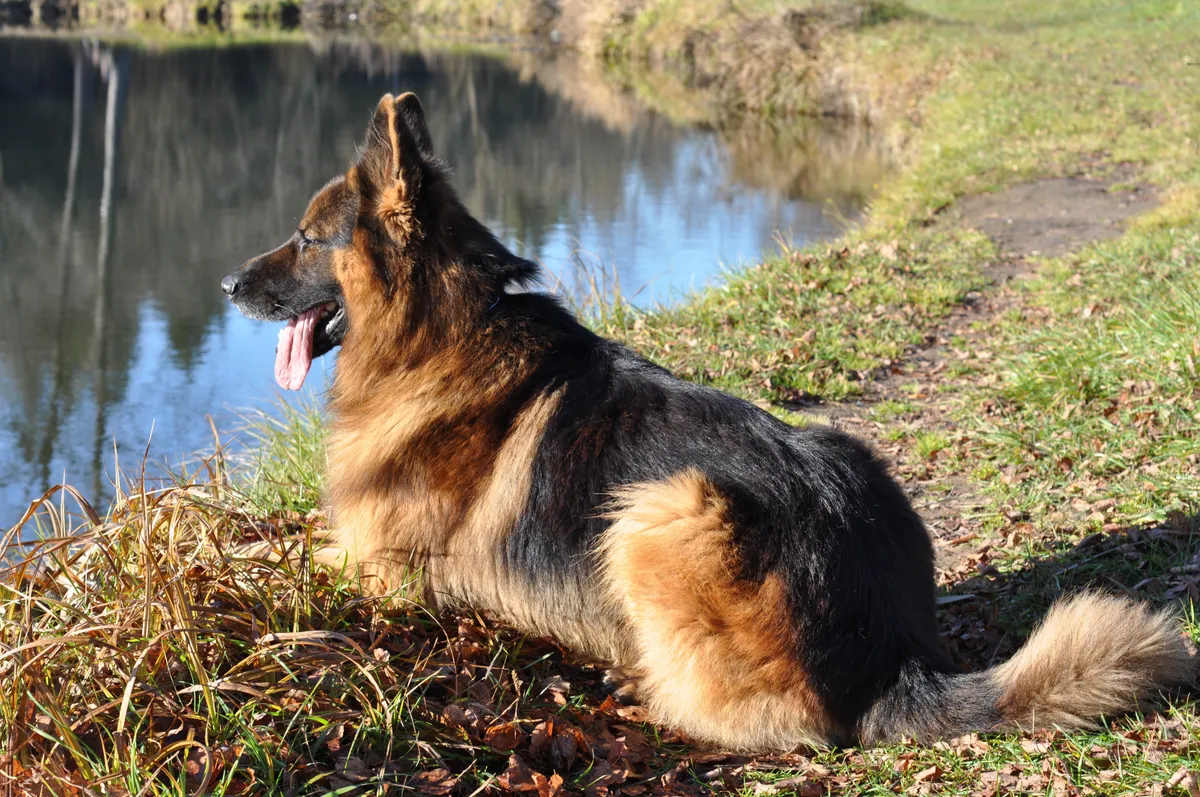
Diagnosis Costs
Before treatment, you need a confirmed diagnosis. That process typically involves:
- Veterinary exam and initial X-rays: $200–$500
- OFA evaluation (at 24 months): $200–$400, including radiologist review
- PennHIP evaluation (available from 16 weeks): $300–$600
PennHIP gives you earlier and more accurate information. A JAVMA comparison study (Powers et al. 2010) found that the OFA’s subjective grading underestimates a dog’s susceptibility to osteoarthritis relative to the PennHIP distraction index, which is available from 16 weeks of age versus OFA’s 24-month minimum. If your puppy has loose hips and you can know that at 16 weeks instead of 2 years, the door to TPO and JPS surgeries is still open.
“The median longevity of German Shepherd Dogs was 10.3 years, and the most common causes of death were musculoskeletal disorder (16.3%) and inability to stand (14.9%).”
— O’Neill et al., Canine Genetics and Epidemiology (2017)
For a Shepherd you suspect might be at risk — softer movement, reluctance to jump, parents not OFA-tested — PennHIP at 4 to 6 months is the screening with the most leverage. OFA at 24 months is the standard breeding evaluation. Different jobs.
Choose Your Path: Decision Matrix
Before getting into per-procedure costs, here’s how the four most common situations map to options:
| Situation | Likely Path | Year-One Cost |
|---|---|---|
| Puppy < 16 weeks, confirmed loose hips | JPS (rare candidate) or watchful PennHIP monitoring | $300–$1,500 |
| Young adult (6–18 months), severe dysplasia, no arthritis yet | TPO (per hip) or planning for THR later | $2,500–$4,500 |
| Adult dog (2+ years), significant dysplasia or pain | THR per hip — restores near-normal function | $5,600–$10,000+ |
| Adult dog, mild–moderate symptoms, older or budget-limited | Conservative management (NSAIDs, weight, supplements, PT) | $500–$2,000 |
| Senior dog or end-stage arthritis | FHO (salvage) or palliative conservative care | $1,000–$3,000 |
These ranges assume one hip. Shepherds frequently develop dysplasia bilaterally, which can roughly double surgical totals. Surgeons usually space bilateral procedures 3 to 6 months apart.
Treatment Cost Summary
| Treatment | Cost Range (Per Hip, Estimate) | Best For | Recovery |
|---|---|---|---|
| JPS (juvenile pubic symphysiodesis) | ~$800–$1,000 | Puppies under 16–20 weeks | Minimal |
| FHO (femoral head ostectomy) | $1,000–$3,000 | Any age, budget-conscious option | 6–12 weeks |
| TPO (triple pelvic osteotomy) | $1,200–$3,500 | Puppies under 10 months | 4–6 weeks |
| THR (total hip replacement) | $5,600–$10,000+ | Adults with significant dysplasia | ~12 weeks |
| Conservative management | ~$480–$1,920/year | Mild cases, older dogs | Ongoing |
Conservative Management Costs
Not every dysplastic dog needs surgery. Many Shepherds with mild to moderate cases are managed through a combination of pain control, joint support, and slowing progression.
Typical annual cost: roughly $480–$1,920, depending on severity. Treat this as a market estimate — the ACVS defines the components of conservative management but publishes no prices, so confirm specifics with your own vet.
Common components (market estimates):
- NSAIDs (carprofen, meloxicam, etc.): $30–$80/month
- Joint supplements (glucosamine, chondroitin, omega-3s): $20–$50/month
- Weight management: No direct cost, but the single most impactful intervention. Every excess pound increases joint stress.
- Physical therapy or hydrotherapy: $50–$100 per session, typically 1–2 sessions per week during active treatment
- Prescription joint diets: $70–$120/month
Conservative management can carry a Shepherd through years of comfortable life. It works best when the dog is at ideal body weight, the owner is consistent with daily NSAID dosing, and there’s room in the budget for periodic PT during flare-ups. It tends to fall short for younger dogs with severe dysplasia where the joint will keep degrading regardless of pain control.
For supportive nutrition, see our guide to the best food for German Shepherds with hip dysplasia.
Surgical Options and Costs
JPS (Juvenile Pubic Symphysiodesis)
The earliest possible surgical intervention, available only in very young puppies, typically under 16–20 weeks. According to PetMD’s overview of hip dysplasia surgery, the procedure fuses a growth plate in the pelvis to alter how the hip socket develops as the puppy grows.
Typical cost: $800–$1,000.
JPS is the least invasive and least expensive surgical option, but the eligibility window is extremely narrow. Most owners do not have a diagnosis early enough to pursue it. PennHIP at 16 weeks is the only realistic path to a JPS conversation.
FHO (Femoral Head Ostectomy)
FHO removes the ball of the hip joint entirely. The body forms a “false joint” from scar tissue and surrounding muscles, which allows movement without bone-on-bone contact.
Typical cost: roughly $1,000–$3,000 per hip (insurer estimates cluster near $1,800–$2,400; the wider market runs lower and higher). CareCredit’s procedure comparison places FHO in a similar range.
This is a salvage procedure — the joint is not restored to normal, but pain is typically eliminated. Outcomes are markedly better in leaner dogs (under 50–60 lb), which is why FHO is more commonly recommended for small and medium breeds. For large Shepherds, surgeons increasingly favor THR if budget allows. FHO remains a real option when THR is unaffordable or when a senior dog is the patient.
Recovery takes 6–12 weeks. Budget another $200–$600 for post-surgical rehabilitation sessions.
TPO (Triple Pelvic Osteotomy)
TPO has a narrow eligibility window. The dog must typically be under 10 months old, and the joint must show looseness without significant arthritis already present.
Typical cost: roughly $1,200–$3,500 per hip (insurer estimates start near $1,200–$2,000; specialty centers run higher).
The procedure cuts the pelvic bone and rotates the hip socket to achieve better coverage of the femoral head. When performed on the right candidate, it may preserve the natural joint and delay or prevent the need for THR later. The catch is timing. By the time many owners notice symptoms and get a diagnosis, the window has closed. Recovery runs 4–6 weeks with strict activity restriction.
THR (Total Hip Replacement)
The most complete surgical solution. A prosthetic ball and socket replace the damaged joint. Around 90–95% of dogs return to excellent function after THR.
Typical cost: $5,600–$10,000+ per hip, and the published figures genuinely split by source. MetLife puts total hip replacement near $5,600–$6,000 per hip, while the University of Missouri Veterinary Health Center quotes $8,500–$10,000. Comprehensive packages at urban specialty centers — surgery, hospitalization, imaging, and follow-up bundled — run higher still. We present the full range rather than a single number because there is no one authoritative price.
Bilateral cost: because hip dysplasia is frequently bilateral, plan for roughly double the per-hip figure — on the order of $11,200–$20,000+ across both hips, before diagnostics, pre-surgical imaging, or rehabilitation. Surgeons typically space bilateral procedures 3–6 months apart so the dog has one functional hip to recover on.
The Insurance Trap (Read This First)
This is the part most cost articles bury, and it’s the part that costs owners the most money.
The mechanics, plain:
- Trupanion: 30-day general waiting period, 6 months for orthopedic including hip dysplasia. Source: Trupanion policy details.
- Embrace: 14-day illness waiting period, 6 months for orthopedic (hip dysplasia, cruciate ligament, IVDD, patellar luxation). Source: Embrace hip dysplasia coverage.
- Longer-waiting carriers: some insurers run a full 12 months for hip dysplasia and, per their published policy terms, may not cover it at all for a dog enrolled at age 6 or older. Confirm the exact waiting period and any age cutoff in writing before you enroll — these terms vary by carrier and change over time.
Pre-existing exclusions: A Shepherd diagnosed at 14 months will not have hip dysplasia covered by a policy purchased at 16 months. There is no appeal process for this.
Bilateral coverage: If one hip is diagnosed, some insurers may consider the second hip a related condition and exclude it too. Check your policy language before you assume the second surgery is covered.
Example reimbursement scenario (policy in force, waiting period passed):
- THR surgery cost: $7,000
- Policy: 80% reimbursement, $500 annual deductible
- Insurance pays: ($7,000 – $500) × 80% = $5,200
- Owner pays: $1,800
For a detailed comparison of carriers and what they each handle, see our pet insurance for German Shepherds guide.
Post-Surgery Recovery Costs
Regardless of which procedure is performed, recovery adds to the total bill:
- Follow-up X-rays and exams: $150–$400
- Physical rehabilitation sessions: $50–$100 per session, typically 2–3 times weekly for 4–8 weeks
- Pain medication: $30–$80/month during recovery
- Activity restriction supplies (crate, baby gates, non-slip mats): $100–$300 one-time
For THR, recovery costs typically add $500–$1,500 on top of the surgical fee. FHO recovery costs run slightly less since the rehabilitation period is often shorter, but PT matters more for FHO outcomes — skipping it means worse function long-term.
Lifetime Management Costs
Whether your dog has surgery or not, hip dysplasia tends to involve ongoing costs.
Post-surgical lifetime costs:
- Annual joint supplements: $240–$600
- Periodic monitoring X-rays: $150–$300 every 1–2 years
- Possible arthritis management in later years: $500–$1,500/year
Conservative-only lifetime costs:
- Annual medication and supplements: $480–$1,920
- Periodic physical therapy: $1,200–$5,200/year during active phases
- Monitoring: $150–$300/year
Across a Shepherd’s full lifespan after diagnosis, the total cost of hip dysplasia (management plus possible surgery) commonly falls in the $5,000–$25,000+ range. The wide spread reflects the difference between mild cases handled with supplements and severe bilateral cases requiring THR plus years of follow-up. These are estimates — confirm specifics with your own veterinarian.
Prevention Worth Spending On
You can’t change genetics. You can change a few things that the literature consistently links to lower severity and later onset of symptoms.
Three interventions that move the needle:
- Buy from breeders who screen. Both parents OFA Good or Excellent, or PennHIP DI under the breed median. Expect to pay $2,000–$3,500 for a puppy from a screening breeder versus $1,000–$1,500 for an unscreened backyard litter. The math still favors the screened puppy if it saves a single $7,000 surgery. See our reputable breeder guide.
- Keep puppies lean. Overweight puppies show measurably more dysplasia in long-term studies. Feed to a body condition score of 4–5 out of 9 through the first 18 months — every rib visible at the right angle, slight tuck-up, no fat pad over the spine.
- Avoid high-impact exercise before 18–24 months. No daily jogging, no agility jumping, no forced staircases on a growing Shepherd. Long flat walks and unstructured play are fine. Growth plates close around 18–24 months for the breed; impact load before then is when the joint forms badly.
None of this guarantees a dysplasia-free dog. All of it shifts the odds and reduces severity if it does develop.
Sources
- Oberbauer AM, Keller GG, Famula TR (2017) — Long-term genetic selection reduced prevalence of hip and elbow dysplasia in 60 dog breeds. PLOS ONE; OFA registry hip/elbow rates.
- Powers MY et al. (2010) — JAVMA comparison of OFA grading and PennHIP distraction index.
- O’Neill DG et al. (2017) — Demography and disorders of German Shepherd Dogs under primary veterinary care in the UK. Canine Genetics and Epidemiology.
- MetLife Pet — dog hip dysplasia surgery cost — THR/FHO/TPO cost ranges.
- University of Missouri Veterinary Health Center — canine total hip replacement — teaching-hospital THR pricing.
- ACVS — Canine hip dysplasia — procedure definitions and conservative-management components.
- CareCredit — Hip dysplasia surgery cost — Procedure comparison and financing.
- PetMD — Hip dysplasia surgery in dogs — Options overview.
- Embrace — Pet insurance for hip dysplasia — Carrier waiting periods.
- Trupanion — What a policy covers — Orthopedic waiting period detail.
For a full overview of breed health expenses, see our German Shepherd health problems and costs guide.
Disclaimer: Cost estimates are approximations based on publicly available data. Actual costs vary significantly by location, provider, and individual circumstances. Read full disclaimer →
Follow new work
A new guide every week or so.
Roughly one new guide every week or so. Cost data, feeding research, breed health — sourced and dated. By Sam, in Belgium.
Related Articles

Best Pet Insurance for German Shepherds
A practical comparison of pet insurance options for German Shepherd owners. What to look for, what to watch out for, and how to choose a plan that fits.
German Shepherd Common Health Problems and Costs
Every major health condition German Shepherds face, how common each is, and what treatment typically costs. Real data from OFA, Nationwide, and vet sources.
Best Food for German Shepherds with Hip Dysplasia
The best foods for German Shepherds with hip dysplasia. Key joint-support nutrients, weight management strategies, and vet-recommended formulas compared.