Feeding a senior German Shepherd is not just “adult food with smaller portions.” The nutritional picture shifts in ways that surprise most owners. The biggest misconception is that older dogs need less protein. Research consistently shows the opposite. What does change is calorie requirements, joint demands, and how the body processes what it takes in.
If your Shepherd is approaching seven or already past it, here’s what actually matters in their bowl. Our German Shepherd food guide covers all life stages, but this article focuses on the senior years specifically.
When a Shepherd Becomes “Senior”
Large-breed dogs age faster than smaller breeds. The general veterinary guideline puts the senior threshold for a German Shepherd somewhere around age six to seven, earlier than the eight-to-nine range you’d see for a Labrador or Golden. But the calendar matters less than what you’re seeing at home.
The real markers are physical. Slower recovery after walks. Stiffness in the mornings that takes longer to work out. Less interest in the ball that used to be an obsession. I noticed it with my first Shepherd before anything else. He just stopped racing to the door when I grabbed the leash. These changes tend to creep in gradually, which is why many owners don’t notice the shift until it’s well underway.
Your vet can help pinpoint where your Shepherd falls on the aging curve. Bloodwork and a physical exam give a clearer picture than birthdate alone.

What Changes Nutritionally
Three things shift as your German Shepherd ages, and two of them go in the opposite direction from what most people assume.
Protein needs go up, not down. This is the most important thing to understand about senior feeding. The outdated advice to reduce protein in older dogs has been largely reversed by veterinary nutrition research. Tufts University researchers found dramatic variation in foods labeled “senior,” which reinforces that the label itself means very little. Aging dogs lose muscle mass more easily, and adequate protein is what counteracts that. For a breed that depends on hindquarter strength for basic mobility, maintaining muscle through the senior years is critical.
Unless your vet has identified a kidney or liver condition that requires protein restriction, a senior Shepherd generally benefits from protein levels at or above what they ate as an adult.
“A wide variety of nutritional content was found among ‘senior’ dog foods — calorie content ranged from 246 to 408 kcal per cup, and there is no AAFCO standard for what constitutes a senior diet.”
Calorie needs go down. Metabolism slows. Activity typically decreases. The same food volume that kept your five-year-old Shepherd lean can produce gradual weight gain in an eight-year-old. According to the Merck Veterinary Manual, geriatric dogs may require 10% to 15% fewer calories than they did during active adulthood. Extra weight on an aging frame accelerates joint deterioration, and for a breed already prone to hip and elbow dysplasia, every unnecessary pound matters.
Joint support becomes non-negotiable. Glucosamine and chondroitin won’t rebuild damaged cartilage, but there’s reasonable evidence they help slow further degradation and manage discomfort. Many senior large-breed formulas include them. Whether the levels in kibble are therapeutic or just supplemental depends on the formula. Higher-dose formulas like Orijen Senior (700 mg/kg glucosamine) provide more meaningful amounts than formulas listing joint ingredients without specifying quantities.
Food Options That Make Sense for Aging Shepherds
The goal is straightforward: more protein per calorie, with joint support built in. Here’s how several formulas approach that balance.
Purina Pro Plan Bright Mind 7+ Large Breed stands out for one specific ingredient. The formula includes enhanced botanical oils containing medium-chain triglycerides, which Purina’s research suggests provide an alternative energy source for aging brains. Whether that produces a noticeable difference at home is hard to measure, but the science behind it is reasonable. At 27% protein and 386 calories per cup, it hits a strong middle ground nutritionally. Live probiotics help with digestion. The main gap is joint support: no glucosamine is listed, so you may need a separate supplement. Around $55 to $62 for a 30-pound bag.
Hill’s Science Diet 7+ Large Breed takes a more conservative approach. Protein is 19.2% and fat 10.8%, both on the lower end. What sets it apart is the combination of glucosamine and chondroitin for joint support, which makes it one of the more complete options for skeletal health. Hill’s employs veterinary nutritionists and runs feeding trials. The lower protein may not be ideal for Shepherds who are losing muscle mass, but for a less active senior at a healthy weight, it provides steady, controlled nutrition. Around $65 to $72 for 33 pounds.
Orijen Senior is the premium choice and the numbers reflect it. At 38% protein and 700 mg/kg glucosamine, it delivers both the highest protein and the most meaningful joint support of any commercial senior food. The ingredient list is heavy on whole animal ingredients. The trade-off is cost: $85 to $95 for a 25-pound bag. Calorie density is also the highest at 414 per cup, so you feed less volume. For active seniors in good body condition, this is a strong option. For overweight or sedentary Shepherds, the richness and 15% fat content may be too much.
Nutro Ultra Senior uses a trio of proteins (chicken, lamb, and salmon) which provides amino acid variety and appeals to dogs who’ve grown picky with age. At 25% protein and just 308 calories per cup, it delivers solid protein at the lowest calorie density on this list. That combination is useful for a Shepherd who needs to drop weight without feeling like they’re getting less food. No specific glucosamine content is listed, so joint supplementation would be a separate conversation with your vet.
When to Switch From Adult Formula
There’s no universal trigger date. Some Shepherds show age-related changes at six. Others are still going strong at nine on the same adult food. The decision is based on signals, not a calendar.
Consider switching when you notice gradual weight gain despite unchanged portions, visible muscle loss along the spine or hindquarters, increased stiffness after rest, or your vet recommends it based on exam findings.
There’s no rush if your Shepherd is maintaining healthy body condition, staying active, and showing no joint stiffness on their current food. An eight-year-old Shepherd doing well on a quality adult formula doesn’t need to switch just because a bag says “senior.”
When you do transition, go slowly. Senior dogs can be more sensitive to abrupt dietary changes. Mix increasing amounts of the new food over ten days to two weeks.
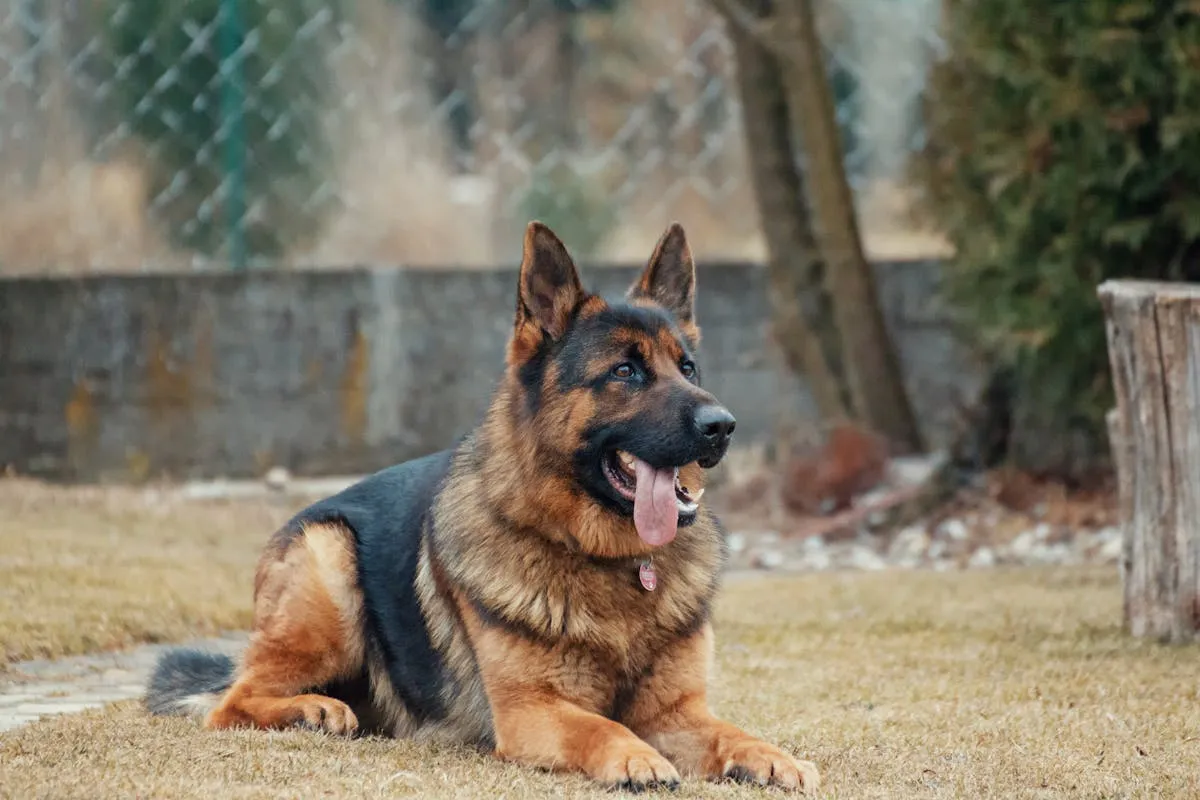
Managing Weight in Older Shepherds
Weight management becomes the primary feeding challenge for most senior Shepherds. The math is simple but unforgiving: fewer calories burned plus the same food volume equals gradual weight gain.
The WSAVA body condition scoring system provides a practical way to monitor this at home. Run your hands along your dog’s ribcage. You should be able to feel individual ribs with light pressure. From above, there should be a visible waist behind the ribs. From the side, the abdomen should tuck up behind the rib cage.
If those landmarks are disappearing, reduce portions by 10% before switching foods entirely. Sometimes the formula is fine and the quantity just needs adjustment.
For Shepherds who are already overweight, a lower-calorie formula like Nutro Ultra Senior (308 calories per cup) lets you maintain a reasonable portion size while cutting total calorie intake. Cutting portions dramatically on a calorie-dense food leaves your dog hungry and begging, which nobody enjoys.
Keeping Kidneys in Mind
Kidney function declines gradually with age in many dogs. This doesn’t mean your senior Shepherd has kidney disease, but it’s worth awareness. Annual bloodwork can catch early changes before they become clinical problems.
If your vet identifies reduced kidney function, they may recommend moderating (not eliminating) protein from high-quality, highly digestible sources. This is where that “less protein for older dogs” advice originally came from — it was specific to kidney patients and got incorrectly applied to all senior dogs. For a Shepherd with healthy kidneys, higher protein remains beneficial.
Your vet’s guidance on this should override any general feeding advice, including what you read here.
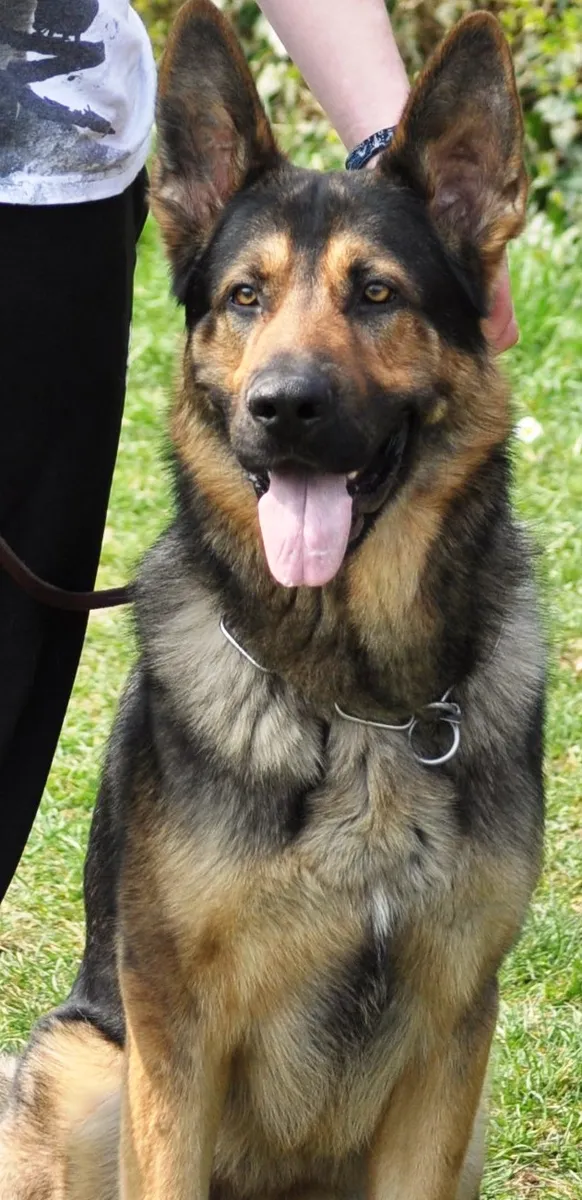
Signs the Current Food Isn’t Working
Watch for these signals that your senior Shepherd’s diet may need adjustment:
- Gradual weight change in either direction despite consistent portions
- Muscle wasting, particularly noticeable along the topline and rear legs
- Coat changes including dullness, thinning, or excessive shedding beyond normal seasonal patterns
- Digestive shifts like looser stools, increased gas, or decreased appetite
- Stiffness or reluctance to move that worsens rather than stabilizes
Any sudden change in weight, appetite, or energy in a senior dog warrants a vet visit before adjusting the diet. Age-related health conditions become more common, and food alone can’t address all of them.
For specific portion guidance tailored to senior Shepherds, see our senior feeding amounts guide. For the broader feeding picture across all life stages, visit the German Shepherd feeding hub.
Questions Owners Ask
Do senior German Shepherds really need more protein? In most cases, yes. The outdated recommendation to cut protein was based on early research into kidney disease management, not healthy aging. Current veterinary nutrition guidance from AKC supports maintaining or increasing protein to preserve muscle mass in aging dogs. The exception is dogs with diagnosed kidney or liver conditions, where your vet may recommend controlled protein levels.
Should I add a joint supplement if the food already contains glucosamine? It depends on how much the food provides and how your dog’s joints are doing. A formula listing 700 mg/kg provides a meaningful dose. One that simply lists “glucosamine” without a quantity may not. Talk to your vet about whether supplementation makes sense for your specific dog.
Is grain-free better for senior Shepherds? There’s no evidence supporting that. The FDA has investigated potential links between certain grain-free diets and heart disease in dogs. Unless your Shepherd has a diagnosed grain intolerance, grain-inclusive formulas are a well-studied, reasonable choice.
How do I help a picky senior eat enough? Appetite can drop with age. Warming food slightly releases more aroma. Adding a small amount of warm water or low-sodium broth can make kibble more appealing. A formula with varied protein sources, like Nutro Ultra’s chicken-lamb-salmon blend, sometimes re-engages interest. If appetite loss is sudden or significant, see your vet — it can signal dental pain, nausea, or other treatable conditions.
Disclaimer: This content is for general informational purposes only and is not veterinary advice. Consult a licensed veterinarian for decisions about your dog's health, diet, or medical care. Read full disclaimer →
Related Articles
Best Food for Adult German Shepherds
What adult German Shepherds actually need from their food. Protein, fat, joint support, label reading, and formulas that work for this breed.

German Shepherd Feeding Schedule by Age
Complete feeding schedule for German Shepherds from puppy to senior. When to feed, how often, and how to build a routine that works.

How Much to Feed a Senior German Shepherd
Feeding guide for older German Shepherds. How portions, protein, and meal frequency should change as your Shepherd ages.