German Shepherd Breed Guide
On this page · 14 sections
- 01The Quick Verdict
- 02The Part Most Comparisons Skip: Working Line vs Show Line
- 03Size, Weight, and Physical Reality
- 04Temperament and Drive: What They Were Actually Bred For
- 05Trainability: Two Kinds of Smart
- 06Exercise: Same Hours, Different Work
- 07Health, Lifespan, and Breed-Specific Concerns
- 08Working Roles: Where Each Breed Dominates
- 09Shedding and Grooming Reality
- 10The Failure Modes: How It Goes Wrong
- 11Who Should Pick the German Shepherd
- 12Who Should Pick the Labrador
- 13A Note on the Belgian Malinois Question
- 14The Bottom Line
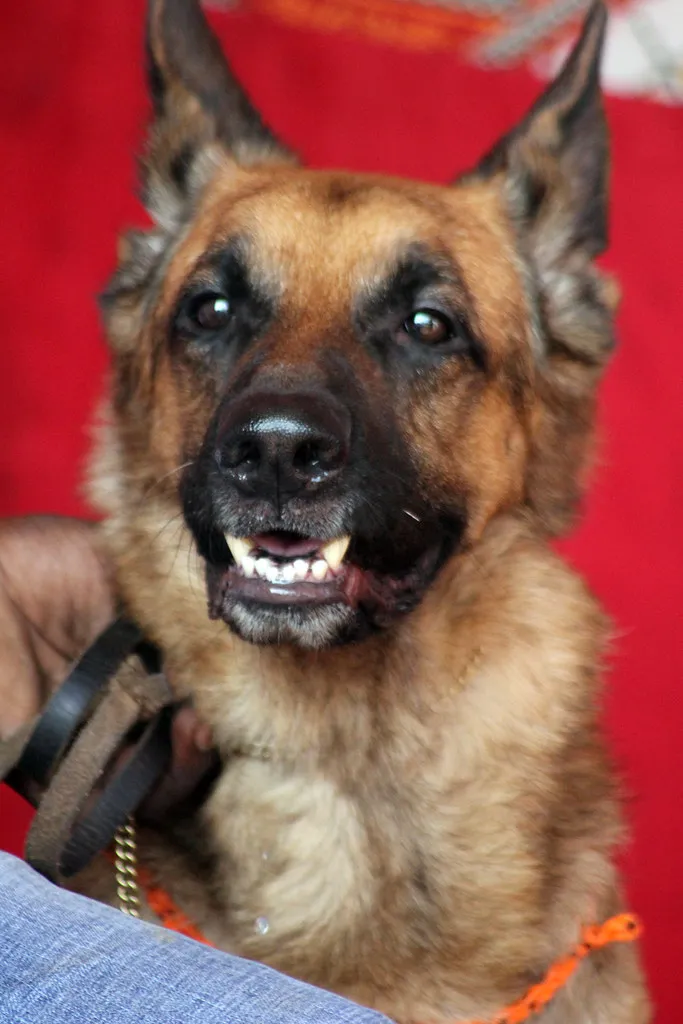
German Shepherd or Labrador is one of the most searched breed comparisons on the internet, and most of the articles answering it are written for a reader who doesn’t really have a job for the dog yet — someone who just wants a family pet and is choosing between the two most popular large breeds in the United States. If that’s you, the short version is that a Labrador is probably the easier first-time large dog, and most comparison pages will tell you that, correctly.
This page is for the other reader. The one who trains seriously, who’s looking at Schutzhund or PSA or mondio, who wants a dog that can work, who lives an active life and needs a partner that matches it. Or the one who just plainly loves the look of a Shepherd, grew up with Rin Tin Tin or K-9 or a family Shepherd, and wants the breed for reasons that have nothing to do with bite sport and everything to do with how the dog makes them feel. Both are legitimate reasons. For that reader, the question isn’t which breed is “better.” It’s which breed was bred to do what your life asks of a dog, and which one matches what you actually want a dog to be in your home. Get that mismatched and you’ll have a miserable dog and a miserable owner. Get it right and you’ll have one of the strongest partnerships you’ll ever have with an animal.
One thing worth saying up front: the German Shepherd has been the prototypical working dog of the last 130 years. Bred as a working tool from day one, still used as one across police, military, protection sport, search and rescue, and herding. The Labrador is also a working breed, and it earns its keep in detection, service, and gundog work. But in the cultural imagination, and in day-to-day modern deployment, “working dog” is more strongly tied to the Shepherd. That’s not an accident or a stereotype. It’s 130 years of selection doing its job.
Both are exceptional breeds. This isn’t a competition, and I won’t pretend to be neutral — this site is called German Shepherd Now for a reason. What follows is where the Labrador wins, where the German Shepherd wins, and where most owners get the decision wrong.
The Quick Verdict
If you want the answer before the analysis, here it is as a decision table. The details come after.
| If you are… | Probably pick | Why |
|---|---|---|
| A first-time large-breed owner, family household, want a warm greeter | Labrador | Higher forgiveness factor, softer temperament, easier social default |
| Doing bite sport, protection work, Schutzhund/IGP/PSA/mondio | Working-line German Shepherd | Bred for exactly this. A Lab cannot do it reliably. |
| Looking for a service dog, detection dog, or retrieval-based working dog | Labrador | Soft mouth, food drive, and non-confrontational temperament are the right wiring |
| Active outdoor family who swims, hikes, and plays fetch daily | Labrador | Built for sustained physical work without the mental-stimulation floor |
| Trainer, handler, or hobbyist who thrives on structured daily work | German Shepherd | Needs the mental work that suits a handler who wants to do it |
| Need a dog that deters and can intervene if a real threat appears | German Shepherd | The presence alone matters, and the breed was built with defense drive |
| You just love the look, the presence, the intensity of the breed | German Shepherd | A legitimate reason and the one most long-time Shepherd owners started with |
| Apartment or small home, limited yard, long work hours | Neither, honestly | Both need more than that. If forced, Lab is the slightly more forgiving choice |
| Multi-dog or cat household, lots of strangers in and out | Labrador | Higher social default with other dogs and unfamiliar people |
Most comparison articles stop somewhere around that table and call it an answer. The rest of this page is for anyone who wants to know why, and for the one piece of context that changes the comparison completely, which hardly anyone writes about.
The Part Most Comparisons Skip: Working Line vs Show Line
Here’s the single biggest reason German Shepherd vs Labrador articles feel vague: “German Shepherd” covers at least three distinct populations today — West German show line, East German (DDR) working line, and Czech working line — and the gap between the extremes is wider than the gap between either one and a Labrador. Compare an average show-line Shepherd to an average Labrador, and you get one answer. Compare a Czech working-line Shepherd to a Labrador, and you get a very different one, because the Czech dog has more in common with a Belgian Malinois than with its own show-ring cousin.
A working-line German Shepherd has what old-school trainers call “hardness” — nerve strength, recovery from pressure, defense drive that switches on when it should and off when it shouldn’t. These dogs were kept true to the 1899 original because they were kept working. They’re not bigger or prettier than show-line Shepherds. They’re usually smaller, plainer, and more intense.
A show-line Shepherd, particularly the heavily-angulated West German show-line that dominates conformation rings, was bred for the show standard over working ability. Most are lovely, stable dogs. They tend to be calmer, softer, more biddable with a gentler handler, and more family-adapted out of the box. Some still carry the working drive of their ancestors; many don’t.
This matters for the comparison because:
- If you’re comparing a Lab to an average show-line Shepherd, the differences in drive and trainability are meaningful but not huge.
- If you’re comparing a Lab to a working-line Shepherd from a proven sport or police line, the differences are enormous. The two dogs are built for different sports entirely.
Most of what follows assumes a working-line or strong show-line Shepherd, because that’s the dog most people picture when they think “German Shepherd.” If you’re looking at a pet-quality show-line, adjust the expectations down on intensity and up on family adaptability.
Size, Weight, and Physical Reality
Both are large breeds, but not identically large.
| Measurement | German Shepherd (male) | Labrador Retriever (male) |
|---|---|---|
| Height at shoulder | 24–26 in (61–66 cm) | 22.5–24.5 in (57–62 cm) |
| Weight (healthy working condition) | 65–90 lb (29–41 kg) | 65–80 lb (29–36 kg) |
| Bite force (approximate PSI) | ~238 | ~230 |
| Build | Athletic, angulated, longer in body | Stocky, square, powerful front |
| Coat | Double coat, medium length | Short, dense double coat |
The weights overlap more than people expect. A lean working-line Shepherd can weigh less than a Labrador in show condition. Where they differ is structure: the Shepherd is longer through the loin and built for sustained trotting, while the Lab is built for explosive bursts and retrieval in water. Watch a Shepherd move at speed and it looks efficient. Watch a Lab crash into surf after a duck and it looks purpose-built.
Hip and elbow dysplasia are concerns in both breeds. According to the Orthopedic Foundation for Animals (OFA) hip statistics, German Shepherds have historically shown higher dysplasia rates than Labradors, largely due to the extreme rear angulation of West German show-line breeding. Responsible breeders in both breeds x-ray and clear their breeding stock. If you’re buying a puppy, demand OFA or PennHIP hip and elbow clearances on both parents — not “vet-checked,” actual clearances. Working-line Shepherds from sport-proven lines tend to have better hips than show lines precisely because the dogs had to move athletically to compete.
Temperament and Drive: What They Were Actually Bred For
This is where the comparison gets interesting, and where most articles hand-wave past the important part.
The Labrador was developed in Newfoundland to retrieve waterfowl and fishing nets from cold water, then refined in Britain as a gundog. Every trait the breed is known for traces back to that job: the soft mouth, the water-loving coat, the patient willingness to sit for hours next to a hunter waiting for birds to fall, the trainable drive to bring things back without damaging them, the non-confrontational temperament that lets the dog work in chaotic multi-dog shooting parties without starting fights.
The German Shepherd was developed in Germany in the late 1890s by Captain Max von Stephanitz, who wanted a versatile working dog — herder first, then protection, then military and police work as industrialization reduced the need for herding. Every trait traces back to that broader job description: the suspicion of strangers (a herding dog on a remote farm had to judge who was a threat), the strong defense drive, the willingness to engage, the nerve to hold position under pressure, the trainability for complex tasks.
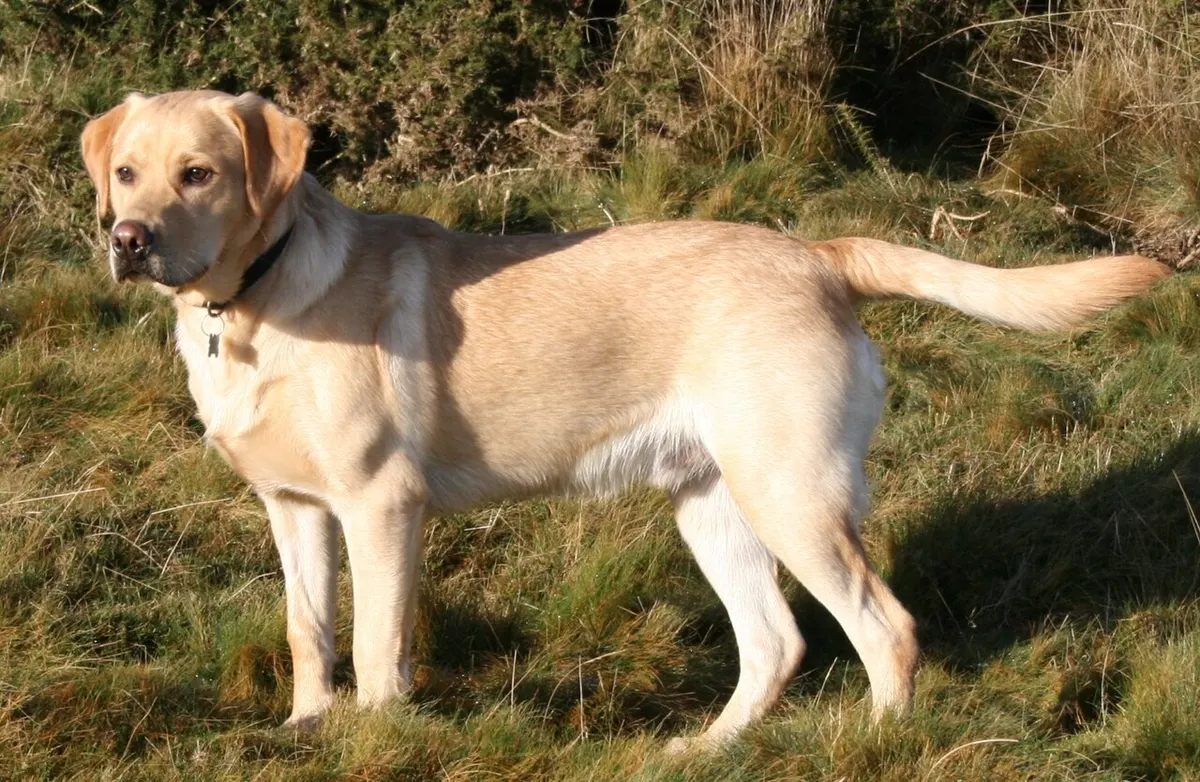
These aren’t better or worse traits. They’re different traits for different jobs. A Lab that tries to do protection work will usually fail because the wiring is wrong — the breed was selected against confrontation for 150 years. A Shepherd that works as a therapy dog in a nursing home can absolutely do it, but the temperament fit is less natural than a Lab’s, and most therapy dog programs know this.
In real life with a companion dog, the practical differences show up as:
- Stranger greetings. A Lab’s default is “new friend.” A Shepherd’s default is “who are you and why are you here.” Both are trainable, neither should be aggressive, but the starting point is different.
- Recovery from pressure. A Shepherd bounces back from an environmental scare or a harsh correction faster than most Labs. This is why they’re used in police work.
- Multi-dog tolerance. Labs generally live easier in multi-dog households. Shepherds can, but take more management, particularly same-sex pairs.
- Reactivity. An under-socialized Shepherd can become reactive toward dogs and strangers. An under-socialized Lab is usually still a friendly mess, just a poorly-behaved one.
Trainability: Two Kinds of Smart
Stanley Coren’s research on dog intelligence, published in The Intelligence of Dogs, ranks breeds by how quickly they learn new commands and how reliably they obey on the first request. German Shepherds rank #3 overall, Labradors rank #7. Both are in the top 10, which puts them among roughly 2% of all breeds.
The rank is misleading, though, if you read it as “GSDs are smarter than Labs.” Coren’s rank measures working and obedience intelligence, not adaptive intelligence, not problem-solving, not emotional reading of humans. And the difference between #3 and #7 in everyday training is tiny compared to the difference between a well-trained Lab and a poorly-trained Shepherd of the same raw ability.
What matters more is how each breed learns:
Labradors learn through motivation and repetition. A Lab with a food reward and a clear routine will learn almost anything. Their biggest trainability weakness is adolescence — Labs mature slowly, sometimes not really settling into working mode until 2 or 3 years old, and the teenage phase can be chaotic. They’re forgiving of handler mistakes, though, and quick to bounce back from a bad training session.
German Shepherds learn through understanding and relationship. A Shepherd wants to know why, not just what. They pick up complex multi-step behaviors faster than most breeds, but they also pick up on handler inconsistency faster, and a Shepherd who decides you don’t actually mean it will test you more than a Lab will. This is why experienced trainers say Shepherds “train their owners” — the feedback loop is sharper in both directions.
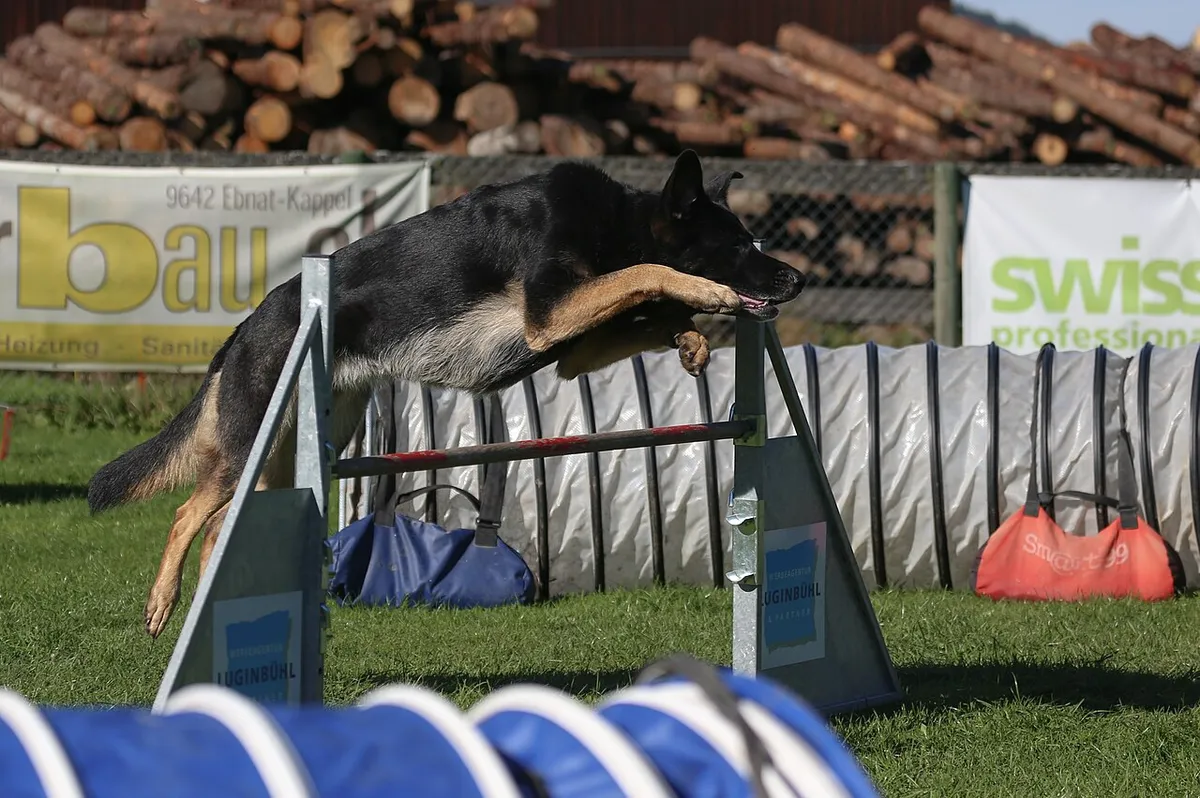
In working dog sports, both breeds compete at the top level in their respective disciplines. You will find Labs winning field trials, detection trials, and obedience competitions. You will find Shepherds winning IGP, mondio, French ring, PSA, and international working trials. You will not find Labs in those protection-sport winners’ circles, not because they can’t learn obedience but because the protection phase requires temperament they don’t have.
Exercise: Same Hours, Different Work
Both breeds need about the same amount of exercise — 60 to 120 minutes of real activity a day, plus mental engagement. The hours are similar. The content is not.
A Lab is mostly fine with physical outlets. A long walk, a swim, a half-hour of fetch, and a short training session will cover most days. The Labrador’s energy is spent primarily through the body, and a physically tired Lab is a happy Lab. This is why Labs do so well with active but not necessarily dog-obsessed households — a runner, a surfer, a fisherman, a family that hikes on weekends.
A German Shepherd needs mental work on top of the physical. A Shepherd who ran for an hour and then watched you work at your laptop all day isn’t tired; he’s bored and frustrated, which is a different state and produces different behaviors. Scent work, structured obedience, tracking, protection training, problem-solving games, and daily training sessions are what actually satisfy the breed. The rough rule I’ve used across four Shepherds in thirty years is this: for every hour of physical exercise, you need at least twenty minutes of mental work, or the dog isn’t really tired.
Health, Lifespan, and Breed-Specific Concerns
Life expectancies are similar but lean slightly in the Lab’s favor.
| Health topic | German Shepherd | Labrador Retriever |
|---|---|---|
| Typical lifespan | 9–13 years | 11–13 years |
| Hip dysplasia | Moderate to high prevalence, varies by line | Moderate prevalence |
| Elbow dysplasia | Moderate prevalence | Moderate prevalence |
| Bloat (GDV) risk | Elevated (deep-chested) | Elevated (deep-chested) |
| Degenerative myelopathy | Breed-associated | Rare |
| Obesity | Lower rates | High — around 60% of UK Labs overweight per PDSA PAW reports |
| Exercise-induced collapse | Rare | Present in some lines, genetic test available |
The Shepherd’s shorter average lifespan is partly genetics and partly the extreme angulation in show-line breeding that contributes to joint and spinal problems. A well-bred working-line Shepherd from hip-tested parents often lives to 12 or 13. My first Shepherd, Bruce, made it to 14, which was always partly luck but also partly that he was a stable, working-type dog rather than a heavily angulated show specimen.
The Labrador’s biggest health risk in 2026 is actually obesity. A landmark study identified a gene variant in Labs that affects appetite regulation, and the practical consequence is that Labs will eat themselves into joint problems and diabetes if their food isn’t measured. If you’re a Lab owner who feeds by the scoop instead of by weight, the odds are you’re overfeeding. Our German Shepherd feeding portions guide covers measured-feeding principles that apply to both breeds.
Working Roles: Where Each Breed Dominates
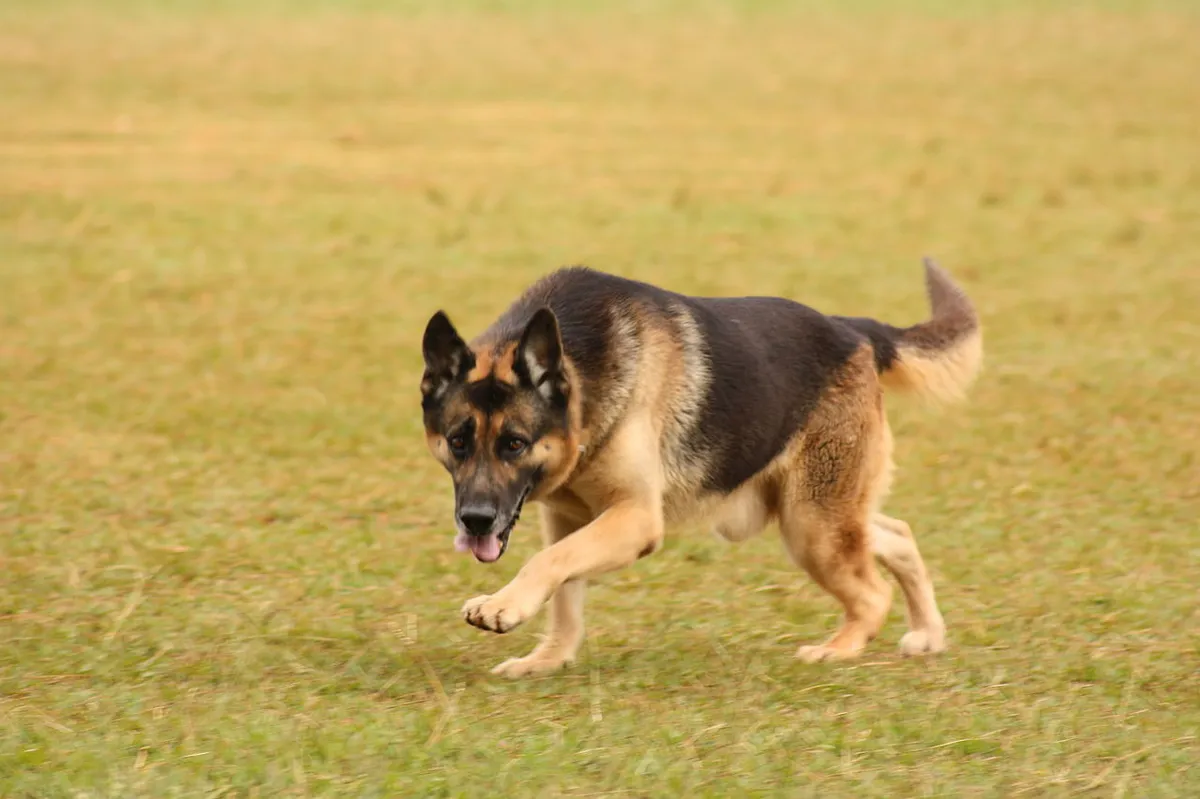
This is the section most family-pet comparison articles avoid entirely, but for an active-owner audience it matters more than coat color or size.
German Shepherds dominate in:
- Police patrol work. Suspect apprehension, building searches, handler protection — the GSD’s combination of nerve strength, defense drive, and trainability is still the default for most agencies, though Belgian Malinois have taken ground in recent decades for their higher drive and lighter weight.
- Military working dog roles. The US military still uses GSDs and Malinois for patrol, detection, and specialized operations. The breed’s history with the Schutzstaffel in WWII Germany is uncomfortable but the working tradition predates it and continues globally.
- Protection sport. IGP (formerly IPO/Schutzhund), mondio ring, French ring, PSA, KNPV — the Shepherd is a top-tier competitor in every discipline that includes bite work.
- Search and rescue. Air scent, ground scent, wilderness, disaster. Both breeds appear in SAR, but Shepherds are particularly common in handler-protection SAR roles.
- Herding trials. The breed’s original job. Still done, still good at it.
Labradors dominate in:
- Narcotics and explosives detection. A 2020 study across four police dog breeds found that Labrador Retrievers had the highest correct alert rates and the lowest false alert rates for narcotics detection. The soft temperament works well in airports, schools, and public environments where a Shepherd’s presence would alarm civilians.
- Guide dogs for the blind. The dominant breed in guide dog programs worldwide. Temperament, trainability, and public access temperament all align.
- Service dogs for mobility, medical alert, and PTSD. Labs are overrepresented in assistance dog programs for the same reason.
- Field trials and hunt tests. The original job. Retrieval, marking, steadiness, water work.
- Therapy work. The social default makes them naturals.
These lists aren’t interchangeable. A Lab can’t reliably do police patrol work, and a Shepherd is a harder fit for public-access guide work. Neither is a failure of the breed; they’re designed for different jobs.
Shedding and Grooming Reality
Both breeds shed. If you hate dog hair, neither is the answer. But the experience is different.
A Labrador sheds at a steady low-to-medium level year-round, with two modest seasonal peaks. A weekly brush and an occasional bath keeps it manageable.
A German Shepherd sheds at a steady medium level year-round and then has two massive coat blows, usually spring and fall, when the undercoat comes out in sheets for two to three weeks. During those weeks you can rake out a grocery bag of undercoat per session and still find more the next day. A slicker brush, an undercoat rake, and acceptance are required. Nutrition matters for coat quality more than most owners realize, too — we cover the reasoning and the tools over in our German Shepherd feeding hub.
Neither breed needs professional grooming in the cut-and-style sense. Both need regular nail trims, ear checks (Labs particularly — the floppy ears trap moisture and get infected), and teeth care. Ear infections are more common in Labs because of ear structure; anal gland issues show up in both.
The Failure Modes: How It Goes Wrong
This is the section that decides whether you’re ready for either breed. Both of these dogs fail predictably when the fit is bad, and knowing the failure mode up front is worth more than any list of positive traits.
How a wrong-fit Labrador fails:
- Obesity. The food drive is a gift and a liability. Free feeding and unmeasured meals make a Lab fat within a year.
- Destructive chewing, usually through adolescence (6 months to 2 years). A Lab that doesn’t get enough physical outlet will chew a couch, a wall, a car interior.
- Pulling on leash. A 75-pound Lab in drive on a flat collar has dragged more owners off their feet than any breed I can think of.
- Over-friendliness as a problem, not a virtue — jumping on visitors, knocking over children, stealing food off counters.
- Joint problems by middle age if the weight was never managed.
These are mostly solvable with structure, measured feeding, daily exercise, and basic obedience. Most Labs that end up in rescue are there because the owner underestimated puppyhood and the dog never got properly trained, not because the breed is unmanageable.
How a wrong-fit German Shepherd fails:
- Separation anxiety and crate destruction, often severe.
- Reactivity toward dogs and strangers, starting around 6 to 12 months and worsening if untreated.
- Destructive behavior when under-stimulated — doors, walls, furniture.
- Resource guarding, handler aggression, or fear-based biting if genetics and socialization fail together.
- Euthanasia or rehoming by age 2 or 3 in the worst cases.
These are harder to solve than Lab failures because the temperament is harder, the bite risk is real, and the rescue network for Shepherds is chronically full. A poorly-bred, under-socialized, under-trained Shepherd is a genuine risk — not because the breed is dangerous in the abstract, but because the specific dog was set up to fail.
If those lists scare you off either breed, that is the right response. Neither is an easy first dog. Both reward the owners who treat them as serious commitments.
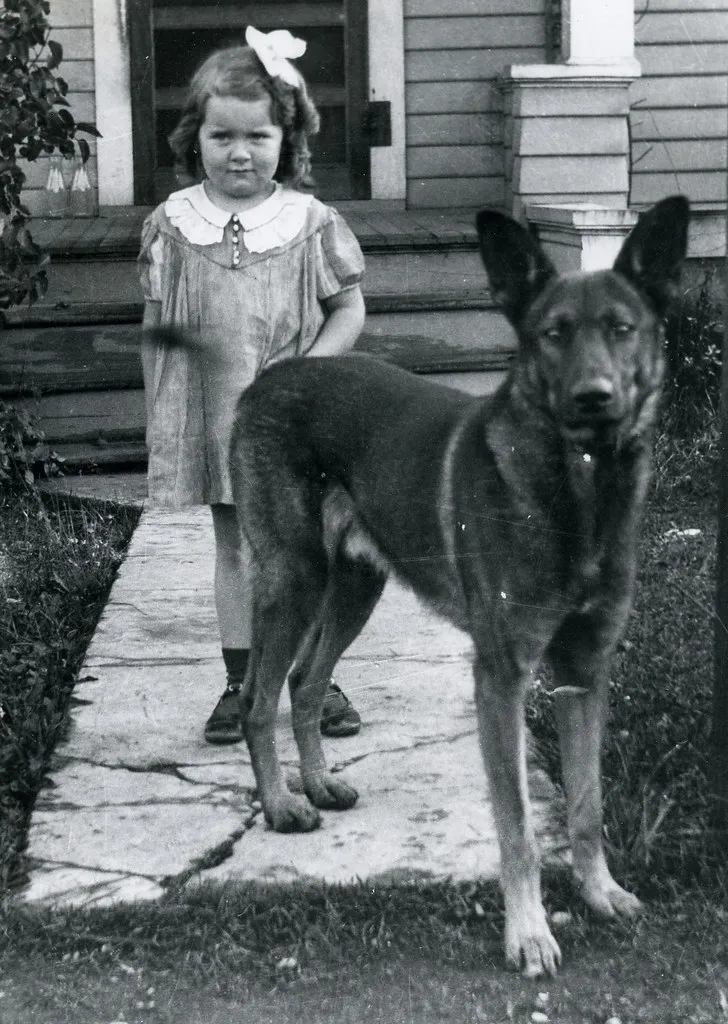
Who Should Pick the German Shepherd
Working reasons and training reasons are the ones most people focus on, but they’re not the only legitimate ones. Pick the German Shepherd if several of these are true:
Working and training reasons:
- You want a dog that’s a training partner, not just a companion. You look forward to daily structured sessions.
- You have a reason for the dog: sport, work, an active lifestyle that includes the dog as a participant rather than an observer.
- You understand the mental-work requirement and have the time for it.
- You want the presence — the sense that there’s a dog in your house that would intervene if something was wrong. Even if it never happens, the deterrent is real.
Aesthetic, emotional, and personality reasons (just as valid):
- You love the look of the breed. The wolf-like profile, the erect ears, the way a well-built Shepherd moves at a trot. Some people are drawn to the Shepherd’s silhouette the way other people are drawn to horses or to a specific make of car. That’s a real reason.
- You want the loyalty. Shepherds bond deeply to one household — sometimes to one person — in a way that’s more intense than most breeds. If that kind of one-dog-one-handler relationship is what you’re after, the Labrador’s more social default can actually feel diluted by comparison.
- You grew up with the breed, or watched Rin Tin Tin or K-9 or Inspector Rex as a kid, and you’ve wanted a Shepherd of your own ever since. The cultural pull of this breed is real, and an owner who’s been waiting 20 years for their first Shepherd usually puts in the work that makes the dog succeed.
- You value the intensity of the relationship over the ease of it. A Lab is easier to live with. A Shepherd is more of an experience.
- You want a dog that feels serious. Not mean, not aggressive — just serious. The Shepherd carries a weight to it that most breeds don’t, and for some owners that’s exactly what they want in their home.
Practical reality checks:
- You’re not the type to rehome a dog when adolescence gets hard.
- You accept the shedding, the health risks, the shorter average lifespan, and the lower social-default with strangers as part of the deal.
If you’re an experienced handler or trainer looking specifically at bite sport, working-line is the right choice and you already know what to look for. If you’re an active family, a serious hobbyist, or someone who just plain loves the breed aesthetically and emotionally, a well-bred show-line or pet-line Shepherd from a breeder who prioritizes temperament is a better fit than most working-line dogs. There’s nothing wrong with wanting the breed for the look and the bond rather than the bite work. Most Shepherd owners, historically, have owned the breed for exactly those reasons.
The pitch for the breed: there is nothing quite like the partnership with a German Shepherd, working-type or otherwise. The reason old-school handlers come back to the breed after trying others is that the relationship has a weight to it that lighter breeds don’t. But you earn it. The breed does not give it away.
Who Should Pick the Labrador
Pick the Labrador if several of these are true:
- You want a dog that fits a family first and a lifestyle second.
- You swim, hike, hunt, or do field activities and want a dog that can join all of it without needing its own training schedule.
- You have kids, or you expect kids, and want a dog whose default with a toddler pulling its ear is to sigh rather than escalate.
- You need a service, detection, or retrieval-based working dog. This is the Lab’s home turf.
- You’re a first-time large-breed owner and you’re honest about not knowing everything. A Lab will forgive the mistakes.
- You accept that you have to manage the food carefully for the dog’s entire life.
The pitch for the Lab: it earns its #1 AKC registration spot on genuine merit. Not the best at any one working discipline, but top-tier at more roles than almost any other breed, and the temperament means it slots into more households without major modification. “Boring” is the wrong word — they’re reliably good-natured, which is a rarer trait than most owners realize until they’ve lived with a dog that isn’t.
A Note on the Belgian Malinois Question
If you found this page while shopping working dogs, you probably already know that the Belgian Malinois has been eating into German Shepherd territory in police, military, and sport work for two decades. The short version: a Malinois is typically higher drive, faster, lighter, and requires an experienced handler most first-time owners aren’t. If you’re choosing between a Shepherd and a Lab for an active home, you almost certainly shouldn’t be looking at Malinois — if you were ready for one, you probably wouldn’t have landed on a comparison page. For serious working homes, the Malinois vs working-line GSD decision is its own article, and usually comes down to handler preference and the specific sport.
The Bottom Line
German Shepherd vs Labrador is not the question most people think it is. The real question is what you need a dog to do with you, and whether you’re the kind of owner who matches what the breed needs back.
For most first-time owners and most families, a Labrador is the more forgiving choice and the most common-sense answer. That’s why the AKC puts it at #1 year after year. It’s popular for good reasons.
For active trainers, working-dog enthusiasts, handlers who want a partner that rewards intense training, and owners who value presence and a serious working tradition — the German Shepherd is the answer, and no Labrador is going to replace what a well-bred working-type Shepherd brings to the relationship. The breed asks more of you, and it gives more back.
Pick the one that matches your life. Don’t pick the one that matches your image of what a cool dog owner looks like. The mismatch is where the trouble starts, and both breeds deserve better than that.
Follow new work
A new guide every week or so.
Roughly one new guide every week or so. Cost data, feeding research, breed health — sourced and dated. By Sam, in Belgium.