German Shepherd Breed Guide
German Shepherds bond hard. They follow you from room to room, position themselves where they can watch you, and notice the moment you pick up your keys. That loyalty is part of what makes them outstanding working dogs. It is also what makes them one of the breeds most prone to separation anxiety.
If your Shepherd destroys things, barks nonstop, or has accidents only when you leave, anxiety is likely the reason. Not a training failure. A real behavioral condition — and the approach that works depends on how severe it is.
How Severe Is Your Dog’s Anxiety
Not every dog that dislikes being alone has clinical separation anxiety. Where your dog falls on this spectrum determines what to do.
| Severity | What It Looks Like | What To Do |
|---|---|---|
| Mild — adjustment stress | Whines 10–15 minutes after you leave, then settles. No destruction, no soiling. Common in puppies and newly adopted dogs. | Build a routine, reward calm independent settling, practice short absences. Usually resolves in 4–8 weeks. |
| Moderate — consistent distress | Barks or paces 30+ minutes. May chew furniture or scratch at doors. Happens most departures. Where most Shepherd owners land. | Run the graduated absence protocol below. Add daily exercise, enrichment, and a midday break for 8-hour workdays. 3–6 months. |
| Severe — full panic | Destroys doors, windows, or crates. Injures itself. House soils every time. Cannot self-soothe at all. | Do not DIY. Book a veterinary behaviorist (DACVB). Medication is usually part of the plan. 6+ months. |
“Separation anxiety is one of the most common behavioral problems in dogs, affecting an estimated 20% of the clinical population.”
— Canine Separation Anxiety: Strategies for Treatment and Management, PMC/Journal of Veterinary Behavior (2020)
Why Shepherds Are More Prone Than Most Breeds
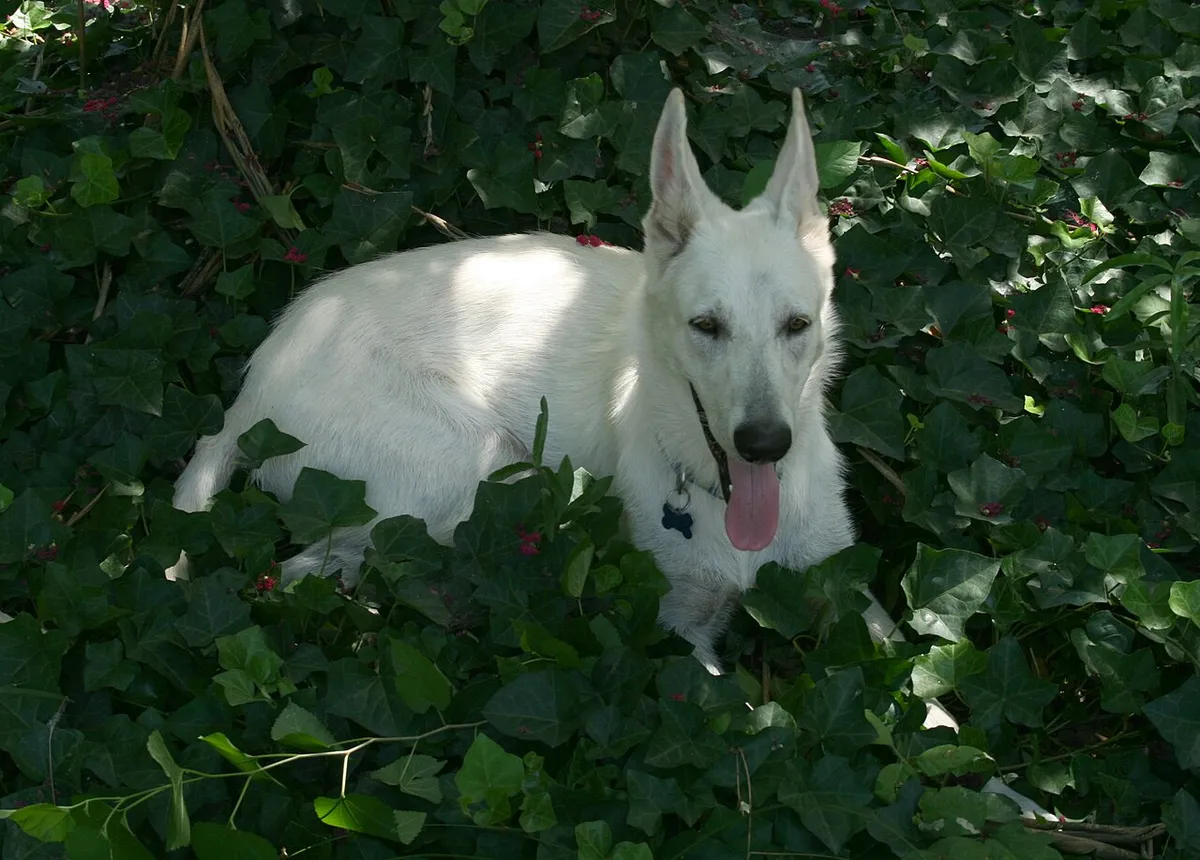
The breed was designed to work alongside a handler all day. Herding, guarding, patrolling — always near a person, always with a job. That genetic wiring does not switch off because the dog lives in a house now.
Handler attachment. The AKC breed profile describes them as “loyal, courageous, confident” with “a willingness to put their life on the line.” That bond cuts both ways. When the person leaves, some dogs genuinely struggle.
Sensitivity to routine. These dogs learn patterns fast. They know your morning routine, your departure cues, the sound of your car. They start stressing before you reach the door.
High intelligence with nowhere to put it. A smart working breed without stimulation or purpose becomes an anxious dog. Shepherds do not sit quietly and wait. They process, anticipate, and worry.
Bruce, my first Shepherd, always wanted to come along — everywhere, every time. That “velcro dog” trait is endearing until it becomes distress when you actually have to leave.
Signs to Watch For
Some signs are obvious. Others are easy to miss or blame on something else.
Exit-focused destruction. Anxious dogs target doors, windows, and crates — not random objects. A bored dog chews a shoe. An anxious dog tears the trim off a doorframe trying to follow you. Broken teeth and bloody paws from scratching at doors are not uncommon in Shepherds.
Persistent vocalization. Barking, howling, and whining that starts shortly after you leave and does not let up. Bored barking is intermittent. Anxiety barking is continuous and often high-pitched — see our barking guide for how to tell the types apart. Set up a camera or ask your neighbors — they usually know before you do.
Pacing in fixed patterns. Back and forth along a fence, around a room in a loop, along windows. Repetitive and purposeless.
House soiling. A housetrained adult that only has accidents when left alone. The stress response overrides years of reliable training. This is not spite. Dogs do not work that way.
Pre-departure panic. Panting, trembling, drooling, or shadowing you more closely than usual when you start getting ready to leave. If the anxiety starts before you are gone, that confirms the pattern.
What Makes It Worse
Several common owner responses accidentally reinforce the problem:
Dramatic departures and arrivals. Long goodbyes, baby talk, emotional reunions. From the dog’s perspective, your anxiety about leaving confirms that leaving is something to worry about. Walk out calmly. Come back calmly.
Comforting the dog during a reaction. Petting and soothing words while the dog is panicking teaches the dog that distress gets closeness. The behavior gets reinforced.
Isolating the dog when it gets bad. Removing the dog to a back room or crate every time prevents the dog from ever learning to cope. The anxiety stays frozen because the dog never practices calm behavior during departures.
Punishment after the fact. Coming home to destruction and scolding the dog does nothing. The dog cannot connect punishment to something that happened hours earlier. It increases anxiety about your return, making the next departure worse. The AVSAB position statement on humane training is clear: aversive methods increase fear-based behaviors.
The Graduated Absence Protocol
This is the approach recommended by veterinary behaviorists. It works for mild to moderate cases. It is not fast.
Step 1 — Desensitize Departure Cues
Pick up your keys and sit back down. Put on your coat and watch TV. Open the front door and close it again. Repeat until these cues stop triggering a stress response. This takes days of repetition, not one session.
Step 2 — Practice Micro-Absences
Step outside for 5 seconds. Come back in calmly. No fanfare. Repeat. Gradually increase to 10 seconds, 30 seconds, 1 minute, 3 minutes. The rule: if the dog panics, you jumped too far. Drop back to the last duration that worked.
Over days and weeks, build to 15 minutes, then 30, then an hour. The progression is not linear. Some days you go backward. That is normal.
Step 3 — Layer in Obedience
Once your dog can handle 10–15 minutes alone, add a “place” or “go to bed” command before you leave. The dog goes to its mat, you leave, you come back, you reward. The mat becomes the job. The job replaces the panic.
Step 4 — Extend to Real Departures
When you can leave for 60–90 minutes without a reaction, you are past the critical threshold. Most dogs that can handle 90 minutes can handle 4+ hours. The anxiety peaks in the first 15–20 minutes after departure. If the dog can get through that window, it usually settles.
Realistic timeline: Expect 4–8 weeks for mild cases, 3–6 months for moderate cases with consistent daily practice. Severe cases with medication support may take 6+ months. There are no shortcuts.
The Working-Owner Daily Schedule
The biggest gap in most separation anxiety advice: it assumes you are home all day to do training. Here is a realistic protocol for someone who works 8 hours.
Morning (before work):
- 30–45 minute walk or active play session. A tired dog is a calmer dog.
- Feed breakfast in a puzzle feeder or frozen Kong. This occupies the first 15–20 minutes after you leave — the peak anxiety window.
- Leave calmly. No goodbye ritual.
While you are gone:
- Set up a pet camera so you can check in. Knowing whether your dog settles after 20 minutes or panics for 4 hours changes your approach.
- If the dog is not settling: arrange a midday dog walker, ask a neighbor to visit, or consider doggy daycare 2–3 days per week while you work through the protocol. During initial training, avoid leaving a moderate-to-severe dog alone for a full 8 hours — it undoes progress.
Evening:
- Low-key arrival. Ignore the dog for the first 2 minutes, then calmly greet.
- Do one training session: a short graduated absence practice (even 10 minutes of step-in/step-out repetition helps).
- Provide mental stimulation — training games, scent work, or a chew session.
Weekends: This is where the real training happens. Use Saturday and Sunday to run longer graduated absence sessions when you can control the timing.
“Dogs administered medication concurrently with behavior modification improved more than dogs that received a placebo and behavior modification alone.”
— Canine Separation Anxiety: Strategies for Treatment and Management, PMC/Journal of Veterinary Behavior (2020)
When You Need Professional Help
If your Shepherd is injuring itself, destroying doors or crates, or showing no improvement after 6–8 weeks of consistent graduated absences, this is beyond self-guided training.
A board-certified veterinary behaviorist (DACVB) can assess whether medication would help. Anti-anxiety medications like fluoxetine, clomipramine, or trazodone are not sedatives. They lower baseline anxiety enough for behavioral modification to actually take hold. Research shows dogs on medication combined with behavior modification improve more than dogs on behavior modification alone.
Your regular vet may prescribe medication, but a behaviorist provides a comprehensive treatment plan. Our training cost guide covers what each tier charges, and calming supplements are a reasonable adjunct for the milder end. The cost of a behaviorist consult is real, but it usually pays for itself by preventing destroyed doors, crates, and emergency vet visits — see the broader German Shepherd cost breakdown for context. If you have not yet found a vet who knows the breed well, the how to find a vet for a German Shepherd guide walks through that decision.
For mild to moderate cases, a CPDT-KA certified trainer with separation anxiety experience can guide you through a structured protocol. Some now offer virtual sessions where they watch camera footage and adjust your plan remotely.
What Realistic Progress Looks Like
You will probably not turn an anxious Shepherd into a dog that barely notices you leaving. That is not a realistic goal for this breed.
What you can achieve:
- A dog that settles within 10–15 minutes of your departure instead of panicking for hours
- A dog that can handle a normal workday (6–8 hours) without destruction or house soiling
- A dog that watches you get your keys without trembling
- Reduced vocalization to occasional whining rather than continuous barking
That is a well-managed Shepherd. Not a dog that has been trained out of its nature, but one that trusts you will come back.
Prevention is easier than treatment. Much of what looks like separation anxiety in a young dog is the adolescent phase instead, and our German Shepherd behavior and temperament guides cover how the two get confused. If you have a puppy, practice short absences from day one. Encourage independent settling — reward calm behavior when the dog lies on its bed instead of pressed against your legs. Avoid constant togetherness, even if you work from home. The temperament patterns laid out in our German Shepherd breed characteristics guide help explain why this breed especially needs that early independence work, and the first-time owner mistakes guide covers the common ways new owners accidentally build anxiety into the relationship.
Follow new work
A new guide every week or so.
Roughly one new guide every week or so. Cost data, feeding research, breed health — sourced and dated. By Sam, in Belgium.
Related Articles

How to Stop a German Shepherd from Barking Excessively
Why German Shepherds bark so much and proven fixes for each type. Covers alert, demand, boredom, anxiety, and night barking with step-by-step protocols.

German Shepherd Breed Characteristics
Complete guide to German Shepherd breed characteristics: AKC size standards, temperament, intelligence ranking, coat types, health, and family suitability.
How to Find a Good Vet for Your German Shepherd
How to find a vet who knows German Shepherds: what to look for, what to ask, the specialists that matter, and how to prepare for bloat before it happens.

First-Time German Shepherd Owner Mistakes to Avoid
Experienced German Shepherd owners share the costly mistakes they wish they had avoided. Covers socialization, exercise, feeding, budgeting, and shedding.