German Shepherd Breed Guide
These two breeds get compared constantly, and it makes sense. Both are intelligent, loyal, driven dogs used extensively in police and military work. They look similar enough that people confuse them regularly. But living with a German Shepherd and living with a Belgian Malinois are very different experiences.
Both are excellent breeds. But they are built for different lifestyles, and choosing the wrong one causes problems for the dog and the owner.
Size and Build
Shepherds are the larger breed. Adult males typically weigh 65-90 pounds and stand 24-26 inches at the shoulder. Females run 50-70 pounds (see our male vs female German Shepherd guide for the full sex breakdown). They have a heavier bone structure, a broader chest, and that distinctive sloped back in show lines (working lines tend to have a more level topline, depending on the breed line).
Belgian Malinois are leaner and lighter. Males weigh 60-80 pounds, females 40-60 pounds. They stand roughly the same height as Shepherds but carry less mass. The build is more angular, more obviously athletic. A Malinois looks like a dog designed for speed and agility. A Shepherd looks like a dog designed for endurance and versatility.
According to the AKC breed standards, both breeds are classified as herding dogs, but their physical builds reflect different working priorities.
Side-by-Side: How They Actually Compare
The full comparison, in one table.
| Trait | German Shepherd | Belgian Malinois |
|---|---|---|
| Height (M / F) | 24-26 / 22-24 in | 24-26 / 22-24 in |
| Weight (M / F) | 65-90 / 50-70 lb | 60-80 / 40-60 lb |
| Build | Heavier bone, broader chest | Lean, angular, athletic |
| Daily exercise floor | 1-2 hours | 2+ hours high-intensity |
| Can settle indoors | Yes, after activity | Difficult; needs structure |
| First-time owner suitability | Moderate | Very low |
| Family-with-kids fit | Strong | Weak (reactivity risk) |
| Reactivity threshold | Moderate | Very low (fires fast) |
| Median lifespan | 10.3 years (O’Neill 2017) | about 12-14 years (breed-club est.) |
| Hip dysplasia (OFA) | 18.9% | about 5% (lower, but present) |
| Common working role | Patrol, detection, service, SAR | Bitework, elite military, protection sports |
| Typical breeder price | $1,500-$3,000 | $1,500-$3,000 |
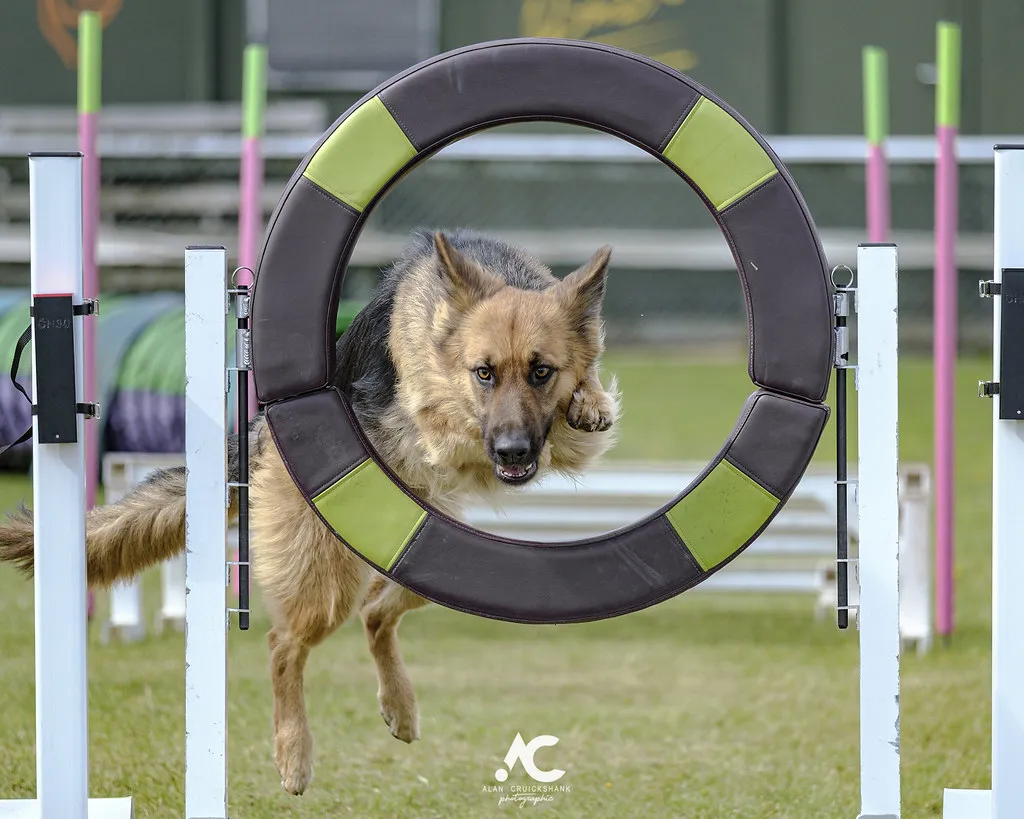
Energy Level and Exercise Demands
This is where the biggest practical difference lives.
Shepherds are active dogs. They need daily exercise, mental stimulation, and a job to feel satisfied. A solid hour of activity per day keeps most adult Shepherds content. They can also relax. After a good walk and some training, a Shepherd will lie at your feet and settle.
A Belgian Malinois operates at a different intensity. These dogs do not have an off switch. They need not just exercise but sustained, purposeful, high-intensity activity. A walk around the block does nothing for them. They want to run, chase, bite (in a working context), jump, and solve problems, and they want to do it for hours. When a Malinois is under-stimulated, they do not just get restless. They become destructive in ways that surprise even experienced dog owners.
A Shepherd that misses a walk might chew a shoe. A Malinois that misses adequate activity might dismantle a door frame.
Temperament: Confident vs. Intense
Both breeds bond deeply with their handlers and are naturally protective. The differences show up in reactivity, intensity, and social flexibility.
Shepherds tend to be more versatile in temperament. They can be confident and assertive or calm and easygoing, depending on the line and the individual. Most well-socialized Shepherds are good with children, tolerant of household chaos, and able to adapt to different situations. They are watchful without being wired.
Belgian Malinois are more reactive by nature. They notice everything and respond to everything. In a working context, this is an asset. In a family home, it means a dog that may react sharply to unexpected stimuli: a child running, a door slamming, a stranger approaching. This does not make them aggressive, but it does mean they require a handler who understands and manages that reactivity.
“The Belgian Malinois is an alert, high-energy breed that bonds strongly to its handler. These dogs require experienced ownership and consistent management.”
— American Belgian Malinois Club, Breed Information
How Trainability Compares
Both breeds are among the most trainable in the world. That is not the issue. The difference is what happens when training is inadequate.
A Shepherd with inconsistent training becomes a nuisance. They might pull on the leash, jump on guests, or bark too much. These are manageable problems.
A Malinois with inconsistent training becomes a serious handful. Their drive and intensity, when not properly channeled, lead to behaviors that most pet owners are not equipped to handle: obsessive behavior, redirected biting, extreme reactivity, and an inability to relax. Malinois are not forgiving of training gaps.
If you are a first-time dog owner or someone who trains casually, the Shepherd is a far more appropriate choice. Malinois do best with experienced handlers who understand operant conditioning, drive management, and structured routines.
Health Risks and Veterinary Costs
Both breeds are generally robust, but they face different health challenges.
Shepherds are commonly associated with:
- Hip and elbow dysplasia (among the most frequently affected breeds, according to OFA data)
- Degenerative myelopathy
- Bloat (gastric dilatation-volvulus)
- Exocrine pancreatic insufficiency
- Allergies and skin conditions
Belgian Malinois tend to have fewer structural issues but are not without health concerns:
- Hip dysplasia (less prevalent than in Shepherds, but still present)
- Progressive retinal atrophy
- Cataracts
- Epilepsy
Overall, Malinois tend to have fewer inherited structural problems, partly because the breed has been less affected by show-line breeding practices that have altered conformation. Shepherds from show lines in particular carry a higher burden of orthopedic issues.
Cost of Ownership Compared
The purchase price is roughly similar. Both breeds from reputable breeders typically run $1,500-$3,000, with working-line dogs from titled parents commanding higher prices in both breeds.
Where costs diverge is in long-term health expenses. Shepherds are more likely to require treatment for hip dysplasia, joint problems, and digestive conditions. A Shepherd’s lifetime health costs tend to run higher than a Malinois’s. For a detailed breakdown, see our German Shepherd cost guide, lifetime cost estimate, and pros and cons breakdown.
A Malinois that does not get adequate mental and physical stimulation generates costs another way: property damage, which is only half a joke.
Which Breed Fits Family Life Better?
For families weighing these two, the answer is not close.
Shepherds are better family dogs. This is not a knock on the Malinois. It is a recognition of what each breed was refined for. Shepherds have been bred for decades as both working dogs and companions. They have a broader temperament range and a greater capacity to adapt to household life with children, other pets, and the general unpredictability of a family environment.
A well-bred, well-socialized Shepherd fits into family life naturally. They are patient with children (within reason), protective without being reactive, and capable of settling down after exercise. Our is a German Shepherd right for me guide walks through the full household-fit test.
A Malinois in a family setting can work, but it requires significantly more management. Their reactivity around children, their intensity, and their low tolerance for boredom make them a poor match for families with young kids, chaotic schedules, or limited dog experience. Malinois thrive with single owners or couples who are deeply committed to the dog’s physical and mental needs.
Exercise: How Much Each Breed Needs Daily
To put a number on it:
- German Shepherd: 1-2 hours of daily exercise (walks, play, training). Can handle a rest day without incident.
- Belgian Malinois: 2+ hours of high-intensity exercise daily (running, agility, bitework, advanced obedience). Rest days are difficult for the dog and the owner.
A Shepherd that gets a solid walk and 20 minutes of training is a happy dog. A Malinois that gets the same will find their own entertainment, and you will not enjoy what they choose.
Decision Flow: Which Breed Fits Your Life
Three questions, in order. If you stop early, you have your answer.
Run them in order. If you stop at any step, you have your answer.
- Q1 Can you commit 2+ hours every day to intense physical and mental work — through rain, holidays, and bad weeks?
- No GERMAN SHEPHERD.The right fit for most homes. A Shepherd is happy with a solid walk and 20 minutes of training; a Malinois will find their own entertainment.
- Yes Continue to Q2.
- No
- Q2 Are you an experienced large-breed handler with no young kids underfoot?
- No GERMAN SHEPHERD.Wider safety margin. The Malinois drive level is unforgiving of handler mistakes and household chaos.
- Yes Continue to Q3.
- No
- Q3 Is your goal a true working role — IGP/Schutzhund, detection, protection sport, or active dog sport competition?
- No GERMAN SHEPHERD.Versatile partner. The Shepherd covers companion, family, and most working roles without the all-day intensity floor of a Mal.
- Yes BELGIAN MALINOIS.The right tool for high-drive working contexts. Buy from a working-line breeder with proof of titles, not show pedigree.
- No
The Recommendation for Most Owners
If you are weighing these two breeds, here is the straightforward answer.
Choose a German Shepherd if:
- You have a family with children
- You want a versatile companion that can hike, train, and also relax on the couch
- You are a first-time or moderately experienced dog owner
- You have 1-2 hours daily for exercise and training
- You want a protective dog that does not require constant management
Choose a Belgian Malinois if:
- You are an experienced handler, ideally with working dog background
- You have a specific working purpose in mind (protection sports, detection, competition obedience)
- You can commit 2+ hours daily to high-intensity exercise and training
- You do not have young children
- You want an extremely driven, responsive working partner
Most families should choose the German Shepherd. The Malinois is an extraordinary dog, but it is a specialist. They are working dogs that happen to look appealing, and too many end up in rescue because owners underestimated the commitment. According to Malinois rescue organizations, the number one reason for surrender is “more energy than expected.”
A Shepherd gives you 90% of the intelligence, loyalty, and capability with a temperament that fits real life.
Sources
- American Kennel Club. German Shepherd Dog Breed Standard and Belgian Malinois Breed Standard. Height, weight, build classification.
- American Belgian Malinois Club. About the Malinois. Energy needs, handler-experience requirements.
- O’Neill DG, Coulson NR, Church DB, Brodbelt DC (2017). “Demography and disorders of German Shepherd Dogs under primary veterinary care in the UK.” Canine Genetics and Epidemiology, 4:7. Full text. Median longevity (10.3 years overall; females 11.1, males 9.7), top disorders.
- Orthopedic Foundation for Animals. Hip Dysplasia Breed Statistics. Cross-breed prevalence comparison.
- Malinois Rescue League. Surrender Statistics. Most common reason for owner surrender.
- United Schutzhund Clubs of America. Working titles overview. Sport titling for both breeds.
- Merck Veterinary Manual. Bloat (GDV) Overview. Breed-risk context.
Follow new work
A new guide every week or so.
Roughly one new guide every week or so. Cost data, feeding research, breed health — sourced and dated. By Sam, in Belgium.
Related Articles
German Shepherd Breed Characteristics
Complete guide to German Shepherd breed characteristics: AKC size standards, temperament, intelligence ranking, coat types, health, and family suitability.
German Shepherd Temperament and Personality
What German Shepherds are like to live with — loyalty, vigilance, intelligence, energy, and how temperament differs across working and show lines.

Is a German Shepherd Right for Me
Honest look at whether a German Shepherd fits your lifestyle, budget, and living situation. Exercise needs, monthly costs, health risks, and housing realities.