German Shepherd Cost Guide
Vaccinations are one of the most predictable costs in your dog’s first year, and one of the most important. For Shepherds, the schedule follows standard veterinary guidelines with no breed-specific exceptions. The costs are straightforward once you know what’s required, what’s optional, and when each shot is due.
If you’re mapping out your full German Shepherd cost breakdown, vaccines are a relatively small but non-negotiable piece of the budget. They also sit inside the bigger puppy spend, mapped out in our puppy first-year cost guide.
One caveat before the numbers: there is no pricing authority for vaccination the way there roughly is for some veterinary procedures. Every figure below is a market estimate that varies by clinic, region, and whether services are bundled. Use them to build a budget, then confirm with your own vet.
Core vs. Non-Core Vaccines
The American Animal Hospital Association divides canine vaccines into two categories. Core vaccines are recommended for all dogs regardless of lifestyle. Non-core vaccines depend on geography, exposure risk, and your vet’s assessment.
“Core vaccines are recommended for all dogs due to universal risk of exposure, severity of disease, and risk of transmission to other species including humans.”
— American Animal Hospital Association, 2022 Canine Vaccination Guidelines
Core vaccines:
- Distemper (CDV)
- Parvovirus (CPV-2)
- Adenovirus/Hepatitis (CAV-2)
- Rabies
These four are non-negotiable. Rabies vaccination is legally required in all US states, though the timing and booster schedule varies by state law.
Non-core vaccines:
- Bordetella (kennel cough)
- Leptospirosis
- Canine influenza (H3N2, H3N8)
- Lyme disease
- Parainfluenza (sometimes bundled with DHPP)
Bordetella is technically non-core, but most boarding facilities, groomers, and training classes require it. If your Shepherd will be around other dogs in any structured setting, plan on getting it.
Puppy Vaccination Schedule
Puppies receive a series of shots starting around 6–8 weeks. The series continues every 3–4 weeks until around 16 weeks of age. This isn’t one-and-done. Maternal antibodies interfere with vaccine response in young puppies, so the series ensures protection kicks in as maternal immunity fades.
| Age | Vaccines | Estimated Cost |
|---|---|---|
| 6–8 weeks | DHPP (1st), Bordetella | $75–$100 |
| 10–12 weeks | DHPP (2nd), Leptospirosis (1st) | $75–$100 |
| 14–16 weeks | DHPP (3rd), Rabies, Leptospirosis (2nd) | $100–$150 |
| 12–16 months | DHPP booster, Rabies booster (if 1-year) | $75–$120 |
| First-year total (estimate) | $325–$470 |
Some vets add canine influenza to the puppy series, especially in areas with recent outbreaks. That adds an estimated $25–$50 per dose, with two initial doses required.
If you acquire your puppy from a breeder, the first round (6–8 weeks) is usually administered before pickup. Confirm what was given and get documentation. Your vet needs to know the starting point to build the rest of the schedule correctly.
Adult Booster Schedule
After the puppy series, the frequency drops significantly. Most core vaccines shift to a three-year cycle after the first annual booster.
| Vaccine | Frequency | Estimated Cost Per Dose |
|---|---|---|
| DHPP | Every 3 years | $25–$40 |
| Rabies | Every 3 years (after initial 1-year) | $15–$25 |
| Bordetella | Annually | $20–$30 |
| Leptospirosis | Annually | $20–$35 |
| Canine influenza | Annually (if given) | $25–$50 |
| Annual booster total (estimate) | $80–$180 |
The three-year protocol for DHPP and Rabies is well-supported by AAHA guidelines and accepted by most veterinary practices. Some clinics still default to annual core boosters. If yours does, ask about the three-year option. There’s no medical reason to vaccinate more frequently for core vaccines after the first annual booster.
Where Costs Vary
Vaccine costs aren’t standardized. Several factors influence what you’ll actually pay.
Vet clinic vs. low-cost clinic. A full-service veterinary hospital charges more per vaccine because the visit includes a physical exam, health assessment, and personalized recommendations. Low-cost vaccine clinics (often run by humane societies or mobile services) offer shots at reduced prices but with less individualized care.
Vaccination setting comparison — estimated costs, not standard rates
| Setting | Exam fee (est.) | Vaccines per visit (est.) |
|---|---|---|
| Full-service vet | $50–$75 | $75–$150 |
| Low-cost vaccine clinic | $0–$25 | $30–$75 |
Geography. Urban areas, especially on the East and West Coasts, run higher than rural practices in the Midwest or South. The difference can be 30–50% for identical services.
Bundled vs. a la carte. Many vets offer puppy packages that bundle all vaccinations, deworming, and wellness exams at a discount. These typically run an estimated $250–$400 and cover everything through 16 weeks. If your vet offers one, it’s usually the better deal compared to paying per visit. Vaccines sit alongside food, crate, and neuter in the full first-year cost picture.
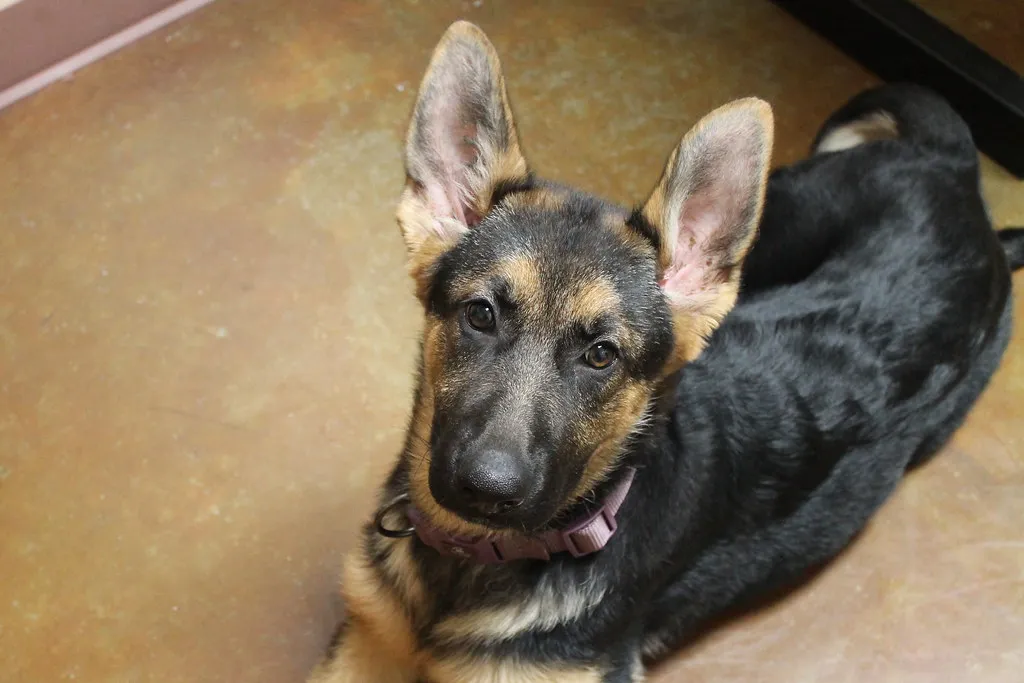
Vaccines and Immune Considerations for Shepherds
Shepherds don’t require different vaccines than other breeds. But there is one immune-related consideration specific to the breed.
Some studies have suggested that German Shepherds may have a higher incidence of IgA deficiency compared to other breeds. According to the Merck Veterinary Manual, IgA deficiency can make affected dogs more susceptible to infections of the respiratory and gastrointestinal tracts. This doesn’t change the vaccination schedule, but it does mean keeping your Shepherd current on vaccines is especially important. A dog with any immune system vulnerability benefits more from strong vaccine-induced protection, not less.
This isn’t common enough to warrant testing in every Shepherd. It’s simply context for why staying on schedule matters. A vet who sees the breed regularly will already know it, which is one reason choosing the practice carefully pays off.
What Happens if You Skip or Delay Vaccines
Skipping core vaccines puts your dog at risk for diseases that are preventable and often fatal. Parvovirus alone kills roughly 91% of untreated dogs, according to data from the American Veterinary Medical Association.
Delaying the puppy series is less risky but still not ideal. Each week without full protection is a week of vulnerability. This is particularly relevant for parvovirus, which can survive in soil for years and is easily transmitted in environments where other dogs have been.
For adult boosters, a lapsed schedule usually means restarting with a two-dose series rather than a single booster. That roughly doubles the cost for that cycle.
Lifetime Vaccination Cost Estimate
Over a typical 10–12 year lifespan, estimated vaccination costs for a Shepherd look roughly like this:
| Period | Estimated Cost Range |
|---|---|
| First year (puppy series) | $325–$470 |
| Years 2–3 (annual boosters) | $160–$360 |
| Years 4–12 (3-year core + annual non-core) | $560–$1,260 |
| Lifetime total (estimate) | $1,045–$2,090 |
Compared to other ownership costs, vaccines are modest. They’re also the highest-return health investment you can make. The diseases they prevent are far more expensive to treat than the vaccines cost to administer. Note that most pet insurance accident-and-illness policies exclude routine vaccinations, so this is typically an out-of-pocket line in your annual vet budget. Insurance earns its keep on the unplanned side instead: our insurance estimator gives you a premium ballpark, and the health-problem cost guide shows what it would be covering.
Common Questions
Are there vaccines my Shepherd doesn’t need? Possibly. Lyme disease vaccination is only recommended in endemic areas. Canine influenza is situational. Your vet should tailor the non-core schedule to your dog’s actual exposure risk. Core vaccines are always recommended.
Can I give vaccines myself? Some non-core vaccines (like Bordetella) are available through farm supply stores. Core vaccines, especially Rabies, must be administered by a licensed veterinarian to be legally valid. Self-administering also means no exam, no documentation, and no medical oversight if a reaction occurs.
How much do vaccine reactions cost to treat? Mild reactions (swelling, lethargy) usually resolve without treatment. Severe allergic reactions requiring emergency care can cost an estimated $500–$2,000. Reactions are uncommon, but your vet may recommend pre-treatment with antihistamines if your dog has a history of sensitivity.
Should I titer test instead of vaccinating? Titer testing measures existing antibody levels and costs an estimated $150–$300 per test. Some owners prefer it to avoid unnecessary re-vaccination. Titers are accepted by some boarding facilities in lieu of boosters, but they’re not accepted as a substitute for legally required Rabies vaccination. Discuss with your vet whether titers make sense for your situation.
Disclaimer: Cost estimates are approximations based on publicly available data. Actual costs vary significantly by location, provider, and individual circumstances. Read full disclaimer →
Follow new work
A new guide every week or so.
Roughly one new guide every week or so. Cost data, feeding research, breed health — sourced and dated. By Sam, in Belgium.
Related Articles
How Much Does a German Shepherd Cost Per Month
A realistic monthly cost breakdown for German Shepherd owners. Food, insurance, preventatives, grooming, and training with US averages and ways to save.
German Shepherd First Year Cost Breakdown
Itemized first-year cost of owning a German Shepherd from setup gear to vet bills. Real 2026 prices, category-by-category breakdown, and money-saving tips.
German Shepherd Puppy: What Everything Costs
Month-by-month first-year cost breakdown for a German Shepherd puppy. Sourced numbers for purchase, supplies, vet, food, training, insurance, and surprises.
German Shepherd Vet Costs — What to Budget
German Shepherd vet costs: routine $600–$1,300/yr, dental $300–$700, hip surgery $5.6K–$10K+/hip, bloat surgery $5K–$7K+. Sourced budget breakdown.