Blaze, my current Shepherd, came to me about eight pounds heavier than he should have been. Not obese. Not even visibly fat to most people. But I could barely feel his ribs, and his waist had disappeared when viewed from above. Within three months of measured meals and daily walks, those ribs were right where they should be and he was moving like a different dog.
The thing about German Shepherds and extra weight is that even moderate excess has consequences. This is a breed already predisposed to hip and elbow problems. Every unnecessary pound puts mechanical stress on joints that may already be compromised. Getting the weight off isn’t complicated, but it does require some structure and an honest assessment of where your dog actually stands. Our German Shepherd feeding guide covers nutrition basics if you need a starting point.
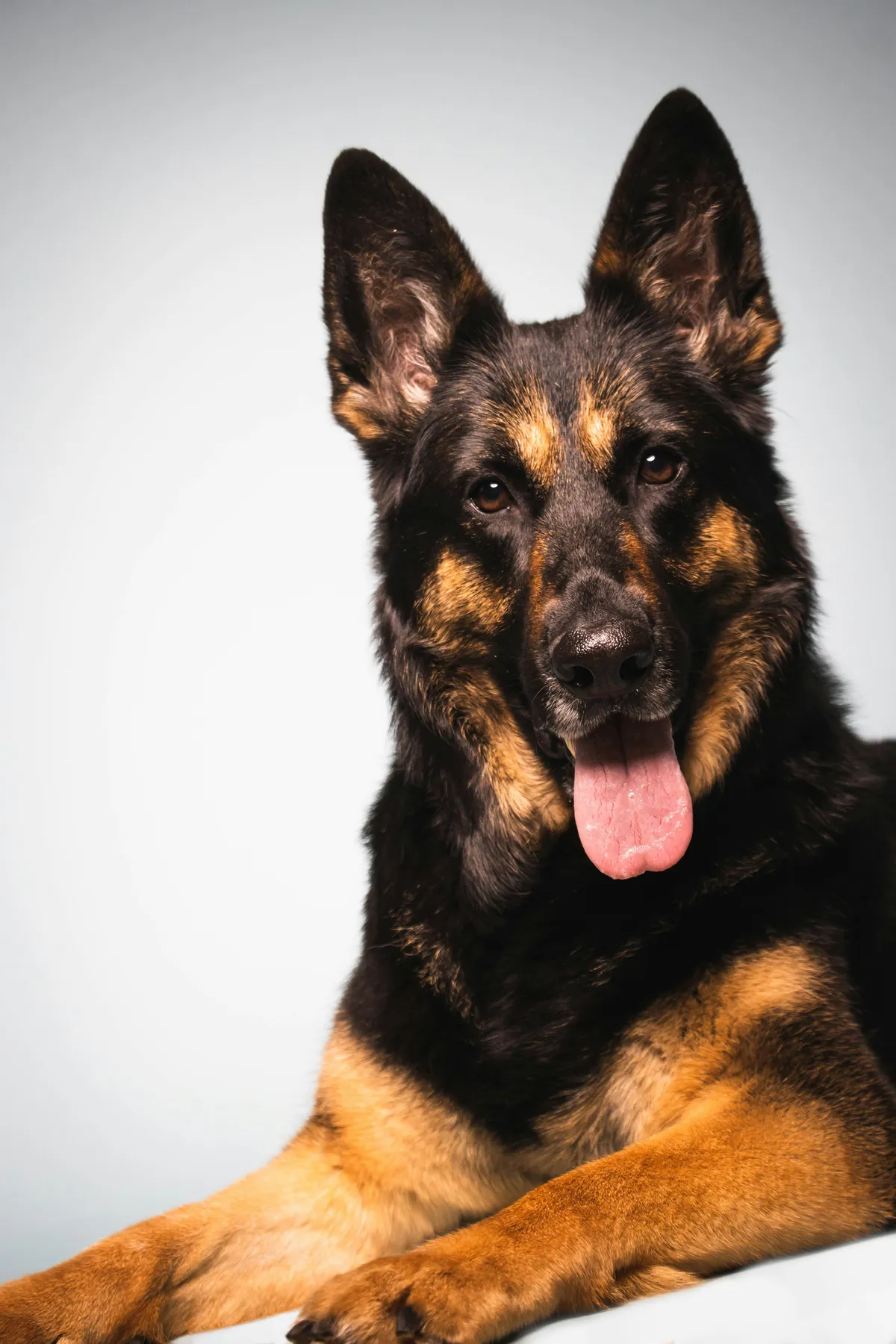
How to Tell If Your Shepherd Is Actually Overweight
Forget the scale for a moment. The AKC breed standard puts males at 65 to 90 pounds and females at 50 to 70, but there’s enormous variation between working lines (which tend leaner) and show lines (which run heavier and more substantial). A 90-pound male from working lines is probably overweight. A 90-pound male from show lines might be perfectly fit.
Body condition scoring is far more useful than a number on a scale. The standard system is a 1-to-9 scale used by the World Small Animal Veterinary Association (WSAVA).
WSAVA considers body condition scoring the gold standard for assessing whether a dog is at a healthy weight. Their Global Nutrition Guidelines recommend that every veterinary visit include a body condition score assessment, calling it more reliable than scale weight alone for evaluating nutritional status.
Score 4-5 (Ideal):
- Ribs easily felt under a thin layer of tissue without pressing hard
- Clear waist visible from above
- Obvious abdominal tuck from the side
Score 6-7 (Overweight):
- Ribs difficult to feel (you need to apply pressure)
- Waist barely visible or absent from above
- Minimal abdominal tuck
Score 8-9 (Obese):
- Ribs cannot be felt under a thick layer of fat
- No visible waist. Body may appear barrel-shaped
- No abdominal tuck, possible abdominal distension
Try it right now. Run your hands along your Shepherd’s ribcage. If you can feel each rib with light pressure, similar to running your fingers across your knuckles, they’re likely in good condition. If it feels more like pressing the back of your hand, there’s excess coverage.
If you’re unsure, your vet can assign a body condition score and help set a target weight. That’s a good starting point before making any dietary changes.
Why It Matters More for This Breed
The research on canine obesity is clear. The Purina Life Span Study showed that dogs kept at a lean body condition lived a median of 1.8 years longer than their freely-fed littermates. Nearly two extra years of life, just from keeping weight in check.
Veterinary research has documented measurable improvements in quality of life when overweight dogs lost weight: better mobility, more energy, improved interaction with their owners.
For Shepherds specifically, the stakes are higher than for many breeds:
- Joint disease. Excess weight accelerates hip and elbow degradation in a breed already predisposed to both.
- Cruciate ligament tears. Directly correlated with body weight, and one of the most common orthopedic injuries in dogs.
- Spinal stress. Extra load on the spine increases risk of intervertebral disc problems.
- Surgical risk. If your Shepherd ever needs an operation, excess weight makes anesthesia and recovery more complicated.
The AKC’s guide to assessing dog weight provides a good overview of how body condition connects to overall health.
How Fast Should the Weight Come Off?
The guidelines from the American Animal Hospital Association (AAHA) are straightforward:
- Target rate: 1 to 2 percent of body weight per week. For an 85-pound Shepherd that should weigh 75, that’s roughly 0.85 to 1.7 pounds per week.
- Calorie reduction: Start by reducing current intake by 20 to 30 percent. Calculate the resting energy requirement for the target weight and feed at 80 to 100 percent of that number.
- Never cut more than 40 percent without direct veterinary supervision. Aggressive restriction risks nutrient deficiencies and muscle loss.
- Monthly check-ins. Weigh your dog and reassess body condition at least once a month. Adjust portions based on progress.
| Weight to lose | Weekly target (1-2%) | Estimated timeline |
|---|---|---|
| 5 lbs | 0.8–1.7 lbs/week | 3–6 weeks |
| 10 lbs | 0.8–1.7 lbs/week | 6–12 weeks |
| 15 lbs | 0.8–1.7 lbs/week | 9–18 weeks |
| 20 lbs | 0.8–1.7 lbs/week | 12–24 weeks |
Based on an 85-pound Shepherd at starting weight. A realistic timeline for a Shepherd that needs to lose 10 pounds is roughly 8 to 14 weeks. Weight loss that’s too rapid often means muscle is being lost alongside fat, which undermines the whole purpose.
Your vet can calculate a specific calorie target based on your dog’s current weight, target weight, and activity level. This is one area where precision matters more than guessing.
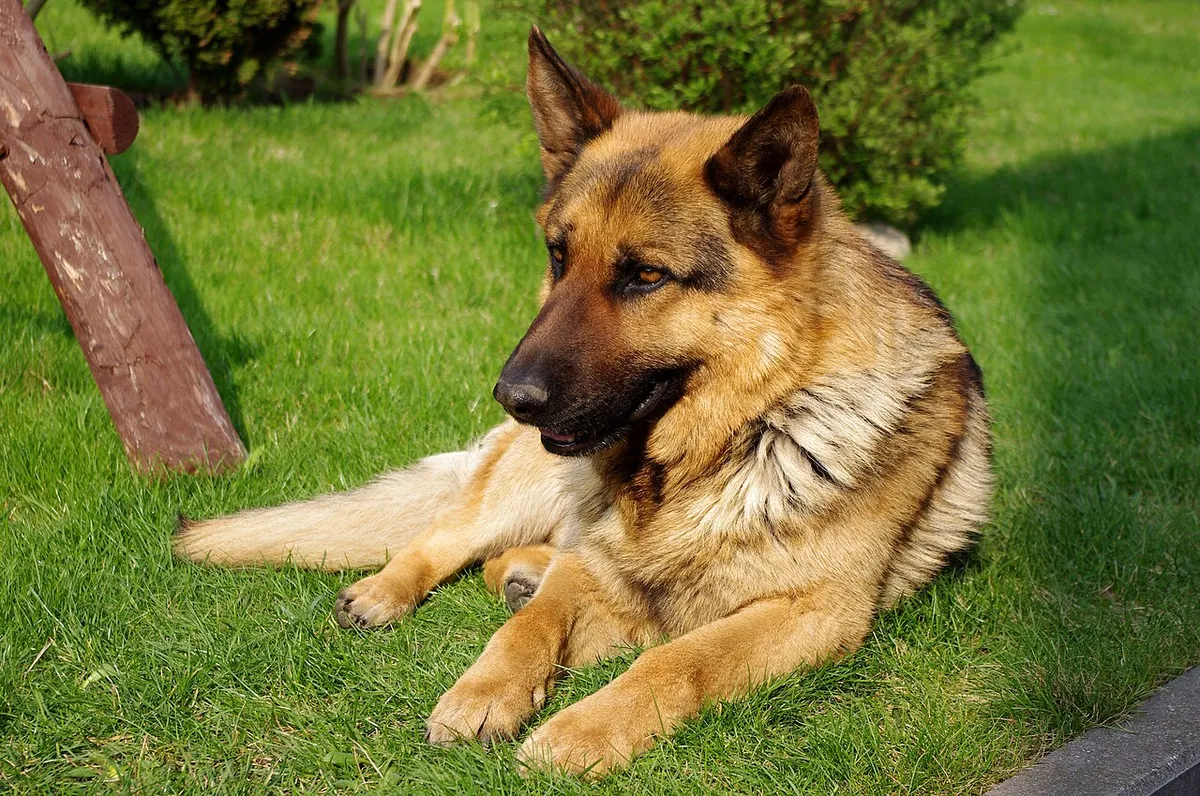
What to Look for in a Weight Management Food
Not all “light” or “weight management” foods are meaningfully different from regular formulas. These are the characteristics that actually matter:
Lower fat content (7 to 10 percent). Regular adult foods typically sit at 14 to 18 percent fat. Fat is the most calorie-dense macronutrient at 9 calories per gram, more than double protein or carbohydrates. Reducing fat is the most efficient way to reduce calorie density without drastically shrinking portion size.
Higher fiber (8 to 15 percent crude fiber). Fiber adds bulk without significant calories and promotes satiety. A Shepherd that feels full after eating is a Shepherd whose owner won’t be tempted to add extra food. Moderate fiber content helps break that cycle.
Adequate to high protein (25 to 35 percent). This is critical. During calorie restriction, you want your dog losing fat, not muscle. Higher protein preserves lean muscle mass during weight loss. Don’t choose a weight management food that cuts protein alongside fat — that’s counterproductive.
L-carnitine. This amino acid derivative helps the body transport fatty acids into cells for energy production. Research has shown it supports fat metabolism during weight loss in dogs. Many quality weight management formulas include it.
Lower calorie density (250 to 300 kcal per cup). Regular adult foods often run 350 to 450 calories per cup. A weight management food in the 250-300 range lets you feed a reasonable volume while still maintaining the calorie deficit needed for weight loss.
Formulas Worth Considering
Purina Pro Plan Weight Management Large Breed provides 26% protein with reduced fat and added fiber to support satiety. The large-breed formulation includes glucosamine for joint support, which matters when you’re managing weight specifically to reduce joint stress. Calorie density is moderate, and the 30-pound-plus bag sizes keep cost reasonable.
Hill’s Science Diet Perfect Weight was developed based on Hill’s own clinical weight loss research. The formula uses a higher protein-to-fat ratio and includes L-carnitine. Many owners report that their dogs adapt well to the portions without begging constantly, which suggests the satiety formulation works in practice.
Blue Buffalo Life Protection Healthy Weight offers 20% protein with controlled fat and added L-carnitine. The formula includes their LifeSource Bits, a blend of antioxidants, vitamins, and minerals processed at lower temperatures. The price point sits in the middle of the market.
Therapeutic options like Hill’s Metabolic, Royal Canin Satiety Support, and Purina OM are available through veterinarians and are specifically formulated for supervised weight management. If your Shepherd needs to lose a significant amount of weight or has concurrent health issues, these may be more effective than over-the-counter options. Your vet can determine whether the situation calls for a therapeutic diet. The Merck Veterinary Manual’s section on obesity provides additional clinical context on managing canine weight.
| Pro Plan Weight Mgmt LB | Hill’s Perfect Weight | Blue Buffalo Healthy Wt | Therapeutic (vet Rx) | |
|---|---|---|---|---|
| Protein | 26% | 28% | 20% | Varies (25-35%) |
| Fat | 9.5% | 9% | 9% | 6-8% |
| Fiber | 5.5% | 8% | 7% | 10-15% |
| Kcal/cup | ~340 | ~291 | ~315 | 230-280 |
| L-carnitine | No | Yes | Yes | Yes |
| Glucosamine | Yes | No | No | Varies |
| Best for | Joint + weight combo | Research-backed loss | Budget-friendly option | Significant obesity |
Specs here reflect labels at the time of writing. Formulations change — always check the current label.
For a personalized calorie target, try our feeding calculator — enter your dog’s target weight instead of current weight to get the right daily calorie number.
Feeding Strategies That Help
Switching food is only part of the equation. How you feed matters just as much.
Measure every meal. Use an actual measuring cup or, better yet, a kitchen scale. Eyeballing portions is one of the most common reasons weight loss stalls. A level cup and a heaped cup can differ by 25 percent or more in calories.
Account for treats. Treats should make up no more than 10 percent of daily calories. Consider using pieces of regular kibble as training rewards, or switch to low-calorie options like small pieces of carrot, green beans, or plain pumpkin. Some owners add a tablespoon of canned pumpkin (not pie filling) or a handful of green beans to meals as a low-calorie filler that adds bulk without meaningful calories. It works, and most Shepherds eat both happily.
Feed on a schedule. Free-feeding — leaving food out all day — makes calorie control nearly impossible. Two measured meals per day gives you control and lets you monitor appetite changes.
Slow down eating. Puzzle feeders and slow-feed bowls extend mealtime and can improve satiety. A Shepherd that inhales a meal in 30 seconds doesn’t register fullness the way one that takes 10 minutes does.
Exercise Alongside Diet
Calorie restriction alone works, but combining it with appropriate exercise produces better results and preserves muscle mass. For an overweight Shepherd, the type of exercise matters.
- Leash walks are the foundation. Start with what your dog can comfortably manage and gradually increase distance and pace.
- Swimming provides a full-body workout without joint impact. If you have access to a safe swimming area or canine rehabilitation facility, it’s worth exploring.
- Avoid high-impact activities like fetch on hard surfaces or extended running until your dog has reached a healthier weight. Excess weight combined with high impact is a recipe for injury.
Consult your vet before significantly increasing exercise, particularly if your Shepherd has existing joint problems or hasn’t been active recently.
When to Involve Your Vet
A mildly overweight Shepherd — body condition score of 6 — can often be managed at home with measured portions and consistent activity. But some situations require professional guidance:
- Body condition score of 8 or above. Significant obesity requires a structured weight loss plan with regular monitoring.
- Weight loss isn’t happening despite consistent calorie reduction. Hypothyroidism and other metabolic conditions can prevent weight loss and need to be ruled out through bloodwork.
- Concurrent health conditions (joint disease, diabetes, heart disease) that complicate dietary changes.
- You need to cut more than 30 percent of calories. Aggressive restriction should be supervised.
- Rapid, unexplained weight gain. If your Shepherd gained weight quickly without a change in diet or activity, something medical may be going on.
Common Questions
How many calories should an overweight Shepherd eat per day?
It depends on target weight and activity level. A common starting point is to calculate the resting energy requirement for the target weight and feed 80 to 100 percent of that value. For most Shepherds targeting a healthy weight, that typically falls between 1,000 and 1,400 calories per day, but your vet can provide a more precise number.
Can I just feed less of my dog’s regular food?
You can, but it’s not ideal. Regular foods are formulated to deliver complete nutrition at full feeding amounts. If you cut portions significantly, you may also be cutting essential vitamins, minerals, and protein below adequate levels. Weight management foods are designed to be nutritionally complete at reduced calorie levels.
Should I feed grain-free for weight loss?
There’s no evidence that grain-free diets help with weight loss. Grain-free foods often substitute grains with potatoes, peas, or lentils, which can have similar or even higher calorie content. Focus on the nutritional profile: fat percentage, fiber content, protein level, and calorie density. Not whether grains are present.
How long does it take for a Shepherd to lose weight?
At the recommended rate of 1 to 2 percent of body weight per week, a Shepherd that needs to lose 10 pounds will take roughly 8 to 14 weeks. Losing 15 to 20 pounds may take 4 to 6 months. Slow and steady is the goal.
For more on how joint health connects to diet, see our guide to feeding a Shepherd with hip dysplasia. For portion guidance by weight, see how much to feed an adult German Shepherd. For the broader feeding picture, visit our German Shepherd feeding hub.
Disclaimer: This content is for general informational purposes only and is not veterinary advice. Consult a licensed veterinarian for decisions about your dog's health, diet, or medical care. Read full disclaimer →
Related Articles
Best Food for Adult German Shepherds
What adult German Shepherds actually need from their food. Protein, fat, joint support, how to read labels, and four formulas reviewed for this breed.

Best Food for German Shepherds with Hip Dysplasia
How diet supports joint health in German Shepherds with hip dysplasia. Key nutrients, weight management, and formulas worth considering.

German Shepherd Weight Chart: Puppy to Adult
Month-by-month weight and height ranges for male and female German Shepherds. AKC standard sizes, growth timeline, body condition scoring tips.
How Much to Feed an Adult German Shepherd
Daily feeding amounts for adult German Shepherds. How much food by weight, activity level, and age, with adjustment tips.