Two meals a day, roughly 12 hours apart, covers most adult German Shepherds. Puppies need three to four meals; seniors sometimes benefit from a third smaller one. The tables below break it down by age.
Puppy Feeding Schedule (2 to 12 Months)
A German Shepherd puppy at eight weeks might weigh 15 pounds. By their first birthday, expect 60-plus. That growth rate demands frequent, measured meals rather than one or two large servings.
Start with four meals a day at eight weeks, then work down to three around four months, and two by eight to twelve months. Here’s the breakdown:
Puppy Feeding by Age
| Age | Cups Per Day | Meals Per Day | Spacing |
|---|---|---|---|
| 2 months | 1 to 1.5 | 4 | Every 4 hours |
| 4 months | 2 to 3 | 3 | Every 5-6 hours |
| 6 months | 3 to 4 | 3 | Every 5-6 hours |
| 8 months | 3 to 4 | 2 | Every 10-12 hours |
| 12 months | 3 to 4 | 2 | Every 10-12 hours |
Cup amounts are approximate. Every kibble brand has different calorie density, so check the label on yours and adjust based on your puppy’s body condition. Your vet can help fine-tune portions at checkups.
Sample Day at 2 Months (4 Meals)
| Time | Activity |
|---|---|
| 6:30 AM | Wake up, potty break |
| 7:00 AM | Meal 1 — roughly 1/3 cup |
| 7:30 AM | Short play session |
| 11:00 AM | Meal 2 — roughly 1/3 cup |
| 11:30 AM | Potty break, gentle play |
| 3:00 PM | Meal 3 — roughly 1/3 cup |
| 3:30 PM | Potty break, short walk |
| 7:00 PM | Meal 4 — roughly 1/3 cup |
| 7:30 PM | Calm time, last potty break before bed |
Four meals keeps portions small enough for a tiny stomach. If your work schedule makes that difficult, three meals at 7 AM, 12 PM, and 6 PM works for most puppies by around 10 weeks.
Sample Day at 4 to 6 Months (3 Meals)
| Time | Activity |
|---|---|
| 7:00 AM | Breakfast — about 3/4 to 1-1/3 cups |
| 12:30 PM | Lunch — about 3/4 to 1-1/3 cups |
| 6:00 PM | Dinner — about 3/4 to 1-1/3 cups |
This is the rapid growth phase. Stick to a large-breed puppy formula designed for steady growth without pushing it too fast, which can stress developing joints.
At six months, some owners wonder about dropping to two meals. A few Shepherds handle it fine. Most do better staying at three through this stage because the daily total is climbing and splitting 3 to 4 cups across three meals is easier on digestion.
Sample Day at 8 to 12 Months (2 Meals)
| Time | Activity |
|---|---|
| 7:00 AM | Breakfast — about 1.5 to 2 cups |
| 6:00 PM | Dinner — about 1.5 to 2 cups |
By twelve months, your Shepherd is approaching adult size and two meals per day becomes the pattern from here on. This is also typically when you’d transition from puppy food to an adult formula over 7 to 10 days. For detailed puppy portion guidance, see our guide on how much to feed a German Shepherd puppy.
Adult Feeding Schedule (1 to 7 Years)
Once a German Shepherd reaches full maturity — usually 12 to 18 months — caloric needs stabilize. Two meals per day is the standard recommendation, and it lines up with research on bloat prevention (more on that below).
The AKC recommends two meals a day for most adult dogs, and the Merck Veterinary Manual echoes that guidance for large breeds.
Adult Portion Reference
| Weight | Cups Per Day |
|---|---|
| 51-75 lbs | 2-2/3 to 3-1/2 |
| 76-100 lbs | 3-1/2 to 4-1/4 |
These are based on Purina Pro Plan’s label for moderately active adults. Working-line Shepherds covering serious mileage need more. Couch-friendly companions may need less. Check the label on whatever food you actually feed.
Sample Adult Day
| Time | Activity | Notes |
|---|---|---|
| 6:30 AM | Wake up, potty break | — |
| 7:00 AM | Breakfast | Half of daily portion |
| 8:00 AM | Walk or exercise | At least 60 minutes after eating |
| 12:00 PM | Training treats (optional) | Count toward daily calories |
| 5:00 PM | Walk or exercise | Before dinner, not after |
| 6:30 PM | Dinner | Second half of daily portion |
| 9:00 PM | Last potty break | — |
Notice the exercise-meal gaps. That buffer matters for a deep-chested breed, and I’ll explain why in the bloat section below.
Active vs. Less Active Adults
| Activity Level | Meals/Day | Adjustments |
|---|---|---|
| High (working, sport, hiking) | 2-3 | Higher calorie food or larger portions; a midday meal may help |
| Moderate (daily walks, yard play) | 2 | Standard portions per food label |
| Low (older pace, limited mobility) | 2 | Slightly reduced portions; monitor weight monthly |
For more on adult portion sizes, see our adult feeding guide.
Senior Feeding Schedule (7+ Years)
German Shepherds are generally considered seniors around age seven, though some stay active well beyond that. Metabolism slows, muscle mass can decline, and digestion often gets more sensitive.
Two meals per day still works for most. Some owners find that adding a small third meal helps dogs with stomach issues or declining appetite. Talk to your vet about whether a senior-specific formula makes sense for your dog.
Sample Senior Day
| Time | Activity | Notes |
|---|---|---|
| 7:30 AM | Breakfast | Slightly smaller portion if on 3 meals |
| 12:30 PM | Midday meal (optional) | Helpful for dogs with sensitive digestion |
| 6:00 PM | Dinner | Evening portion |
Common Senior Changes and What to Do
| Change | Likely Cause | What to Do |
|---|---|---|
| Decreased appetite | Normal aging or possible health issue | Monitor closely; mention to vet if it persists more than a day or two |
| Weight gain | Slower metabolism, less activity | Reduce portions or switch to a weight management formula |
| Unexplained weight loss | Could indicate dental problems, illness, or absorption issues | Schedule a vet visit |
| Pickier eating | Develops gradually with age | Try warming food slightly or adding a splash of low-sodium broth |
Bloat Prevention and Meal Timing
This is the section that really matters for German Shepherds. Gastric dilatation-volvulus (GDV), commonly called bloat, is one of the most dangerous emergencies in deep-chested breeds. The stomach fills with gas, can twist on itself, and without treatment it can be fatal within hours.
A Purdue University study on bloat risk in large breeds produced a finding that should shape how you feed:
Dogs fed once per day were approximately twice as likely to develop GDV compared to those fed two or more times per day.
— JAVMA research on bloat risk factors
That alone is reason enough to split your Shepherd’s food into two meals. But the research flagged other risk factors too:
- Vigorous exercise around mealtimes. Hard running and rough play close to eating increased risk. A calm walk is fine. The concern is intense exertion.
- Raised food bowls. This surprises many owners since raised bowls are often marketed for large breeds. The Purdue University bloat study found they were actually associated with higher bloat risk. Feed from a floor-level bowl unless your vet specifically recommends otherwise.
- Speed of eating. Dogs that gulp food down had elevated risk. Slow-feeder bowls can help here.
The practical rule: exercise before meals when possible, then let your Shepherd rest for at least 30 to 60 minutes after eating. Build that gap into your daily routine and it becomes second nature.
The recommendation among veterinary professionals for large and giant breeds is to feed two or more meals per day and avoid exercise around feeding times.
— Merck Veterinary Manual, Feeding Practices in Small Animals
Transitioning Between Schedules
When it’s time to drop a meal — say, moving from three to two around six to eight months — a gradual shift over five to seven days avoids digestive upset.
How to Drop a Meal
| Day | Approach |
|---|---|
| Days 1-2 | Reduce the meal you plan to drop by 25%; add that food to the remaining meals |
| Days 3-4 | Reduce it by 50%; redistribute |
| Days 5-6 | Reduce to just a small handful; redistribute |
| Day 7 | Drop the meal entirely; split full daily amount across remaining meals |
If your Shepherd gets loose stools or seems gassy during the transition, slow down. Give their system a few extra days at each step.
The same approach works when switching from puppy food to adult food (typically around 12 to 18 months). Start at 75% old food and 25% new, then shift the ratio every two to three days over a 7- to 10-day window. The WSAVA global nutrition guidelines recommend using body condition scoring during transitions to make sure your dog stays at a healthy weight.
What to Do if Your Dog Skips a Meal
A healthy Shepherd skipping one meal is rarely cause for alarm. It happens. Hot weather, a stressful day, too many training treats — all common reasons.
Here’s a simple framework:
- One skipped meal: Offer food at the next scheduled time as usual. Don’t add extras to make up for it.
- Two consecutive skipped meals: Pay attention. Check for other signs like lethargy, vomiting, or changes in stool.
- More than 24 hours without eating: Call your vet. For a large breed, a full day without food is worth a conversation.
- Puppy skipping meals: Take this more seriously. Young Shepherds need consistent fuel for growth. If a puppy under six months refuses two meals in a row, contact your vet.
Don’t start swapping foods or adding toppers the moment your dog turns their nose up. That’s how you train a picky eater. Stick to the schedule, offer the regular food, and pick the bowl up after 15 to 20 minutes if they don’t eat.
What NOT to Do
A few feeding mistakes that carry real consequences for this breed:
Free feeding (leaving food out all day). You lose all ability to monitor intake. A skipped meal or sudden appetite change can be an early warning sign, and you won’t catch it if the bowl is always half-full.
One large meal per day. The research is clear on this one. Split the daily total into two meals at minimum.
Exercising right after eating. Build buffer time into your routine. Walk or play first, feed second, then rest.
Ignoring body condition. The number on the food bag is a starting point, not a prescription. Run your hands along your Shepherd’s ribs regularly. You should feel them with light pressure but not see them. If ribs are visible, increase portions. If you can’t feel them at all, cut back.
Common Questions
How many times a day should I feed my German Shepherd puppy?
Four meals at 2 months, three by 4 to 6 months, two by 8 to 12 months. The goal is keeping individual portions manageable while meeting daily calorie needs. As the puppy grows, the stomach can handle more at once and you reduce frequency.
Can I feed my Shepherd once a day?
Not recommended. Research published in JAVMA found that once-daily feeding carried the highest GDV risk in large breeds. Two meals a day is the safer standard.
What time should I feed my Shepherd?
There’s no single correct time. Most owners land on morning and evening, something like 7 AM and 6 PM. Consistency matters more than the specific hour. Dogs adapt to routine fast, and a predictable schedule supports steady digestion.
Should I feed before or after exercise?
After, when possible. Wait at least 30 to 60 minutes after a meal before any vigorous activity. A short, calm walk near mealtime is fine. It’s the hard running that carries the bloat risk.
When should I switch from puppy food to adult food?
Most German Shepherds transition between 12 and 18 months. Large-breed puppy formulas are designed to support growth through that window. Your vet can help decide timing based on your dog’s development. When you switch, transition gradually over 7 to 10 days.
More Feeding Guides
- How Much to Feed a German Shepherd Puppy — detailed portion guidance by age and weight
- How Much to Feed an Adult German Shepherd — calorie and cup breakdowns
- Best Puppy Food for German Shepherds — top picks reviewed
- Feeding Hub — all our feeding guides in one place
Disclaimer: This content is for general informational purposes only and is not veterinary advice. Consult a licensed veterinarian for decisions about your dog's health, diet, or medical care. Read full disclaimer →
Related Articles

Best Puppy Food for German Shepherds
Top 5 puppy foods for German Shepherds. Large-breed formulas with controlled calcium, joint support, and digestible proteins for German Shepherd puppies.
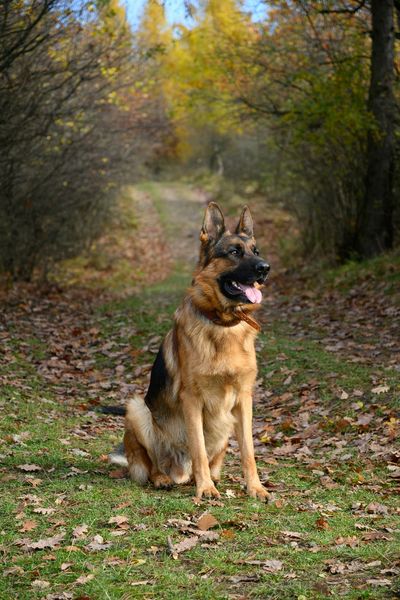
How Much to Feed an Adult German Shepherd
Daily feeding amounts for adult German Shepherds. How much food by weight, activity level, and age, with adjustment tips.
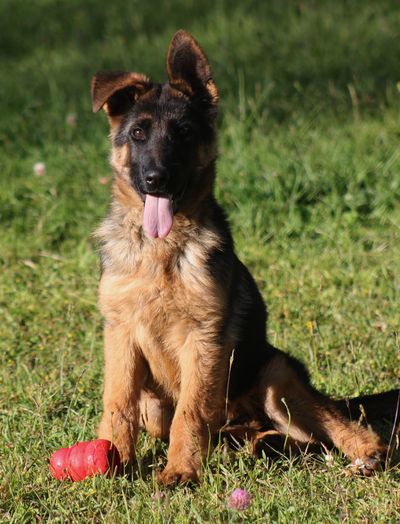
How Much to Feed a German Shepherd Puppy
Feeding amounts for German Shepherd puppies by age, from 8 weeks to 12 months. Cups per day, meal frequency, and when to adjust.