Best German Shepherd Food
Most German Shepherd puppies need between 1 and 4 cups of kibble per day, split across two to four meals depending on age. That range is wide on purpose. A 10-week-old female and a 9-month-old male have completely different portion needs.
Here is the quick breakdown, then the details that actually matter. For food picks at every life stage, see our feeding guide. If you need a daily meal timing plan, our feeding schedule by age covers that in detail.
| Age | Cups Per Day (Total) | Meals Per Day |
|---|---|---|
| 8–12 weeks | 1 to 1.5 | 4 |
| 3–6 months | 2 to 3 | 3 |
| 6–12 months | 3 to 4 | 2–3 |
| 12–18 months | 3 to 4 | 2 |
Seen as bars, the shape of the first year is clear: a steep climb through six months, then a plateau once your puppy is eating close to an adult amount.
Source: German Shepherd Now — midpoints of the cups-per-day ranges above. Bars are band midpoints (large-breed puppy kibble, ~350–400 kcal/cup).
These numbers assume a large-breed puppy kibble in the 350–400 kcal/cup range. Smaller females usually land near the low end. Larger-framed males may need the upper range or slightly above it. Our weight chart can help you track whether your puppy’s growth is on pace. But body condition tells you more than any chart can.
Cups vary by kibble brand, so calorie targets give you a more reliable anchor. The table below shows approximate daily calorie needs based on your puppy’s current weight.
| Puppy Weight | Approximate Daily Calories |
|---|---|
| 10 lbs (4.5 kg) | 550–650 kcal |
| 20 lbs (9 kg) | 850–1,000 kcal |
| 30 lbs (14 kg) | 1,050–1,250 kcal |
| 40 lbs (18 kg) | 1,200–1,450 kcal |
| 50 lbs (23 kg) | 1,350–1,600 kcal |
| 60 lbs (27 kg) | 1,450–1,700 kcal |
These calorie ranges are estimates for growing large-breed puppies with moderate activity. Your vet can give a more precise number at checkups, and you can use our feeding calculator to get a starting point based on your puppy’s current weight.

Why Portion Control Matters for Large Breeds
Growing too fast is a real concern with German Shepherds. Their bones and joints are still developing well past the one-year mark, and excessive weight gain during that window may contribute to skeletal issues like hip dysplasia and panosteitis.
The goal is not to restrict growth. It is to keep it steady. A puppy that is slightly lean is in a better position than one carrying extra weight on developing joints, and controlled growth is one of the few levers owners actually have on hip dysplasia risk. Large-breed puppy formulas are designed for exactly this purpose: moderate calorie density and balanced calcium-to-phosphorus ratios that support controlled growth.
According to the Merck Veterinary Manual, large-breed puppies have specific nutritional requirements that differ from small breeds, particularly around energy density and mineral balance. Getting this right early on matters more than most owners realize.
“Overfeeding large- and giant-breed puppies results in a higher incidence of skeletal abnormalities. Energy intake, not protein, is the dietary factor of most concern.”
— Merck Veterinary Manual, Nutritional Requirements of Growing Puppies
Body Condition Scoring: How to Tell If You’re Feeding Right
Forget the scale for a moment. What your puppy looks and feels like is a more reliable guide than any number.
Rib check. Run your hands along your Shepherd’s sides with light pressure. You should feel individual ribs without pressing hard, but they should not be visible from across the room.
Overhead view. Looking down from above, you should see a visible waist — a slight tuck inward behind the ribcage. No waist suggests too much food. A very pronounced tuck or visible hip bones may mean not enough.
Side profile. From the side, the belly should tuck up slightly behind the chest. A belly that hangs level or sags below the chest line can indicate overfeeding.
“Body condition scoring should be assessed at every veterinary visit. Maintaining an ideal body condition from an early age is associated with longer, healthier lives.”
— World Small Animal Veterinary Association, Global Nutrition Guidelines
The WSAVA’s Body Condition Score chart is a useful visual reference you can use at home between vet visits.
Your vet can walk you through scoring during checkups. Most owners find it becomes second nature after a few weeks of practice.
Feeding Amounts by Age from Weaning to Adulthood
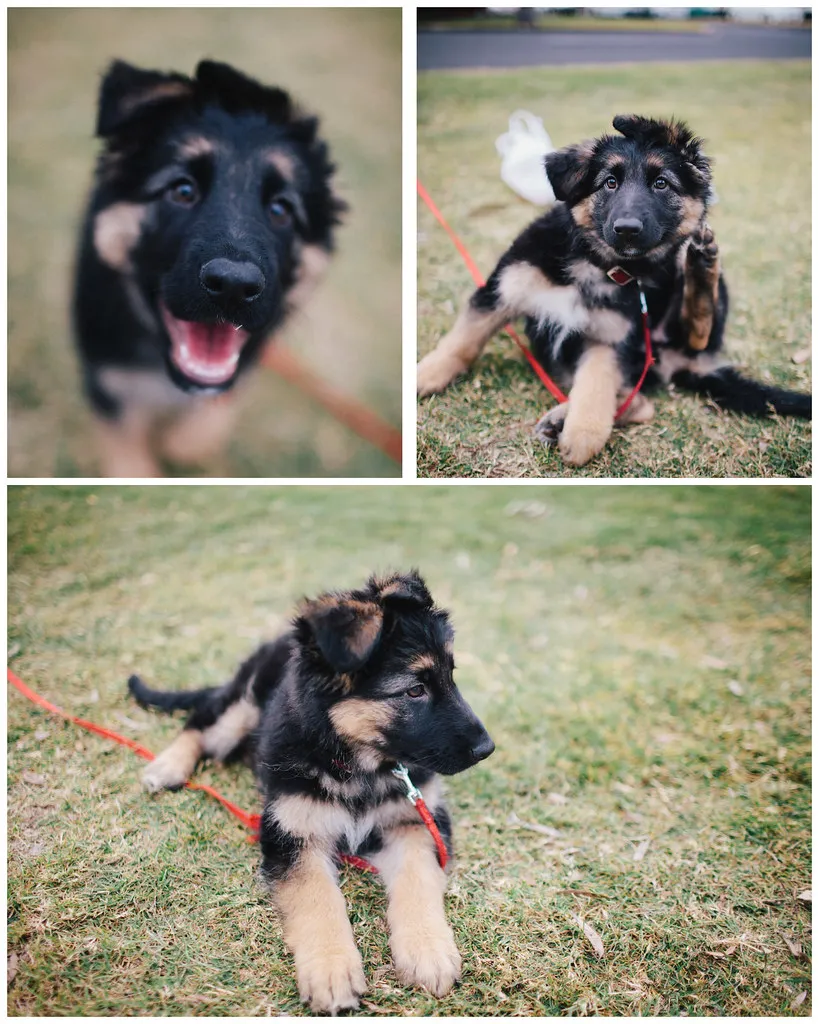
8 to 12 weeks. Your puppy’s stomach is small, but their energy needs relative to body size are high. Four meals a day is standard at this age, roughly a quarter to a third of a cup per feeding, totaling 1 to 1.5 cups daily.
A few things that help during this stage:
- Stay on the breeder’s food for the first week or two. A sudden diet change plus a new home is a recipe for digestive upset. If you plan to switch, transition gradually over 7 to 10 days.
- Pick up uneaten food after 15 to 20 minutes. Free-feeding makes it hard to track intake, and portion control matters with large-breed puppies.
- Do not panic over a day of low appetite. Many German Shepherd puppies eat less during their first day or two in a new home. If it lasts more than a couple of days, call your vet.
3 to 6 months. This is the rapid growth window. Your puppy may look like a different dog every week. Around 12 weeks, most puppies drop from four meals to three, with daily intake climbing to 2 to 3 cups depending on size and calorie density of the food.
Watch for signs of overfeeding: a rounded pot-belly that goes beyond the normal puppy look, consistently loose stools, or weight gain that outpaces what your vet expects. On the flip side, visible ribs without pressing, low energy, or stalled weight gain may mean portions need to go up.
Your vet’s puppy wellness visits are a good checkpoint. They can give a more tailored recommendation than any general chart.
6 to 12 months. By six months, most puppies move to two meals per day. Some owners keep three meals going until 8 or 9 months, and either approach works fine really. Daily amounts typically land between 3 and 4 cups, though active, larger-framed Shepherds may need a bit more.
Adolescent German Shepherds can be unpredictable eaters. It is not unusual for a puppy to skip meals or eat less around 7 to 10 months. As long as they maintain a healthy weight and energy level, the occasional missed meal is not cause for concern. Appetite loss lasting more than 24 hours is worth a vet call.
12 to 18 months. Most German Shepherds transition to adult food somewhere in this window. Our guide on when to switch from puppy to adult food covers the timing in more detail. Larger males may benefit from staying on puppy formula a bit longer than smaller females. Signs they are ready: growth has noticeably slowed, they have reached close to their expected adult height, and your veterinarian confirms skeletal development is on track.
Make the switch gradually. Mix increasing amounts of adult food with decreasing amounts of puppy food over 7 to 14 days. Once you are on adult food, our adult feeding guide covers portion sizes for the next stage.
When to Increase or Decrease Amounts
The cup amounts in the chart above are starting points. Your puppy will tell you whether they need adjustment — you just have to know what to look for.
Increase portions if:
- Ribs are easily visible without touching
- Your puppy seems lethargic or low-energy after meals
- Weight gain has stalled for more than two weeks
- Your vet says they are underweight at a checkup
Decrease portions if:
- You can no longer feel ribs with light pressure
- The waist tuck has disappeared when viewed from above
- Stools are consistently soft or loose
- Your puppy is gaining weight faster than expected for their age
When you do adjust, change by about 10 to 15 percent at a time and reassess over a week. The AKC’s feeding guide recommends using body condition rather than weight alone as your primary gauge, and that advice holds especially true during the first year.
If you switch food brands, recalculate everything. A cup of one kibble can deliver 30 percent more calories than a cup of another. Check the kcal/cup on the bag and adjust the volume so total daily calories stay roughly the same.
Common Overfeeding Mistakes New Owners Make
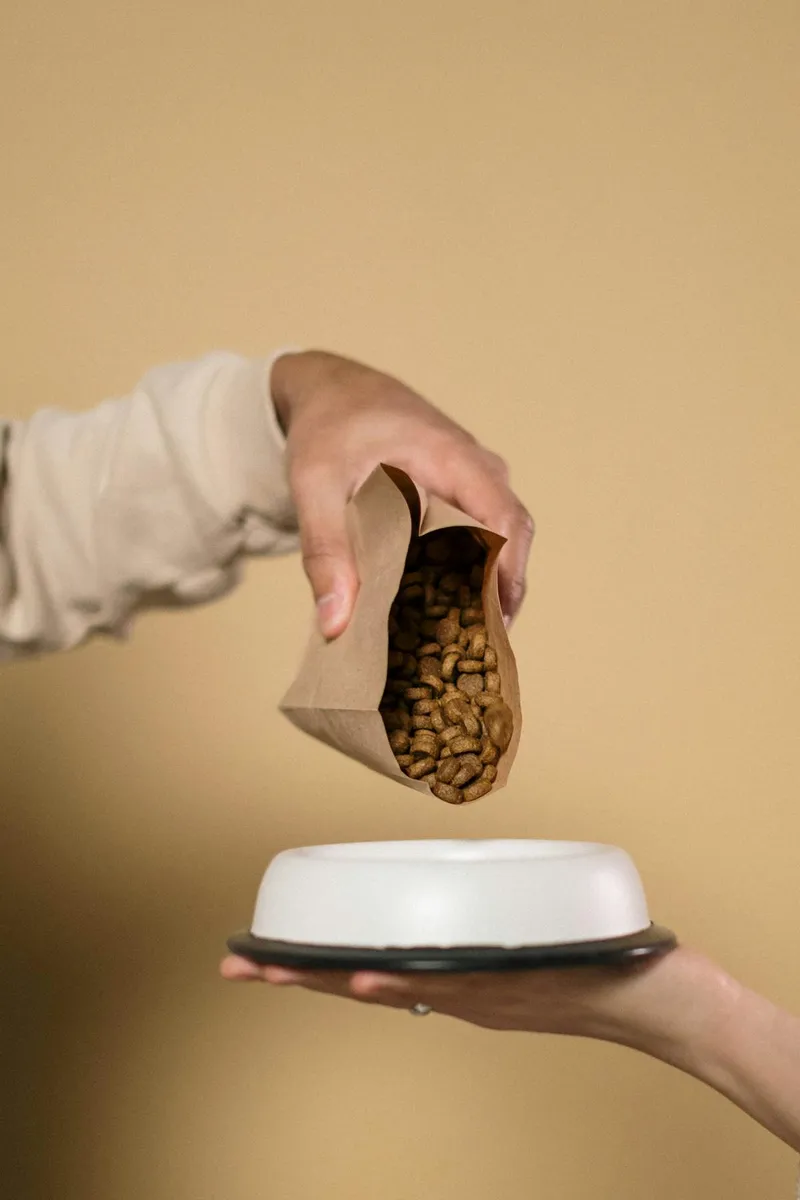
Trusting the bag guidelines blindly. The feeding chart on your kibble bag is a starting point. Those recommendations are broad averages and tend to run generous. Always cross-check against your puppy’s body condition.
Free-feeding a large-breed puppy. Leaving food out all day removes your ability to track intake and control portions. Scheduled meals are better for growth management and for housetraining.
Treating without accounting for calories. Training treats add up fast, especially during the 3-to-6-month window when you are likely training the most. If you are using a lot of treats during the day, reduce the next meal slightly to compensate.
Feeding adult food too early. Adult formulas often have higher calorie density and different mineral profiles than large-breed puppy food. Switching too soon can push growth rates in the wrong direction. Stick with a large-breed puppy formula until your vet gives the green light.
Using a raised food bowl. This one surprises people. Older advice recommended raised bowls, but the Glickman/Purdue University GDV studies found that raised bowls may actually increase bloat risk in deep-chested breeds. Feeding from a standard bowl on the floor is the safer choice. If your puppy inhales food, a slow feeder bowl can help pace them.
Exercise and Meal Timing for Bloat Prevention
German Shepherds are a deep-chested breed, which puts them at higher risk for gastric dilatation-volvulus (GDV), commonly called bloat. While bloat is more common in adult dogs, building good habits early matters.
Avoid vigorous exercise for at least one hour before and after meals. A calm walk is fine, but running, rough play, and heavy training sessions should wait. The AKC’s bloat prevention guidance recommends splitting daily food into multiple smaller meals rather than one large feeding, which is already standard practice for puppies.
Feeding costs for a growing Shepherd can add up quickly. Our monthly food cost breakdown covers what to budget during the first year.
If you are still choosing a food, our best puppy food roundup covers specific product picks. The large-breed puppy food guide drills into the calcium and calorie limits that matter most for Shepherds, and our raw food guide covers that option if you are considering it.
Disclaimer: This content is for general informational purposes only and is not veterinary advice. Consult a licensed veterinarian for decisions about your dog's health, diet, or medical care. Read full disclaimer →
Follow new work
A new guide every week or so.
Roughly one new guide every week or so. Cost data, feeding research, breed health — sourced and dated. By Sam, in Belgium.
Related Articles

Best Puppy Food for German Shepherds
The best puppy foods for German Shepherds need controlled calcium for safe growth. Large-breed formulas compared with calcium and phosphorus levels checked.

German Shepherd Feeding Schedule by Age
A complete German Shepherd feeding schedule from 8-week-old puppy to senior. Meal frequency, portion sizes by age, and sample daily routines that work.
How Much to Feed an Adult German Shepherd
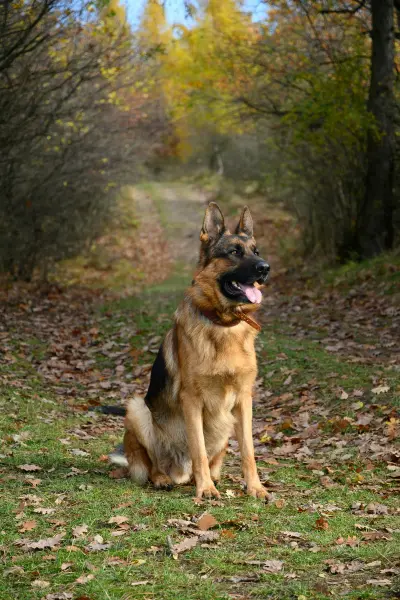
How much to feed an adult German Shepherd per day by weight and activity level. Calorie math, body condition scoring, bloat prevention, and meal portions.