Best German Shepherd Food
Every Shepherd I’ve owned has had at least one stretch of unpredictable digestion. Loose stool for a few days, firm again, then back to soft without any obvious cause. With most breeds, you’d chalk it up to something they ate in the yard. With this one, it’s often just how the gut works.
The breed is genuinely overrepresented in veterinary studies on food-responsive digestive issues. That doesn’t mean every dog will have problems, but if yours does, you’re dealing with something the breed is known for rather than some freak occurrence.

Start Here: Which Approach Fits Your Dog
Most sensitive stomach cases fall into one of three categories. Matching the right strategy saves weeks of trial and error.
| Situation | Strategy | Where to Start |
|---|---|---|
| Generally loose or inconsistent stool, no clear trigger | Easily digestible formula with probiotics | Purina Pro Plan Sensitive Skin & Stomach |
| Symptoms tied to a specific protein or ingredient | Limited ingredient diet (single protein) | Blue Buffalo Basics LID Turkey & Potato |
| Already tried sensitive formulas without improvement | Novel protein your dog hasn’t eaten before | Vet conversation about elimination diet |
| Persistent symptoms for 6+ weeks on any food | Veterinary workup | Rule out EPI, IBD, parasites first |
If you’re not sure which category fits, start with the first row. An easily digestible formula resolves the most common cases. If four to six weeks of consistent feeding doesn’t help, move down the list.
Why the Breed Is Prone to Digestive Issues
German Shepherds show up more frequently in food-responsive enteropathy cases than most other large breeds — veterinary researchers have noted this pattern repeatedly. There’s no single explanation, but several factors likely play a role.
Exocrine Pancreatic Insufficiency (EPI) is the big one. The pancreas doesn’t produce enough digestive enzymes, which means food passes through without being properly broken down. According to the Merck Veterinary Manual, German Shepherds are the breed most commonly affected by EPI.
“German Shepherds account for a disproportionate number of EPI cases, with the condition typically resulting from pancreatic acinar atrophy, a progressive loss of the enzyme-producing cells.”
— Merck Veterinary Manual, Exocrine Pancreatic Insufficiency
IgA deficiency, a weakness in the immune proteins that line the gut, has also been documented at higher rates in the breed. This may make the intestinal lining more reactive to dietary proteins and bacteria.
General dietary sensitivity rounds out the picture. Some dogs simply don’t tolerate certain proteins, fats, or fillers well. Their gut reacts to ingredients that wouldn’t bother a Labrador or a Beagle.
Across breed forums, vet caseloads, and owner discussions, recurring loose stool is one of the most common quality-of-life issues this breed throws up. Clinical conditions like EPI and eosinophilic gastroenteritis are rarer but serious when they show up — they need testing, not another bag of food.
None of this means your dog is broken. It means their digestive system may need more thoughtful management than the average dog’s.
How to Recognize a Sensitive Stomach
Not every bout of diarrhea means your dog has a chronic issue. Look for patterns rather than isolated incidents:
- Recurring loose or soft stool, particularly after meals
- Frequent gas tied to feeding times
- Occasional vomiting, especially with rich or high-fat foods
- Inconsistent stool quality. Firm one day, loose the next.
- Eating grass more than usual
Stress can also trigger flare-ups. Boarding, travel, or even a disrupted routine is enough to upset a sensitive gut. If symptoms appear after environmental changes rather than food changes, the cause may not be dietary at all.
These signs suggest a food sensitivity or a gut that’s easily thrown off balance. Most cases respond well to a dietary change. If you’re also seeing skin issues like itching or hot spots, the problem may be an allergy rather than simple sensitivity.

Three Food Strategies That Actually Help
There are three broad approaches, and which one fits depends on what’s actually going on.
Easily digestible formulas with probiotic support work best when the gut is generally reactive but not allergic to a specific ingredient. These foods use highly digestible proteins (often salmon or fish-based), include live probiotics or prebiotic fiber, and avoid the most common irritants. They assume the issue is digestive efficiency rather than a specific trigger.
Limited ingredient diets strip the ingredient list down to minimize variables. These are useful when you suspect a particular protein or grain is causing the problem. Single-protein formulas with short ingredient lists help you identify what your dog can and can’t handle. If this is the route you’re heading down, our LID guide for German Shepherds covers the 5 formulas worth considering.
Novel protein formulas take things a step further. If your dog has been eating chicken- and beef-based foods their whole life and the gut hasn’t settled, switching to a protein they’ve never encountered (venison, duck, rabbit) sometimes resolves what other approaches couldn’t.
A reasonable progression: start with an easily digestible formula. If symptoms don’t improve after four to six weeks of consistent feeding, move to a limited ingredient diet. If that doesn’t work either, it’s time for a vet conversation about elimination diets or further testing.
Sensitive Stomach Formulas Worth Considering
| Product | Protein | Fat | Key Feature | Bag Size | Approx. Price |
|---|---|---|---|---|---|
| Purina Pro Plan Sensitive Skin & Stomach | 26% | 16% | Live probiotics | 30 lb | ~$65 |
| Hill’s Science Diet Sensitive Stomach & Skin | 22% | 15% | Prebiotic fiber blend | 30 lb | ~$72 |
| Diamond Naturals Skin & Coat | 25% | 15% | No corn/wheat/soy | 30 lb | ~$45 |
| Blue Buffalo Basics LID Turkey & Potato | 22% | 14% | Single animal protein | 24 lb | ~$62 |
Prices are approximate and change frequently. At the time of writing, these reflect typical online retail pricing. Always check current labels and prices before purchasing.
Purina Pro Plan Sensitive Skin & Stomach uses salmon as the first ingredient, sidestepping chicken and beef. The standout feature is live probiotics added after cooking, so they actually survive to reach the gut. At 26% protein and 16% fat, the nutritional profile is well-matched for an active breed. Many Shepherd owners report firmer, more consistent stools within a few weeks of switching. It’s widely available and reasonably priced for a specialty formula.
Hill’s Science Diet Sensitive Stomach & Skin takes a different approach with prebiotic fiber as the digestive support mechanism. Rather than adding probiotics directly, the formula feeds the beneficial bacteria already in your dog’s gut. The 22% protein is lower, which can actually be easier on a reactive digestive system. Hill’s has strong veterinary recommendation history and a long track record with large breeds. The transition period can take longer than with some foods, so plan for a slow switch over 10 to 14 days.
Diamond Naturals Skin & Coat offers the best value without cutting the corners that matter. At the time of writing, salmon is the primary protein, probiotics are included, and the formula skips corn, wheat, and soy. Formulations change, so always check the current label. At 25% protein and 15% fat, the nutritional profile fits an adult’s needs. The price per pound makes it the most budget-friendly option here. Availability can be more limited than the bigger brands, and some owners report occasional inconsistency between production batches.
Blue Buffalo Basics LID Turkey & Potato is the only true limited ingredient diet in this group. Turkey is the single animal protein, paired with easily digestible potato. If stomach issues might be tied to a specific protein source, a formula like this helps narrow things down. The 22% protein and 14% fat are moderate, sufficient for an adult but not excessive. No chicken, beef, corn, wheat, or soy at the time of writing. The smaller bag size (24 lb) does mean more frequent purchasing for a large breed.
How to Transition Without Making Things Worse
Switching food abruptly is one of the fastest ways to trigger the exact symptoms you’re trying to fix. This matters more with sensitive stomachs than with healthy ones.
| Day | Old Food | New Food |
|---|---|---|
| 1-3 | 75% | 25% |
| 4-6 | 50% | 50% |
| 7-9 | 25% | 75% |
| 10+ | 0% | 100% |
For dogs with especially reactive guts, stretch this to 14 days. If loose stool appears during the transition, hold at the current ratio for a few extra days before moving forward.
Sensitive Stomach Formula vs. Limited Ingredient Diet
These serve different purposes, and picking the wrong category can waste months.
Sensitive stomach formulas (like Purina Pro Plan Sensitive or Hill’s Sensitive) use easily digestible proteins and add gut-support ingredients — they assume the issue is digestive efficiency.
Limited ingredient diets (like Blue Buffalo Basics) strip everything down to minimize potential triggers. They’re more useful when you suspect a specific protein or grain is the problem.
If you’re not sure which one fits, start with a sensitive stomach formula — it solves the more common problem. If six weeks of consistent feeding doesn’t improve things, a limited ingredient diet or a conversation with your vet about food allergies is the next step.
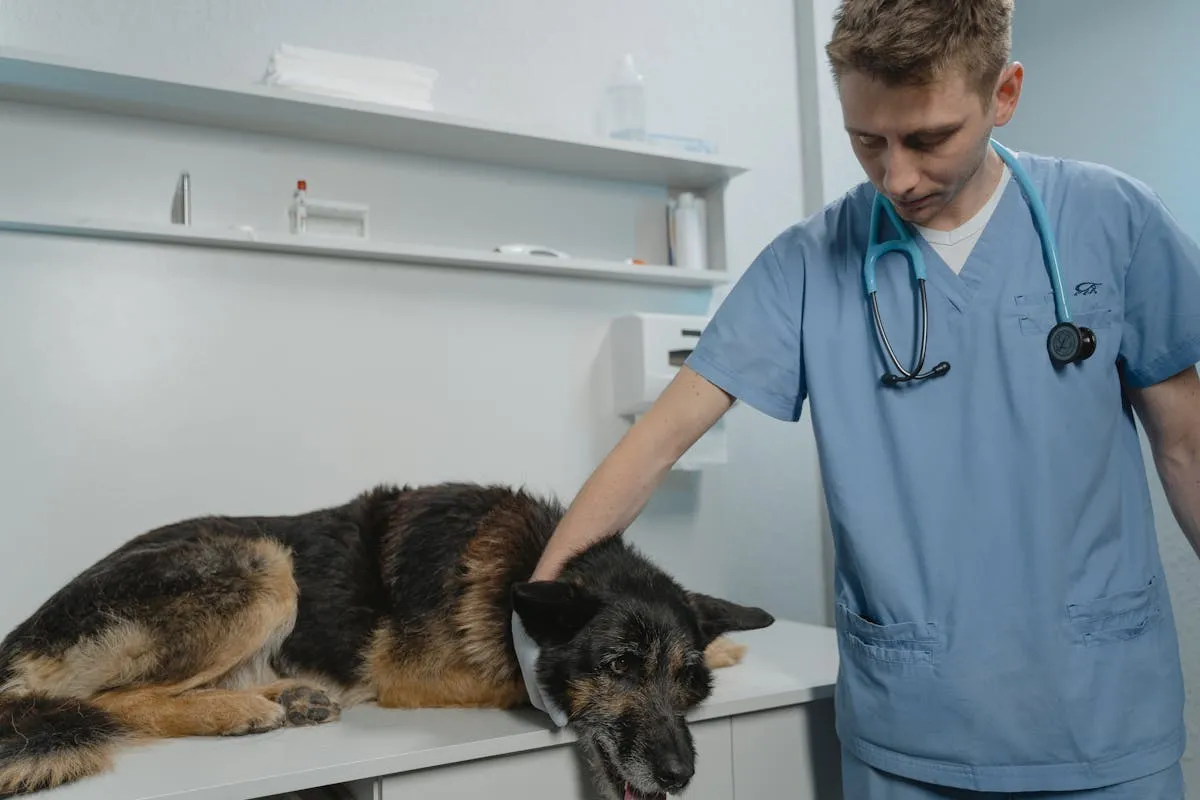
When Digestive Issues Need a Vet Visit
A dietary change handles many cases of sensitive digestion, but certain signs call for veterinary evaluation rather than another food swap. PetMD’s overview of sensitive stomachs in dogs notes that chronic digestive issues can signal conditions that food alone won’t resolve:
- Symptoms persist after six-plus weeks on a new food (with proper transition)
- Blood or mucus in stool
- Weight loss despite normal eating
- Vomiting more than once a week
- Lethargy or behavioral changes alongside digestive issues
- Your dog is a puppy. Puppies with chronic digestive problems need faster intervention.
“If your dog has been experiencing gastrointestinal symptoms for more than a few days, or if symptoms are recurring frequently, a veterinary visit is warranted to rule out underlying conditions.”
— PetMD, Why Does My Dog Have a Sensitive Stomach?
Your vet can rule out parasites, inflammatory bowel disease, EPI, and true food allergies. EPI in particular is worth testing for early when a dog from this breed has persistent digestive problems, since it requires enzyme supplementation rather than just a food change. The AKC’s guide to common digestive problems provides additional context on when to seek professional help.
If your dog stops eating entirely, that’s a separate concern that warrants faster action than a gradual food switch.
For portion guidance and feeding schedules by age, visit our German Shepherd food guide.
Disclaimer: This content is for general informational purposes only and is not veterinary advice. Consult a licensed veterinarian for decisions about your dog's health, diet, or medical care. Read full disclaimer →
Follow new work
A new guide every week or so.
Roughly one new guide every week or so. Cost data, feeding research, breed health — sourced and dated. By Sam, in Belgium.
Related Articles

Best Food for Adult German Shepherds
What adult German Shepherds actually need from their food. Protein, fat, joint support, and four formulas reviewed with a side-by-side comparison table.

Best Food for German Shepherds with Allergies
How to spot food allergies in German Shepherds, run a proper elimination diet, and choose the right limited ingredient formula. Vet-sourced guidance included.

Best Grain-Free Food for German Shepherds
Top grain-free dog foods for German Shepherds. What to know about the FDA grain-free debate, plus 5 picks that meet German Shepherd nutritional needs.

German Shepherd Feeding Schedule by Age
A complete German Shepherd feeding schedule from 8-week-old puppy to senior. Meal frequency, portion sizes by age, and sample daily routines that work.

Best Food for German Shepherds with Skin Problems
Best food for German Shepherds with skin problems, hot spots, and itchy coats. Fish-based formulas with omega-3s that support skin repair.