German Shepherd Breed Guide
Your Shepherd just vomited. Maybe once. Maybe several times. The first thought for any deep-chested-breed owner is the right one: is this bloat? That fear should be in the background, always. Most vomiting episodes are not bloat — but knowing the difference can save your dog’s life, and also save you from a panicked midnight drive when monitoring at home was the right call.
A triage flowchart
The decision-making tree below maps the signs you see in front of you to the action you should take next. Print it. Stick it on the fridge.
Work through the questions top to bottom. Stop at the first match.
- 1 Unproductive retching + distended hard abdomen?
- Yes Possible GDV/bloat. Emergency vet NOW. Drive — do not call ahead.
- No Continue to 2.
- Yes
- 2 Any of: blood in vomit / suspected toxin / collapse or weakness / can't keep water down / projectile vomiting?
- Yes Emergency vet. ASPCA Poison Control 888-426-4435 if toxin suspected.
- No Continue to 3.
- Yes
- 3 Vomiting beyond 24 hours / intermittent over days / post-meal pattern / mild lethargy / recurring yellow bile?
- Yes Call your vet. Schedule same-day or next-day appointment. Log timing + appearance.
- No Continue to 4.
- Yes
- 4 Single episode + normal energy + drinking + no distension + identifiable cause?
- Yes Monitor at home. 12-hour food fast → small water → bland diet → gradual return.
- Yes
Vomiting vs regurgitation
These are two different things and the distinction matters when you talk to your vet.
Vomiting is an active process. The dog heaves, abdominal muscles contract, and partially digested food comes up. There is usually warning: lip-licking, drooling, restlessness. The material is partially digested and may contain bile (yellow or green liquid).
Regurgitation is passive. Food comes up without effort, usually shortly after eating. It looks mostly undigested, often still in a tubular shape from the esophagus. The dog may just lower its head and the food slides out. Regurgitation points at an esophageal problem rather than a stomach issue.
Tell your vet which one you are seeing — the diagnostic path differs.
The triage decision
The cleanest framework for handling vomiting in a Shepherd is a three-tier triage. The DataTable below is the version you can actually print and stick on the fridge.
Vomiting triage — what to do at each severity tier
| Tier | Signs | Action | Timeline |
|---|---|---|---|
| Monitor at home | Single episode, normal energy, drinking, no distension, identifiable cause | 12-hour food fast → small water → bland diet → gradual return to regular food | 24-48 hours |
| Call your vet | Vomiting beyond 24 hours, intermittent over days, post-meal pattern, mild lethargy, recurring yellow bile | Schedule an appointment same day or next morning; document timing + appearance | Same-day or next-day appointment |
| Emergency vet now | Unproductive retching + distended abdomen, blood in vomit, repeated vomiting with weakness/collapse, can’t keep water down, suspected toxin, projectile vomiting, abdominal pain | Drive immediately — do not wait. ASPCA Poison Control 888-426-4435 if toxin suspected | Now — GDV can kill within hours |
Common causes, ranked roughly by frequency
Dietary indiscretion
The polite veterinary term for “ate something they shouldn’t.” Garbage, sticks, grass, another animal’s feces, a sock. Shepherds are intelligent dogs, but that intelligence does not always extend to dietary choices. A single vomiting episode after eating something questionable, followed by normal behavior, is usually not cause for alarm. Persistent scavenging is often a chewing and mouthing problem wearing a different hat.
Eating too fast
Many Shepherds inhale their food. The stomach receives a large volume too quickly, gets irritated, and sends it back. Common in the breed and easily managed with slow-feeder bowls or puzzle feeders.
Stress and anxiety
The breed is sensitive. Changes in routine, car rides, vet visits, thunderstorms, household upheaval — all can trigger vomiting. Stress-related vomiting is usually isolated and resolves when the stressor passes.
Diet change too fast
Switching food abruptly upsets the stomach. Transitions should happen gradually over 7-10 days, mixing increasing amounts of new food with decreasing amounts of the old. Our guide to switching from puppy to adult food has the day-by-day ratios.
GDV (bloat) — the breed-specific concern
Gastric dilatation-volvulus is a life-threatening emergency in which the stomach fills with gas and rotates on its axis, cutting off blood supply. Deep-chested breeds are at significantly higher risk; German Shepherds are repeatedly cited among the breeds with the highest incidence.
“Gastric dilatation-volvulus is one of the most serious non-traumatic emergencies encountered in small animal practice. German Shepherd Dogs are among the breeds with the highest incidence.”
— Merck Veterinary Manual, Gastric Dilatation-Volvulus
The signs that mean now, not later:
- Unproductive retching — the dog is trying to vomit but nothing comes up. This is the hallmark sign.
- Distended, hard abdomen — the belly looks swollen and feels tight like a drum.
- Restlessness and pacing — the dog cannot get comfortable. Standing up, lying down, standing again.
- Excessive drooling.
- Rapid breathing or panting.
- Weak, rapid pulse.
If your dog is retching without producing anything and the abdomen looks distended, go to an emergency vet immediately. Do not wait. Do not call ahead. Drive. The bloat surgery cost guide walks through what to expect at the clinic — useful background, but not something to read instead of going.
The home-monitor protocol (when it is appropriate)
If you are in the “monitor at home” tier — single episode, identifiable cause, normal energy, no distension — the standard protocol is:
- Withhold food for 12 hours to let the stomach settle
- Offer small amounts of water — not a full bowl all at once; small repeated sips
- Bland diet — plain boiled chicken and white rice, no seasoning, small portions
- Watch for keeping it down — if no vomiting at the 4-hour mark, offer another small portion
- Gradual transition back to regular food over 2-3 days, mixing in increasing proportions
If the dog vomits the bland diet, or develops any tier-3 signs at any point, the home protocol is over — call the vet.
Why does my German Shepherd eat grass?
Usually because dogs eat plants, and the popular explanation is weaker than most owners assume. The folk theory says a dog grazes to make itself sick. A 2008 survey of plant-eating behavior by veterinary researchers at UC Davis found the opposite pattern in most cases: the majority of dogs that ate plants showed no signs of illness beforehand, and only a small minority vomited afterward. Grazing on a walk, chewing a few blades in the garden, and moving on is ordinary behavior, not a symptom.
Three versions of it do deserve attention. Frantic, urgent grass eating paired with unproductive retching or a hard, distended belly is a bloat presentation and belongs in the emergency column above. Grass eating that has appeared suddenly alongside appetite changes, weight loss, or repeated vomiting is worth a vet conversation, because a dog with genuine nausea may seek out anything. And lawn treatments matter more than the grass: herbicides, fertilizers, slug pellets, and grass awns that lodge in paws, ears, or throats are the real hazards, which is why the toxic foods and substances guide is worth reading before you treat the yard.
If grazing is constant and looks compulsive rather than casual, treat it as a behavior question. Dogs short on activity or mental work will find something to do with their mouths, and in this breed that pattern shows up in destructive chewing too.
Reducing vomiting risk
For dogs that vomit occasionally because of eating habits:
- Feed two to three smaller meals instead of one large meal. This is also the standard recommendation for GDV risk reduction.
- Use a slow feeder bowl to prevent gulping. The eating-too-fast guide covers the slow-feeder options that actually work.
- Avoid vigorous exercise within an hour before and after meals.
- Transition foods gradually over 7-10 days.
- Keep garbage and counter-tempting items out of reach. Adult Shepherds are tall enough to clear most kitchen surfaces.
“Feeding multiple small meals per day and avoiding exercise around mealtimes are commonly recommended strategies to reduce the risk of gastric dilatation-volvulus.”
— American Kennel Club, Bloat in Dogs
When vomiting points at something bigger
Chronic or recurrent vomiting can indicate an underlying condition: inflammatory bowel disease, pancreatitis, liver or kidney issues, intestinal parasites, food intolerances, or, rarely, neoplasia. If your dog vomits regularly (more than once or twice a month), keep a log of timing, appearance, and any patterns, then bring it to your vet.
Diagnostic workup typically includes blood panels, urinalysis, X-rays, and possibly ultrasound or endoscopy. Costs vary; the German Shepherd cost guide covers what to budget for diagnostic workups, and the vet cost breakdown has line-item figures for bloodwork and imaging.
In my own dogs, the false alarms outnumbered the real emergencies five to one — but the one time you can’t afford to be wrong is bloat. The triage framework above is the closest thing to a rule that exists: monitor when the signs are quiet, drive when they are loud, and never bet against unproductive retching plus a hard belly.
Sources cited in this article
- Non-Dietary Risk Factors for Gastric Dilatation-Volvulus in Large and Giant Breed Dogs — Glickman et al., Journal of the American Veterinary Medical Association (2000) ↗ Purdue/Glickman cohort study establishing breed-specific GDV risk percentages.
- Gastric Dilatation-Volvulus in Small Animals — Merck Veterinary Manual ↗ Reference clinical overview with breed risk and emergency recognition.
- Bloat in Dogs: Symptoms, Treatment, and Prevention — American Kennel Club ↗ Plain-language owner-facing summary of risk-reduction strategies.
- Vomiting in Dogs — When to Call the Vet — PetMD ↗ Triage framework reference and common-causes overview.
- Animal Poison Control Center — ASPCA ↗ 24/7 telephone consultation for suspected toxin ingestion (888-426-4435; consultation fee applies).
- Gastric Dilatation-Volvulus — Information for Pet Owners — American College of Veterinary Surgeons ↗ Surgical-specialty perspective on the condition, prognosis, and prophylactic gastropexy.
Follow new work
A new guide every week or so.
Roughly one new guide every week or so. Cost data, feeding research, breed health — sourced and dated. By Sam, in Belgium.
Related Articles
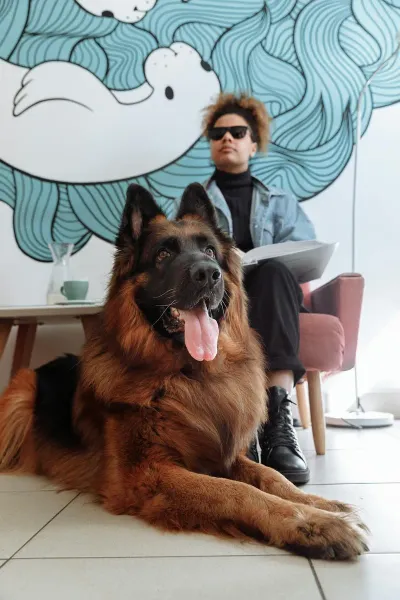
German Shepherd Bloat Surgery Cost
German Shepherd bloat surgery is a market-estimated $5,000 to $10,000+. Emergency GDV vs. preventive gastropexy pricing, survival odds, and insurance coverage.
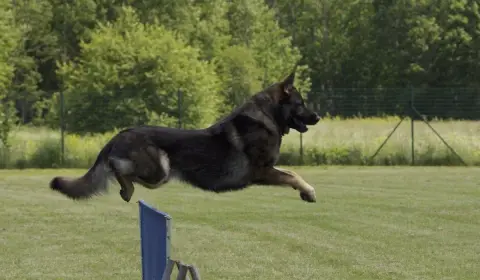
German Shepherd Eating Too Fast — Solutions
Speed eating raises bloat risk in German Shepherds by up to five times. Slow feeder bowls, split meals, and other proven strategies to protect your dog.
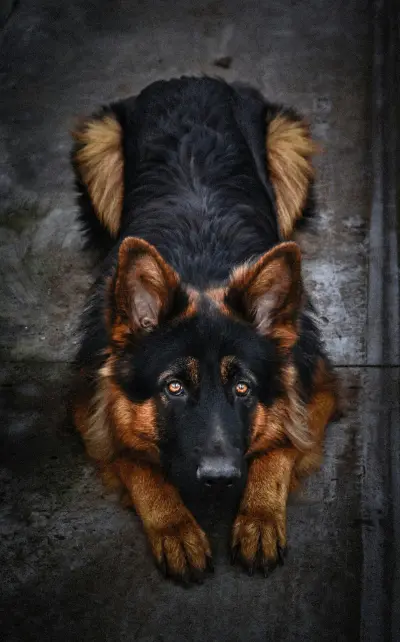
German Shepherd Not Eating — What to Check
Why your German Shepherd stopped eating and what to do about it. Medical causes, behavioral triggers, exercise and appetite links, and when to call the vet.