German Shepherd Breed Guide
Your Shepherd lunges at another dog on a walk. Barking, pulling, ears forward, completely uncontrollable for 10 seconds. Then the other dog passes and yours settles. Is that aggression? Reactivity? Does the label even matter?
It matters a lot. Because the approach that helps a reactive dog can make an aggressive dog worse, and the approach for aggression is overkill for a reactive dog. Getting this wrong wastes months of training and can make the behavior more dangerous.
Most Shepherds that owners label “aggressive” are actually reactive. Understanding the difference is the first step toward fixing it.
The Core Difference
Reactive means the dog overreacts emotionally to a trigger — another dog, a stranger, a sound — and the behavior is about creating distance. The dog wants the scary thing to go away. Once the trigger is removed, the dog settles relatively quickly.
Aggressive means the dog is willing to approach, engage, and cause harm. The behavior is about closing distance, not creating it. The dog does not settle when the trigger is removed. It may actively seek out confrontation.
“Reactive dogs are not necessarily aggressive dogs, but reactivity can turn into aggression.”
— Cornell University College of Veterinary Medicine, Managing Reactive Behavior
Most reactive dogs are scared. Most aggressive dogs have moved past scared into something more concerning. The emotional root is different, and that changes everything about how you respond.
How to Read Your Dog’s Body Language
Body language tells you what your dog is feeling before the behavior escalates. The signals are different for reactive and aggressive dogs, and learning to read them is the most important skill you can develop.
Reactive vs aggressive — body language at a glance
Same lunge, different dog. Read the signals before the behavior tells you. Reactive: wants distance (fear or frustration). Aggressive: wants to close (intent to harm).
| Signal | Reactive | Aggressive |
|---|---|---|
| Tail | Tucked or stiff vibrating wag | High over back, slow flag or rigid |
| Ears | Pinned flat back or rotating | Forward, locked on target |
| Eyes | Whale eye, darting, dilated | Hard fixed stare, no blink |
| Mouth | Lip-licking, panting, long commissure | Lifted lip, short pucker, teeth |
| Hackles | Often raised at shoulders only (also seen in arousal) | Raised along the full back |
| Weight | Shifted backward, ready to retreat | Forward, leaning into the target |
| Vocalization | High-pitched, rapid, frantic | Low growl, deep bark, or silence |
| Distance intent | Increase — push the trigger away | Decrease — close on the target |
| Recovery | Settles in seconds to minutes | Stays aroused, fixated 15+ min |
Distance-increasing vs distance-decreasing intent is the cleanest single read. The other rows are supporting evidence. Sources: Aloff · Rugaas · Shepherd ladder of aggression · germanshepherd.now
A note on hackles: shoulder-only hackles often appear with excitement or anxiety, not aggression. Hackles raised the full length of the back are the more concerning signal.
The Gray Zone
Some dogs show elements of both. A reactive dog that has been punished for barking may go quiet and stiff — which looks like aggression but is actually learned suppression of warning signals. This is one of the most dangerous outcomes of using aversive training on a reactive dog. You lose the warning system.
If you are unsure, treat it as aggression and get professional help. It is safer to overestimate than underestimate.
The Quick Assessment
Ask yourself these five questions after an incident:
1. Did my dog try to close the distance or create it? Reactive dogs lunge forward but are actually trying to make the trigger retreat. If the trigger moved toward them, they would back up. Aggressive dogs close distance deliberately.
2. How quickly did my dog recover? Reactive dogs settle within minutes once the trigger is gone. Aggressive dogs stay wound up — pacing, scanning, unable to redirect — for 15+ minutes.
3. Was there a clear trigger? Reactive dogs respond to specific stimuli: other dogs, strangers, bicycles, hats. Aggressive dogs may escalate with less identifiable or more generalized triggers.
4. What did the barking sound like? High-pitched, rapid, frantic = reactive. Low, controlled, rumbling = concerning. Silence before escalation = most concerning.
5. Has this happened before in the same pattern? Reactive dogs are predictable. You can usually identify the trigger and the threshold distance. Aggressive behavior is less predictable and may escalate in severity over time.
If you answered “close distance,” “slow recovery,” “no clear trigger,” “low/silent,” and “escalating” — consult a veterinary behaviorist (DACVB) before doing anything else.
Why Shepherds Get Mislabeled
German Shepherds look intimidating when they react. An 80-pound dog lunging and barking at the end of a leash is terrifying to bystanders, even when the dog is scared and would run the other direction if it could.
Three breed traits make the mislabeling worse:
The bark. Shepherds have a deep, loud bark that sounds aggressive even when the dog is anxious. A reactive Golden Retriever gets sympathy. A reactive Shepherd gets reported to animal control.
The appearance. The breed’s association with police and military work creates an assumption of aggression. People see a Shepherd react and assume the worst, which reinforces the owner’s anxiety, which travels down the leash and makes the reactivity worse.
The intensity. Shepherds commit fully to whatever they are feeling. A mildly anxious Beagle might whine. A mildly anxious Shepherd explodes. The intensity of the reaction does not necessarily match the severity of the underlying issue. Our aggression guide goes further into where the real line sits.
The AVMA’s position on breed-specific behavior is clear: breed alone is not a reliable predictor of individual aggression. Context, socialization, training, and individual temperament matter far more. Much of what owners read as reactivity in a young dog is the adolescent phase instead.
What to Do if Your Dog Is Reactive
Reactivity is manageable. Most reactive dogs improve significantly with consistent work.
Step 1: Identify the triggers. Write them down. Other dogs? Strangers? Men specifically? Bicycles? Knowing the exact triggers lets you control exposure. If most of them appear on walks, start with our leash reactivity guide.
Step 2: Find the threshold distance. How close can the trigger get before your dog reacts? 50 feet? 20 feet? That is your starting point. Everything happens below that line.
Step 3: Counter-condition below threshold. When the trigger appears at a safe distance, feed high-value treats. Trigger appears = good things happen. Trigger leaves = treats stop. Over sessions, the dog’s emotional response to the trigger shifts from fear to anticipation. Cornell recommends this as the primary evidence-based approach.
Step 4: Gradually decrease distance. Over weeks, not days. If the dog reacts, you moved too fast. Back up.
Step 5: Build alternative behaviors. Teach a “look at me” or “watch” cue. When the trigger appears, the dog looks at you instead of fixating. This gives the dog a job to do, which replaces the panic.
Timeline: Most owners see noticeable improvement in 4–8 weeks of consistent daily practice. Full reliability in varied environments takes 3–6 months. Some dogs will always need management in certain situations, and that is okay.
What to Do if Your Dog Is Aggressive
True aggression in a German Shepherd is a serious issue that requires professional help. Do not attempt to manage it alone.
Immediate management: Prevent the dog from practicing the behavior. Muzzle train (humanely, with positive association) for safety during walks. Use baby gates and separate rooms to manage the household. Avoid all known triggers until a professional has assessed the dog.
Get a veterinary behaviorist. Not a general trainer. Not a YouTube personality. A board-certified veterinary behaviorist (DACVB) who can rule out medical causes (pain, thyroid issues, neurological problems), prescribe medication if needed, and build a behavior modification plan.
Do not punish. The AVSAB position statement is unambiguous: aversive methods applied to aggressive dogs increase the risk of bites. Punishing a growl removes the warning. Punishing a lunge builds frustration. Neither changes the underlying emotion.
Be honest about liability. A German Shepherd that bites can cause serious injury. Many homeowner insurance policies restrict or exclude coverage for certain breeds after a bite incident. The cost of a behavioral consultation is a fraction of the medical bills, legal fees, and insurance consequences of a serious bite. Our full cost guide puts that line item in context.
When Reactivity Becomes Aggression
The transition does not happen overnight, but it does happen. Watch for these escalation markers:
- Reactions that used to resolve in seconds now last minutes
- The trigger distance is shrinking — your dog reacts to things further and further away
- New triggers appearing that never bothered the dog before
- Growling or snapping replacing barking as the primary response
- The dog targeting specific body parts (hands, face) during redirected bites
- Inability to redirect or disengage the dog once triggered
If you are seeing two or more of these, the window for self-guided training is closing. Get professional help now, not after the next incident. The earlier you intervene, the better the outcome — for the dog, for you, and for the people and animals around you. If isolation or kennel-stress is part of the picture, our guide on separation anxiety covers the overlap. If the trigger is specifically food, bones, or the couch your dog is on, that’s resource guarding — a related but distinct pattern with its own escalation ladder. If your Shepherd targets visitors specifically, the overprotective guide covers the desensitization sequence for that pattern.
Sources
Body-language and bite-scale references on this page are sourced as follows. Last verified 2026-05-22.
- Aloff B. Canine Body Language: A Photographic Guide. Dogwise Publishing, 2005. The standard reference on distance-increasing vs distance-decreasing canine signals.
- Rugaas T. On Talking Terms with Dogs: Calming Signals (2nd ed.). Dogwise, 2005. The original catalog of ~30 calming signals (head turn, lip lick, yawn, freeze, look-away).
- Shepherd K. The Canine Commandments (Ladder of Aggression). Broadcast Books, 2004. Hierarchy of communicative signals dogs use before biting.
- Dunbar I. Dog Bite Scale. Association of Professional Dog Trainers. APDT PDF. Standard 1–6 severity scale referenced in the By-the-Numbers callout.
- Cornell University College of Veterinary Medicine, Riney Canine Health Center. Managing Reactive Behavior in Dogs. vet.cornell.edu. Reactivity-to-aggression progression and counter-conditioning baseline.
- American Veterinary Society of Animal Behavior. Humane Dog Training Position Statement (2021). PDF. Standard-of-care against aversive methods with reactive/aggressive dogs.
- American Veterinary Medical Association. Dog Bite Risk and Prevention: The Role of Breed. avma.org. AVMA position that breed alone is not a reliable individual-aggression predictor.
- American Society for the Prevention of Cruelty to Animals. Aggression. aspca.org. Taxonomy of aggression types (territorial, fear, defensive, redirected, predatory, pain-elicited).
- American College of Veterinary Behaviorists. Find a Veterinary Behaviorist. dacvb.org. Board-certified referral directory for diagnosed behavioral disorders.
Follow new work
A new guide every week or so.
Roughly one new guide every week or so. Cost data, feeding research, breed health — sourced and dated. By Sam, in Belgium.
Related Articles
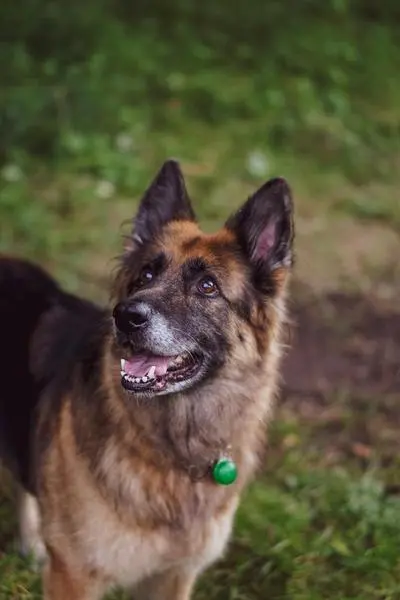
German Shepherd Aggression: Why It Happens and What to Do
German Shepherd aggression: fear vs reactivity, the dominance myth debunked, O'Neill 2017 data, $69K liability reality, when only a DACVB will do.
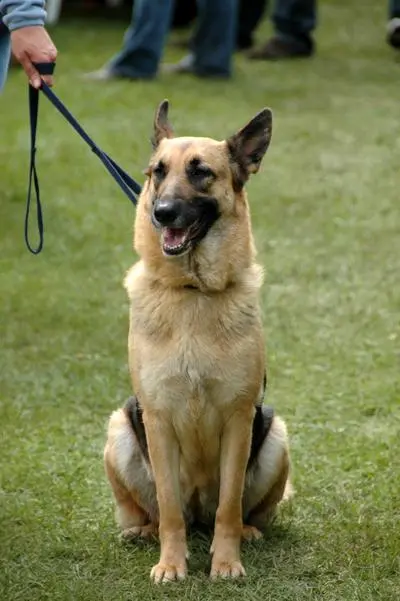
German Shepherd Reactivity on Leash: Why and What to Do
Why German Shepherds lunge and bark on leash and how to fix it. Step-by-step walk protocol, engage-disengage method, and equipment that helps.
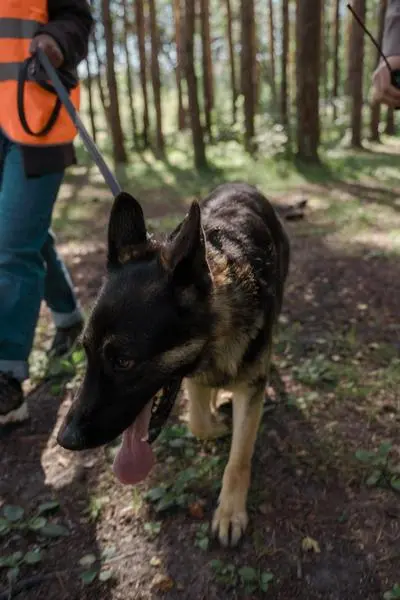
German Shepherd Overprotective of Owner — What to Do
Overprotective German Shepherd behavior explained: the resource-guarding reality, nerve strength in working lines, and a 5-phase visitor protocol that works.