German Shepherd Breed Guide
German Shepherds are supposed to be confident, bold, fearless. That’s the breed standard. So when yours cowers behind your legs at the sight of a stranger, trembles during a walk, or panics at sounds other dogs ignore, it feels like something is fundamentally wrong.
Fearfulness in Shepherds is more common than the breed’s reputation suggests. And it is one of the hardest behavior issues to live with, because a fearful 80-pound dog is a safety concern. Fear is the most common root of aggression and reactivity in dogs. A scared dog that can’t flee will fight.
The good news: most fearful Shepherds can improve. Not transform. Improve. The goal is a dog that copes, not a dog that loves everything.
The Socialization & Fear-Period Timeline
This timeline is the single most important framework for understanding why a Shepherd ended up fearful — and what window you’re still working in.
When the door is open — and when it closes. The socialization window closes at ~14 weeks; after that, everything is remedial work.
- 3–14 wk Socialization windowBrain accepts new people/dogs/surfaces/sounds as normal. After this closes, novel = potential threat.
- 8–11 wk Fear period 1Single bad experience can imprint a lasting fear. Reputable breeders guard this window carefully.
- 6–14 mo Fear period 2Adolescent regression — previously confident dog goes cautious. Lower exposure, do not push. It passes. (~2–3 wk window)
Source: AVSAB puppy socialization position statement; Serpell & Duffy 2014; veterinary developmental literature.
Why Some Shepherds Are Fearful
There’s rarely one single cause. Fearfulness usually comes from a combination.
Genetics
This is the one nobody wants to hear. Temperament is heritable. If the parents are nervous, shy, or reactive, the puppies are at higher risk regardless of how well they’re socialized. This is why meeting the parents before buying a puppy matters — and why the AKC breed standard specifically describes the ideal temperament as “direct and fearless, but not hostile.”
Poorly bred Shepherds from high-volume breeders or puppy mills are disproportionately represented in fearfulness cases. When breeding prioritizes appearance or volume over temperament, nervous dogs get bred.
Missed Socialization Window
The critical socialization period in puppies is 3 to 14 weeks. During this window, the brain is wired to accept new experiences as normal. After it closes, novel things default to “potential threat.”
A puppy that wasn’t exposed to diverse people, dogs, surfaces, sounds, and environments during this period will be playing catch-up for the rest of its life. The window doesn’t reopen. You can still make progress, but it takes longer and the ceiling is lower.
Fear Periods
Puppies go through two developmental windows where they become temporarily more sensitive to scary experiences:
First fear period (8–11 weeks). A single traumatic experience during this window can create a lasting fear. This is why reputable breeders are careful about what happens to puppies at this age — and why dragging a brand-new puppy to a busy parade in their first week home is a bad idea even when intentions are good.
Second fear period (6–14 months). A previously confident adolescent may suddenly become cautious or reactive. This is normal brain development, not a training failure. It typically lasts 2–3 weeks. The critical rule: don’t force the dog through it. Reduce exposure to new, overwhelming experiences during this period if possible.
Trauma
A single bad experience can create a lasting fear, especially if it happened during a fear period. A dog attack, a painful vet visit, a fireworks event at close range. The brain encodes “this situation = danger” and the dog avoids or reacts to anything resembling that situation.
What Fear Looks Like in Shepherds
Fearful Shepherds often look different from fearful small dogs. The signs can be subtle or dramatic.
Fear signals — subtle to overt
| Signal | What it looks like | What it means |
|---|---|---|
| Avoidance | Hiding behind you, refusing to enter rooms, turning away, trying to leave | Dog is trying to create distance from the trigger |
| Freeze | Stops moving, becomes stiff, stares — looks calm but isn’t | Overwhelmed; deciding between flight and fight |
| Displacement | Yawning when not tired, lip licking, scratching, ground-sniffing under pressure | Self-soothing; conflict between approach and avoid |
| Submissive urination | Peeing when greeted, approached, or touched | Fear response, not housetraining failure |
| Reactivity | Barking, lunging, growling at the trigger | Defensive fight response — gets misread as ‘aggression’ |
The reactivity row is the one most likely to get a Shepherd labeled “aggressive” when the dog is actually terrified. The reactive vs aggressive guide covers exactly how to tell the difference using body language — weight back vs forward is the single fastest tell.
The Confidence-Building Protocol
This protocol is adapted from veterinary behaviorist recommendations. It isn’t fast. But it works.
Step 1 — Create a Safe Base
Your dog needs one place in the house where nothing bad ever happens. A bed in a quiet room, a covered crate (if the dog is crate trained), a corner away from foot traffic. The dog should be able to retreat here at any time, and no one should follow, reach in, or force the dog out.
“Dogs will often show improvement over time once you become more predictable and they learn the routine.”
— Dr. Christine Calder, DVM, DACVB, Veterinary Partner/VIN
Step 2 — Stop Forcing Exposure
The instinct is to socialize the fearful dog by exposing it to more things. This backfires badly. Flooding a fearful dog with triggers — taking it to a busy park, having strangers pet it, forcing it into a dog group — makes the fear worse.
Instead: reduce exposure to triggers while you build the dog’s toolkit. Walk in quiet areas at quiet times. Avoid situations that overwhelm the dog. This isn’t avoidance forever. It’s creating the conditions where training can actually work.
Step 3 — Counter-Condition at Distance
When you do encounter a trigger (a stranger, another dog, a sound), stay far enough away that the dog notices but doesn’t react. Feed high-value treats. Trigger appears = good things happen. Over sessions, the dog’s association shifts from “that thing is dangerous” to “that thing predicts chicken.”
The distance matters more than anything. If the dog is already panicking, you’re too close. Back up until the dog can take a treat calmly. The leash reactivity guide has the same distance work mapped out for outdoor triggers specifically.
Step 4 — Teach Focus and Communication
Teach a “look at me” cue so the dog has something to do when scared. Teach a chin rest or hand target so the dog can communicate “I need help.” These give the dog agency, which builds confidence faster than passive exposure.
Puzzle toys and nose work are also powerful confidence builders. Solving problems teaches the dog that it can influence its environment, which is the opposite of helplessness. Sniff-walking on a long line in low-traffic areas is one of the most underrated confidence interventions there is.
Step 5 — Build on Small Wins
Every successful experience matters. The dog walked past a stranger without panicking. The dog heard a loud sound and recovered in 10 seconds instead of 10 minutes. Mark and reward these moments. Confidence builds through accumulated evidence that the world is survivable.
Timeline: Expect gradual improvement over months, not weeks. Some dogs show noticeable progress in 6–8 weeks. Others take 6–12 months. Dogs with genetic fearfulness may always need management in certain situations, and that’s a realistic and acceptable outcome.
What Makes It Worse
Punishment. Scolding, leash corrections, or yelling at a fearful dog confirms that the world is unpredictable and scary. Makes everything worse.
Forced socialization. Holding the dog while strangers pet it, dragging it toward other dogs, refusing to let it retreat. The dog learns it can’t escape, which creates learned helplessness or defensive aggression.
Inconsistency from household members. Everyone in the house needs to follow the same approach. One person pushing the dog past its limits undoes the other person’s patient work.
Your own anxiety leaking through the leash. If you tense up, grip the leash tighter, or panic when you see a trigger approaching, the dog reads your body language and concludes the trigger really is dangerous. Stay calm and matter-of-fact. Loose leash, neutral voice.
When to Get Professional Help
If the fearfulness is severe enough that the dog can’t function normally — can’t walk, can’t be around any people, panics at everyday sounds — this needs professional involvement.
A veterinary behaviorist (DACVB) can assess whether medication would help. Anti-anxiety medication isn’t a shortcut or a last resort. For severely fearful dogs, it can be the difference between a dog that can learn and one that’s too overwhelmed to take in any information. Medication lowers the baseline anxiety enough for the confidence-building work to take hold.
A CPDT-KA certified trainer experienced with fearful dogs can guide you through a structured desensitization plan. Avoid any trainer who uses corrections, flooding, or dominance-based methods on a fearful dog. The AVSAB position on humane training is clear: aversive methods increase fear-based behaviors.
What Realistic Progress Looks Like
You will probably not turn a fearful Shepherd into the bold, confident dog on the breed poster. That’s okay.
What you can achieve:
- A dog that recovers from scares in seconds instead of hours
- A dog that can walk in your neighborhood without panicking
- A dog that tolerates visitors in the house from a safe distance (see overprotective for the visitor-management overlap)
- A dog that looks to you for guidance instead of reacting independently
That is a well-managed fearful dog. Not broken. Not “fixed.” A dog that has learned it can trust you to keep it safe, and that the world is mostly survivable — even if it will never be comfortable.
For related challenges, see noise phobia, reactive vs aggressive behavior, resource guarding, and aggression.
Sources
- Salonen M et al. Prevalence, comorbidity, and breed differences in canine anxiety in 13,700 Finnish pet dogs. Scientific Reports 2020, 10:2962. nature.com. Source of 72.5% any-anxiety / 29% fearfulness figures.
- American Veterinary Society of Animal Behavior. Position Statement on Puppy Socialization. PDF. 3–14 week window.
- American Veterinary Society of Animal Behavior. Humane Dog Training Position Statement (2021). PDF.
- Serpell J, Duffy DL. Dog Breeds and Their Behavior. In: Domestic Dog Cognition and Behavior. Springer 2014. Heritability of fear traits.
- Calder C, DVM DACVB. Veterinary Partner: Fear in Dogs. veterinarypartner.vin.com.
- American Kennel Club. German Shepherd Dog breed standard. akc.org.
- American College of Veterinary Behaviorists. Find a DACVB. dacvb.org.
- CCPDT. Certified Dog Trainer Directory. ccpdt.org.
Follow new work
A new guide every week or so.
Roughly one new guide every week or so. Cost data, feeding research, breed health — sourced and dated. By Sam, in Belgium.
Related Articles
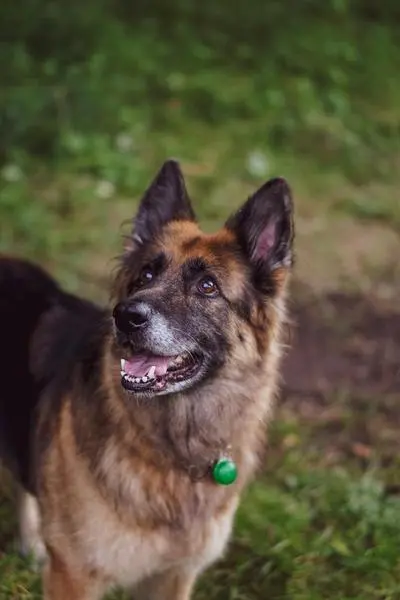
German Shepherd Aggression: Why It Happens and What to Do
German Shepherd aggression: fear vs reactivity, the dominance myth debunked, O'Neill 2017 data, $69K liability reality, when only a DACVB will do.

German Shepherd Fear of Loud Noises: Thunderstorms and Fireworks
Noise phobia in German Shepherds: the medications vets prescribe (Sileo, trazodone, gabapentin) and a real Fourth-of-July event-day checklist.
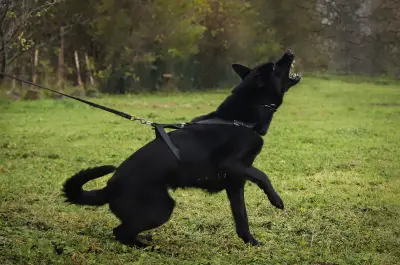
Is My German Shepherd Reactive or Aggressive?
Reactive vs aggressive German Shepherd: body-language matrix, the 4-distance recovery test, Dunbar bite scale, and when a DACVB is required.